
Sustainable Livelihoods
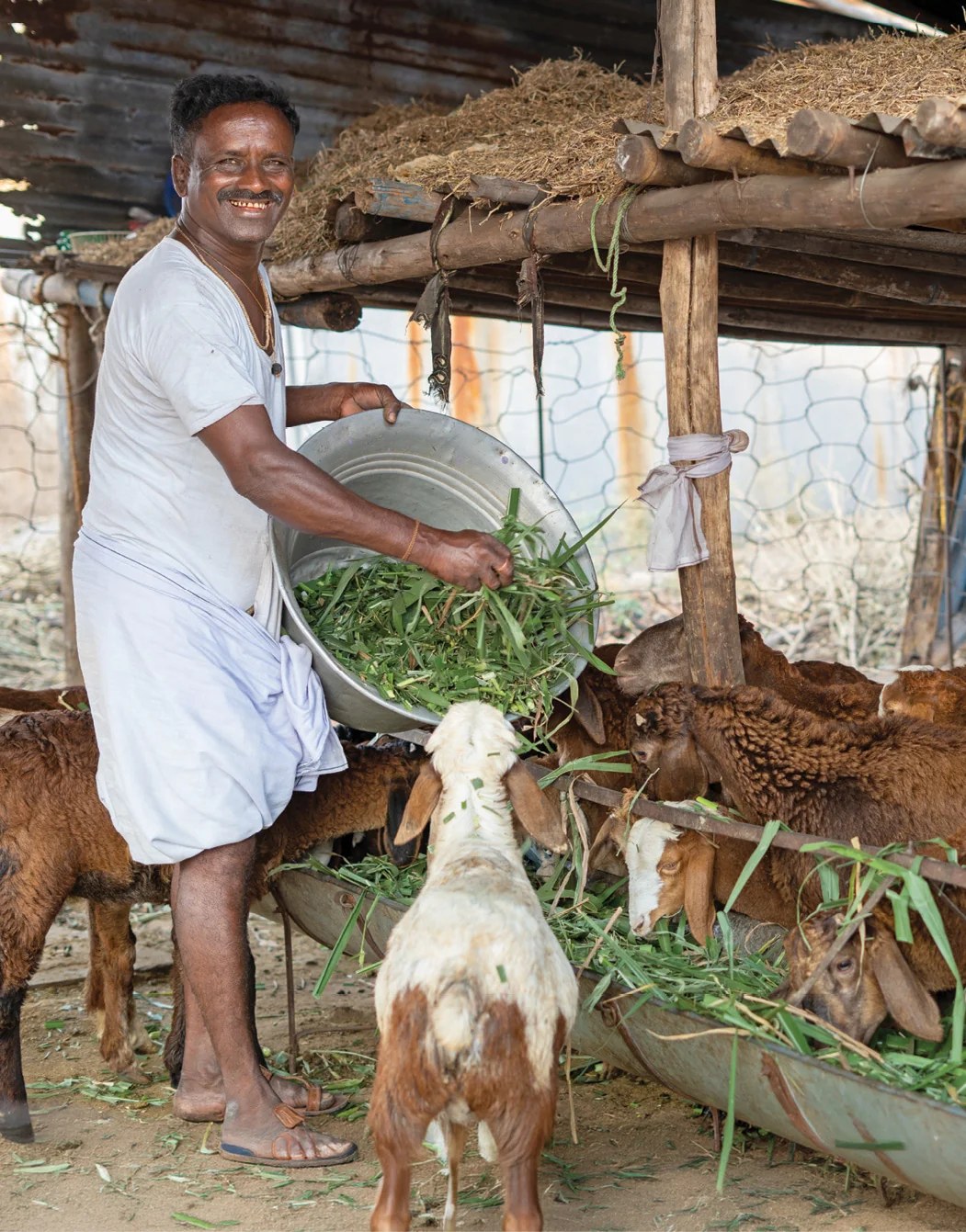
The Adani Foundation is enhancing income levels of the households by building a self-sustaining ecosystem that leverages community resources for socio-economic progress. The Foundation drives impactful change across on-farm, off-farm, and non-farm sectors, fostering resilience, inclusion, and lasting social impact, shaping resilient communities.
Our initiatives focus on boosting, diversifying, and sustaining incomes through:
- Women-led Enterprises: Recognising women as powerful agents of change, the Foundation promotes women entrepreneurship by fostering leadership, enhancing knowledge, and ensuring access to critical networks and markets.
- Project Saksham: This skilling programme equips youth with invaluable technical and entrepreneurial skills, propelling them toward greater employability and self-reliance.
- Sathwaro: Dedicated to empowering India's artisan communities, this initiative transforms traditional and cultural heritage into viable, income-generating opportunities.
- Agricultural Development: Programmes in natural farming, animal husbandry, and dairy development help farmers leverage technology to boost yields and resilience.
Under its Sustainable Livelihood Development initiative, the Adani Foundation is promoting entrepreneurship among women Self Help Groups (SHGs) by upgrading skills, enhancing in house livelihood activities, and creating sustainable income opportunities. A total of 2061 members under 199 Self-Help Groups engaged in income generation activities. Cumulative turnover of 1.16 crores.
Different activities under Sustainable Livelihoods
| Activities | Beneficiaries |
|---|---|
| Organic/ Natural farming, wadi development, drip irrigation, seed & shed for vegetable cultivation, vermi compost units | 6,747 farmers |
| Vegetable cultivation | 2,000 families |
| Livestock Development – breed improvement, cattle treatment camps, fodder support, training, | 8,895 Cattle owners |
| Women in entrepreneurship groups – training, linkage with market and financial institute, sewing machine, | 1,463 women members |
Supporting Traditional Livelihoods Through Skill Development:
As part of its commitment to inclusive growth and sustainable livelihood promotion, Adani Foundation, Hazira implemented a targeted skill development initiative for bamboo artisans from the Kotwalia community in Bilvan and Sadrapani villages of Umarpada block. The training-cum-workshop reached over 90 artisans, including 36 men and 54 women, ensuring broad-based participation with a strong focus on women’s economic empowerment and tribal welfare. Till date, we have supported 140 artisans.
Impact Created
501
Farmers adopted good agronomic practices
650+
Farmers adopted natural farming practices
360
Families cultivating vegetables in their kitchen garden
688.5 tonnes
Green fodder produced
2,400+
Cattle covered through Artificial Insemination (AIs), resulting in 510 improved breed calves
3,050
Cattle dewormed through camps
18,372
Animals treated via two Mobile Veterinary Units at Dhamra
482
Cattle owners supported with mineral mixture
15,005
Cattle provided with fodder support across 25 villages
262
Self-Help Groups (SHGs)
3,086
Members
461
Youth trained in different skills
1,097
Applications processed under government schemes
Adani Mangal Seva: A Pathway to Dignity, Security and Independence
The Mangal Seva initiative by Adani Foundation is a targeted social welfare program designed to promote dignity, financial independence, and long-term security for newly married women with disabilities. Under this model, each selected beneficiary is supported through the creation of a fixed deposit of 10 lakh for a period of 10 years. While the principal amount remains with them and is released at maturity, while a steady monthly interest payout (approximately 5,416) provides regular income, enabling beneficiaries to meet household needs, investment towards livelihoods, access to healthcare, or pursuance of higher education.
The program adopts a structured, transparent selection and verification process involving field outreach, document validation, and home visits, ensuring that support reaches deserving candidates. Beyond financial assistance, Mangal Seva aims to strengthen social security and inclusion by enhancing the economic agency of women with disabilities and reducing their vulnerability post marriage. By combining financial planning with social empowerment, the initiative creates a sustainable pathway for improving quality of life and fostering long-term resilience among beneficiaries.
So far, the project has enrolled 500 beneficiaries and envisages to reach to 2000 candidates over next four years. It is a collaborative program with multiple group companies participating in it.
Holistic Transformation of Kotwaliya Bamboo Artisans
In a remote tribal village in Gujarat, the Kotwaliya community, renowned for its traditional bamboo craftsmanship, struggled to sustain its livelihood due to low incomes, outdated production methods, and limited market access. Despite generations of skill, survival became a daily challenge.
Recognising this potential, the Adani Foundation launched a transformative livelihood intervention focussed on collective empowerment through Self-Help Groups (SHGs). Artisans were organised into SHGs, strengthening financial cooperation and shared decision-making. Training in modern production techniques improved product quality, while machinery support enhanced efficiency, transforming a traditional craft into a viable, income-generating enterprise.
Through the Foundation’s efforts, artisans showcased their products at state and national exhibitions, earning 40,000 per event and generating 1 lakh in cumulative sales. Exposure to new customers and markets increased their confidence and incomes. Access to microloans and savings mechanisms reduced reliance on informal lenders. Further, preservation of traditional bamboo craft ensured cultural heritage.
This initiative has gone beyond livelihood enhancement; reviving a traditional art form, strengthening self-reliance, and fostering community-led development. Today, Kotwaliya artisans stand stronger, blending heritage with progress