Prioritising workers’ safety and well-being

As a people-focussed organisation, we assign the highest priority to the safety and well-being of the workers. At APSEZ, we have aligned our workplace practices to the Health and Safety Policy of the Adani Group. The security and well-being of our people is pivotal to our strategic approach, and we remain committed to preventing work-related illnesses and injuries. It is our continuous endeavour to enhance the safety environment at all our sites, and we take targeted measures to drive our efforts.
Key Highlights for FY 2025-26
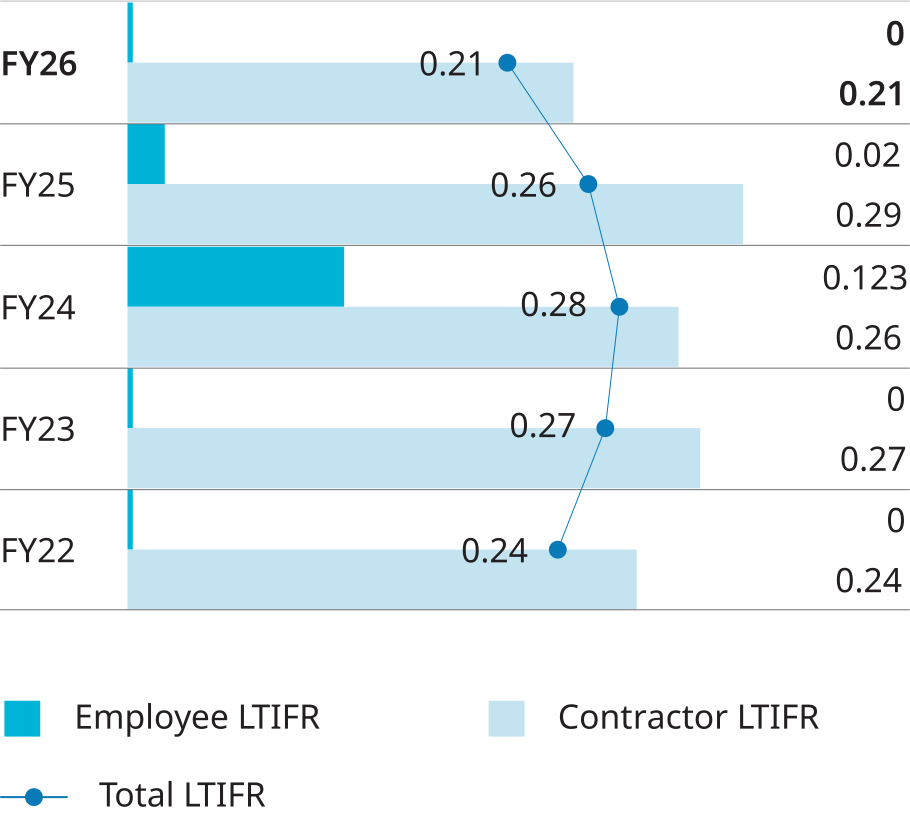
0.21
LTIFR
ISO 45001:2018 Certification
All ports certified for Occupational Health and Safety Management System
Awards
International Safety Award for Adani Vizhinjam Port Private Limited (AVPPL) from British Safety Council;
Kalinga Safety Excellence Award - Gold Category for Dhamra Port Company Ltd
27,35,681
Safety Training Man-hours
OHS Policy and STRAP Objectives
Implementation of Occupational Health and Safety Policy and Strategic Response Action Plan objectives
Safety Task Forces
Active functioning of 6 Safety Task Forces
OHS Governance
Establishment of robust Occupational Health and Safety governance
SDG Alignment

GRI Linkage:
Capitals Impacted
 Human Capital
 Social and Relationship Capital
Material Topics Impacted

The safety and well-being of our people is pivotal to our strategic approach, and we remain committed to preventing work-related illnesses and injuries.
Securing the Workplace with OHS Policy
Our Occupational Health and Safety (OHS) proposition is guided by a well-articulated policy. It is rooted in the belief that all workplace fatalities, severe injuries and occupational illnesses are preventable. We have aligned our workplace safety commitment to the highest global standards of employee health, safety and well-being. Through elaborate materiality assessments, we have identified the key metrics of OHS.
Major Elements of Our OHS Policy
- Identifying and mitigating potential risks through stringent compliance with global best practices
- Focussing on recognising, effectively managing, and, where possible, completely eliminating risks through meticulous and critical control monitoring, with the objective of preventing all incidents and injuries
- Assessing and effectively reducing our business impacts on health and safety
- Engaging closely with key stakeholders, including employees, contractors, shareholders, and the community, to ensure compliance with national regulations and adherence to Good International Industrial Practices (GIIPs)
- Following a well-crafted rewards and recognition system to promote our OHS systems, in line with our commitment to total safety across our operations
Our OHS Policy is available on our website at https://www.adaniports.com/investors/corporate-governance
The governance of our safety systems is guided by a structured Consequence Management Policy, which is ratified by the APSEZ Board. The policy, designed to address both the positive and negative outcomes of our initiatives, becomes applicable the moment a careless decision-making is identified by the Incident Investigation Committee to be the main cause of an incident. Under the terms of the policy, such incidents are met with serious consequences for contractors found to deviate from our stringent safety standards. The action may range from temporary suspension to permanent blacklisting of the contractor.
The Adani Safety Management System comprises:
- Group OHS Policy
- Business OHS Policy
- Site OHS Policy
- Safety Governance Process
- Felt Leadership, Standard Operating Procedures (SOPs)
- RACI (Responsibility, Accountability, Consulted and Informed)
- Goals & Objectives and 10 Life Saving Safety Rules
- Roles and Responsibilities of Employees, Associates and Vendors
- Use of Suraksha-Samwaad as a behaviour correction technique
Structured OHS Governance Framework
At APSEZ, we have put in place an exhaustive and structured Occupational Health and Safety (OHS) governance framework, encompassing all our manufacturing locations and the entire workforce. We are continually striving to strengthen the framework to make it more effective and impactful.
Key Enablers of our OHS Management System
We have adopted a rigorous and structured approach to OHS management, aimed at proactively identifying hazards, mitigating risks, and promoting a culture of safety across all our operations.
Suraksha Samwaad
Suraksha Samwaad (Safety Interaction) is a corrective behaviour system focussed on fostering a culture of safety. Analysis of safety observations is a key facet of the system, enabling the timely initiation of targeted safety programmes. Annual audits and certifications like ISO 45001 are conducted by third-party agencies in line with the company’s commitment to complying stringently with the highest safety standards.
Strategic Programmes to Augment OHS Excellence
We have undertaken a multitude of strategic initiatives aimed at augmenting excellence in terms of the occupational health and safety of our people.
Roadmap for Enhanced Workplace Safety
Strategic Dimensions for Enhancing Safety at APSEZ: The 5C Model
With safety embedded in our operations as a core value, it is our continuous endeavour to strengthen the safety culture and performance across the organisation. The 5C Model is an elaborate strategic framework to propel our safety enhancement efforts. The model is pillared around five key elements of the safety strategy, namely Commitment, Capability, Conformance, Communication, and Culture.
This model strategically blends theoretical understanding with practical applications, and improves the safety environment through comprehensive discussions, case studies, and interactive exercises. It ensures sustained compliance, minimisation of incidents, and promotion of a culture of continual learning with respect to safety.
At APSEZ, we are committed to aligning our OHS structure with internationally benchmarked safety standards by following a process of continual engagement and assessment.
2026 Goals – Robust OHS Governance Framework
We have set ambitious OHS targets for 2026, in line with our commitment to enhancing the organisation’s safety culture. A robust OHS governance framework is helping steer our journey towards the realisation of these goals.
Nurturing a Culture of Safety
Our OHS governance structure is designed to integrate safety into our business operations across the organisation. Built around the philosophy of ensuring the well-being and safety of our employees and partners, it steers our commitment to achieving zero harm and nurturing a culture of safety for all stakeholders. We have obtained the ISO 45001:2018 certification for our Safety Management System, strengthening our compliance to the highest international standards and emphasising our commitment to workplace health and safety.
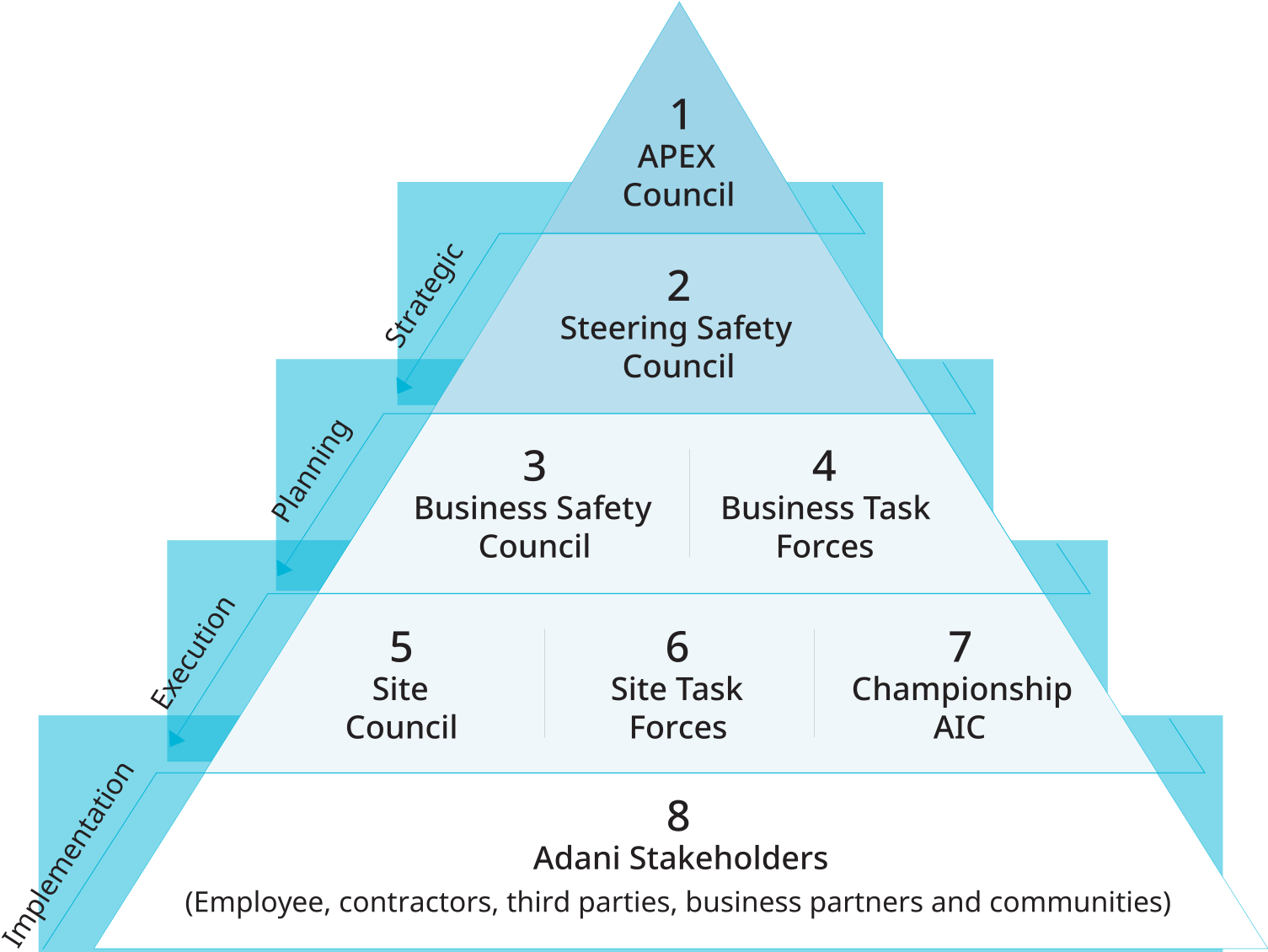
Multi-layered Governance Strategy
Stringent safety oversight and implementation of our OHS governance strategy is ensured through a multi-layered approach, comprising:
Safety Steering Council
Operates at the corporate level; formulates overall safety policies and strategic directions
Business Safety Council
Drives the implementation of the corporate safety goals; monitors the execution of safety programmes across business units
Site Safety Councils
Work at the ground level; ensure effective execution of safety practices at the individual operational sites
Safety Task Forces
Address distinct safety challenges across the organisation; drive targeted approach to risk mitigation
| Level | Management | Non-Management | Frequency of Meetings |
|---|---|---|---|
| Site Level | CEO and HODs | Departmental heads and task forces | Monthly |
| Business Level | Business unit head, CEOs and safety heads | Taskforce heads and safety heads | Monthly |
| Corporate Level | Committee chairman, BU heads and invitees | Taskforce heads and safety heads | Once in two months |
| Board Level | BU heads and Chairman | Special invitees | Quarterly |
A JOURNEY IN ACTION FROM SAFETY 1.0 TO SAFETY 2.0
Aligning Leadership & Setting the Culture
- 1.Formation of Group Safety Function
- 2.Safety Governance Structure – Functioning Taskforces of Group, BUs & Sites
- 3.Leadership Engagement – 1-on-1 CEO Forum, Awakening Program
- 4.STRAP Annual Safety Improvement Plan (Group & BU STRAP)
Accountability, Operations & Projects
- 5.Group OH&S Policy
- 6.Revised ADANI Life Saving Safety Rules (LSSR)
- 7.Consequence Management Policy (Enforced)
- 8.Visible Felt Leadership (10 Commandments)
- 9.Contractor Safety Management Process (PQ Institutionalized)
- 10.Process Safety Management (Applied)
- 11.Project Safety Management
- 12.Safety Interaction & Safety Risk Field Audit Process (Continued)
- 13.Design Safety Manual (Design Changes Initiated)
- 14.Incident Management & Investigation System (Gained Momentum through Focussed Approach)
- 15.Single-Page Safety Guidelines 13 nos
- 16.Safety Standards (upgraded to International Standards)
Mobilizing People
- 17.Safety Assurance & Due-Diligence (Group safety Audits, First Party Assessment & Project Safety Assurance)
- 18.ADANI Safety Management System (Continued)
- 19.Capability Building – Contractor + Employees (Saksham, Udgam, Camaigns, Standard TtT Programs)
- 20.Digital Transformation (SAFEX 2.0 with 20 Apps)
- 21.Safety Technological Interventions (Used Cases Consolidated)
- 22.Reporting Culture (Daily Incident Reporting, LFI,Repeat cases)
Managing Performance
- 23.MIS+Planned Scorecard Change
- 24.Onboarding New & Emerging Bus (Green PVC, KCTL,Smart Meters etc.)
- 25.Road Safety Campaign Adani ProTECHt
Community Safety
- 26.TSC & TSC+ Formation
- 27.Creation of Safe Model Site
Employee
- 28.Tier I – Employees, Contractors, Suppliers & Distributors, Consultants, One time Hires
- 29.Tier II – JV Partners, Customers & Technology Providers,Annual Maintenance Contract (fixed/Variable Manpower)
- 30.Tier III – Local Community & Members of Public
Powering Ahead Towards Achieving 2026 Safety and Health Goals
We are actively pursuing our 2026 goals for occupational and process safety as well as health protection, and undertake focussed measures to propel this journey. Our efforts are centred around continual monitoring and assessment to identify gaps, followed by initiatives to improve our safety performance. We have undertaken various initiatives to reduce health and safety incidents at APSEZ, and to promote a culture of safety across the organisation.
| Initiatives | Benefits | Status |
|---|---|---|
| Participation of all BU senior leaders in safety engagement with employees and contractors, as part of the Personal Safety Action Plan (PSAP) - over 2 person-days per employee per year | BU safety KRAs for APSEZ leadership team & employees | As per PSAP, continuous engagement of the leadership team and employees is ensured through Safety Interactions, and is measured as 2 interactions for CEO’s and site heads, 8 for site safety leads and HOD, with a frequency of 4 interactions a month. |
| 4-hour Contractor Induction pack programme, coupled with spread of safety awareness, amongst contractors through Saksham programme | Capacity & capacity building | 55,162 participants trained under the “Saksham” programme at APSEZ |
| Reward and recognition policy covering the best TF (Task Force) member, OHS trainer, staff contractor; SRFA (Safety Risk Field Audit) team and department achieved a high score in SPIS (Safety Performance Indicator Score) and effective implementation of CMP (Critical Management Plan) | Excel team engagement in OHS activities | Reward and recognition programme, wherein 10% employees are rewarded in FY 2025-26 |
| Quality enhancements of SRFA audits to eliminate maximum 4s and 5s through SRFA; Reinforcement of AICs and line function, enabling a competitive environment (target electrical safety standards) | Safe workplace | Sustained monitoring undertaken to track the quality of safety at the BU level through SFRA audits; Achieved excellence in our targeted electrical safety standards to reduce observation relating to electricity safety |
| Study conducted of structural stability/integrity, harnessing the maximum benefit of VSR (vulnerable safety risk) audits tool to minimise vulnerabilities | VSR elimination | Ensuring compliance and operational excellence through VSR audits, designed to validate the systems against regulatory standards |
| Samwaad: Achieve minimum 4UA/hr (Unsafe Acts/hour) and 100% assignment for all port employees via the monthly Samwaad assessment through KPI and 90% actual achievement | Engaging workmen in OHS activities | Achieved more the 2 UA/hr for FY 2025-26 |
| Horizontal deployment of incidents Comprehensive Corrective and Preventive Actions (CAPA) and Safety Risk Field Audits (SRFA), based on a monthly trend for the business and 100% monitoring compliance | Proactive strategy for the prevention of recurrence at other sites | CAPA plan developed and executed across all sites for any potential incidents |
| Taskforce KPI scorecard launched for 6 task forces, boosting meaningful involvement of members through tracking, micro tasking and measuring: Review of SSC and BSSC meetings | Line management engagement | Monthly SSC and BSSC meetings held with management to review ongoing process enhancement measures and implement new, forward-looking strategies |
Impactful Initiatives to Boost Safety and Productivity
Our Contractor Incubation Series is structured to promote experience-based learnings. The initiatives under this series are mainly targeted at owners, managers, supervisors, and workers.
Saksham
This key initiative is focussed on promoting safety skills among the workers of the contractors involved in the execution of most of our projects. Saksham is deployed by site heads, line managers and training coordinators. A Trainer’s Handbook is also made available to ensure uniform training and live demonstrations. All contractors are onboarded on to Saksham before the start of any job and non-compliance is taken seriously, leading to disciplinary action as per Adani’s Consequence Management Policy.
Saksham involves nurturing “Experience-based Learnings” through 3D animated modules, powered by trainers. It further entails training of coordinators and the OH&S team in the maintenance of records and feedback forms, which are evaluated by the Business Units (BUs) to strengthen the training process.
Both Saksham and the Trainer’s Handbook kits can easily be accessed and downloaded from the Group Safety Portal and Safety e-LMS Platform.
Samwaad
We have deployed Samwaad as a platform to drive enhanced participation, engagement and knowledge sharing by workers with respect to health and safety. It involves the use of the ‘Adani SafeX’ system, which facilitates employees in reporting any safety concerns or incidents within 40 seconds via their smartphones. This enables prompt handling of the concern/incident. Anonymous reporting is provided as an option in this system.
Ensuring Process Safety
All expansions and projects at APSEZ are undertaken through a clearly defined process, spanning:
- QRA (Quantitative Risk Assessment)
- HAZID (Hazard Identification)
- HAZOP (Hazard and Operability Study)
- PSM (Process Safety Management)
- PSSR (Pre-Startup Safety Review)
Additionally, we apply Hazard Identification and Risk Assessment (HIRA) procedures to all operational activities, and have undertaken the exercise for both new and existing processes through a specialised team consisting of process safety engineers. We have also hired independent process safety consultants for making gap assessments, identifying improvement areas, and implementing risk mitigation strategies with the aim to further enhance the process safety at APSEZ.
Continued Monitoring
Round-the-clock surveillance and real-time alerts through CCTV systems, equipped with advanced technology, deployed at all hazardous locations
Safety Awareness
Continuous audio safety announcements in local languages and simulation training modules provided at entry points, to spread awareness on safety issues among employees and visitors
Safety Alerts and CAPAs
Swift redressal of any safety incidents by issuing prompt alerts through CAPA implementation
Monthly Reward & Recognition Programme
Successfully recognised 10% employees for their contributions to our safety culture.
Awards
Gold colour Helmet will be presented with Safety Star Logo.
Gifts are like Computer/Tab, Bicycle, Refrigerator, Washing Machine, LED TV etc.

Robust Systems for Employee & Contractor Well-Being
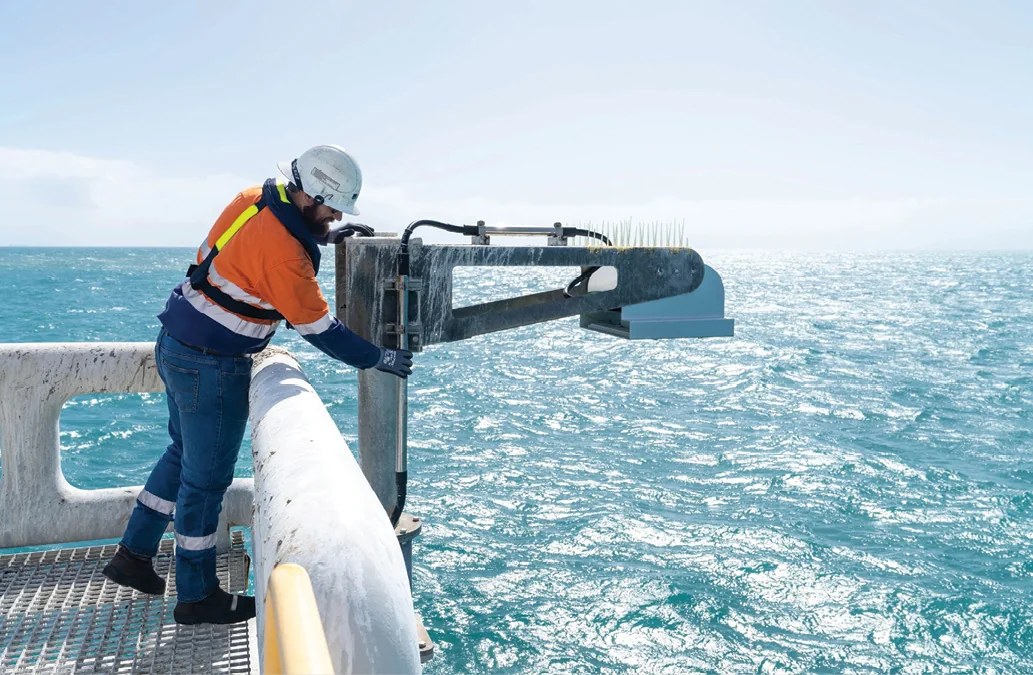
We have in place a structured system for ensuring the well-being of our employees and contractors. This includes:
- Well-equipped emergency healthcare facilities at all sites
- Conduct of comprehensive pre-employment and periodic medical assessments for all personnel
- Safe and secure maintenance of all employee health-related data and records
- Dedicated doctor for monitoring all employee occupational and individual health initiatives
Identification of work-related hazards is done through a clearly defined process, which covers:
- Safety handholding and assessment by a third party
- Monthly self-assessment by a task force team
- Vulnerability Safety Risk Assessment by a site task force team (TF2 - Contractor Safety Management) to identify and ensure compliance with SOP updates and refinements
- Regular Safety Risk Field Audit (SRFA) at the site level by a task force team (TF2 Contractor Safety Management)
Management-Workers Health & Safety Committees
Given the importance we place on ensuring the health and safety of our people, we have established joint management-worker health and safety committees to oversee the implementation systems and processes.
Fostering Safety Training Culture
At APSEZ, we have embedded safety training into the organisational ethos as part of our commitment towards ensuring a safe and secure workplace for every individual associated with the organisation. Safety training is provided across hierarchical levels – extending from the top management to employees, contractors, and partners.
Safe Handling of Essential Machinery
We have established dedicated training centres to provide practical experience to employees in safe handling of essential machinery. The centres are equipped with advanced simulators, and help in preparing and skilling equipment operators in safe handling before kickstarting the machine’s actual operation.
On-site Audio-Visual Training
Our 3D animated videos help in educating the employees by demonstrating past on-premise safety incidents. This helps workers anticipate and mitigate similar future incidents, and boosts their understanding of potential hazards while providing them with clear guidance on preventive measures.
Oil Spill Contingency Plan
We have in place a comprehensive Oil Spill Contingency Plan to handle Tier 1 responses for up to 700 tonnes of oil, deemed to be the worst-case scenario. The plan is aligned with the National Oil Spill Disaster Contingency Plan (NOS-DCP). It involves quick mobilisation of essential equipment and trained personnel to tackle any oil spill emergency. The plan ensures our preparedness to efficiently handle oil spill emergencies, thus protecting our operations and the environment.
Key Elements
Robust Management Structure
1Shoreline Sensitivity Identification
2Phased Equipment Procurement
3Safe Storage and Disposal
4Effective Response Strategy
5Fire Safety Measures
6Periodic Training and Drills
7Regular Simulation Exercises
8Transparent Communication
9Off-site mock drill on
CBRN emergency scenario
During the year, Adani Hazira Port Limited (AHPL) conducted a joint mock drill to enhance disaster preparedness, focussing on a Chemical, Biological, Radiological, and Nuclear (CBRN) emergency. The exercise demonstrated the critical role of joint efforts in strengthening disaster preparedness and ensuring readiness for unforeseen challenges.
Summary
The exercise, which involved stakeholders like the 6th BN National Disaster Response Force (NDRF) and District Crisis Group-Surat, simulated a leakage of Acrylonitrile chemical from a tank, leading to a fire and multiple injuries.
Objective
The drill highlighted the importance of collaboration and communication among stakeholders.
Simulation Methodology
- A security guard first observed the incident and informed the Marine Emergency Control Centre, activating the emergency response
- Firefighting and rescue teams arrived promptly, and the situation was escalated to the District Crisis Group and then to the NDRF
- The NDRF team successfully rescued the injured persons and controlled the situation
Outcomes
- Areas for improvement identified
- Emphasis on better coordination and communication during emergencies
27,35,681
Training manhours completed in FY 2025-26

Reinforcing the OHS Framework
We are committed to strengthening our OHS strategy and framework, and continue to invest in targeted initiatives to reinforce our capabilities in tackling the various health and safety challenges facing the company’s operations. Our efforts in this direction include:
- Continuous expansion to cover logistics, warehouse, and road transportation safety, with special provisions for training of employees on the issues of road safety, defensive driving, and electrical safety; training involves driver-centric programmes, speed radar guns, and advanced CCTV monitoring with video analytics
- Comprehensive evaluation of infrastructure safety to identify the improvement areas, and take necessary action for augmenting safety
- Integration of OHS into the procurement process through online portals like Ariba, ensuring suppliers’ compliance to high standards of occupational health and safety, labour laws, and ethical practices; Contractor Safety Management (CSM) initiative is in place, encompassing the elements of:
- Strategic planning
- Safety meetings
- Online CSM portal
- Toolbox talks
- Site surveillance
- Empowerment and authorisation of the teams to immediately stop operations in case an unsafe practice comes to light
- Strategic deployment of audio-visual tools across the sites to guide the workers on safety
- We have in place a Grievance Management System to ensure that workers can freely form and join trade unions, without fear of intimidation or reprisal, in accordance with legal provisions. The system also helps address and resolve the concerns of workers in this regard. This is in line with our Human Rights Guidelines
Integrating Automation in OHS Framework
In a move towards enhancement of workplace safety, we have deployed multiple automation technologies, integrating them into our OHS framework to drive predictive insights, real-time monitoring, and proactive risk mitigation. This helps in minimisation of hazards and prevention of incidents at APSEZ.
Some of the prominent automation technologies include:
This offers our business units a secure and unified safety learning framework, aiding the transition from classroom-based programmes to self-learning management. Launched in line with our vision for digitalisation and Industry 4.0, this Safety Learning Management System has been developed using the Adani MS SharePoint.
The system offers 24/7 access to knowledge, and includes key features like self-registration, automated certification management, and personalised dashboards. Its integration into the OHSMS Digital Transformation minimises the effort involved in creating training MIS and analytics. It supports internal governance, reviews, and ESG & sustainability disclosures using Power BI tools for management dashboards.
Key Takeaways
Udgam operates on a decentralised model with autonomous administration at Group, BU and Site levels. This ensures flexibility and consistency in safety standards. We have progressively added several key features to the platform, including a library of safety training resources, including modules on Defensive Driving and Electrical Safety.
Outcomes
- Strengthens our commitment to a safe workplace environment
- Drives continuous improvement of safety practices as a result of the insights secured through advanced analytics into training progress and compliance
The installation of Intelligent Vehicle Monitoring Systems (IVMS) in all Adani-owned trucks (100% internal vehicles) is helping strengthen efficiency and safety at APSEZ. It is contributing to the reduction of accident risks, enhancement of driver safety, and augmentation of efficiency in vehicle maintenance.
With these GPS-enabled devices installed in our fleet, we successfully track vehicle locations in real-time. Besides ensuring timely deliveries and optimal routes, this helps in maintaining high standards in our transport and freight operations.
Key Takeaways
The transmission of data to our base from the IVMS enables us to monitor driver behaviour, effectively supporting compliance with safety regulations. We use CANBUS adaptors for seamless, tamper-proof installations, while portable IVMS units enable easy transfer between vehicles.
Outcomes
Prevention of Accidents
IVMS helps in monitoring vehicle parameters like speed, location, and braking patterns, enabling the identification of erratic behaviour to trigger emergency alerts and timely response.
Monitoring of Driver Conduct
Enables recording of data on speed, engine RPM, and other parameters, facilitating improvement of the driver’s behaviour under Health, Safety, and Environment (HSE) policies.
Undertaking Preventive Maintenance
By sharing real-time vehicle diagnostics, it helps identify potential issues before they become serious problems.
Ensuring Compliance and Reporting
The detailed reports generated on driver behaviour and vehicle performance ensure compliance with safety regulations and improving fleet management.
Rail
Initiatives in this regard include:
- Integration of siren (auto/manual) with entry/exit gate for the rake movement or placement
- Installation of height barrier at various crossing points across Rail tracks to prevent inadvertent contact with OHE (Overhead Equipment) line
- Addition of lockable devices to set points to prevent wagon derailing due to improper setting of shunting points
- Placement of safety signage across the track to prevent cross during rake movement
Safety and operational efficiency have been strengthened across our ports through the strategic installation of advanced 2D sensor technology on gantry cranes and spill plates. The sensors help in the detection of obstacles and creation of safety zones.
Key Takeaways
The sensors automatically stop or slow down the machinery in the event of detection of an object in the safety zones. This helps in ensuring continual monitoring and minimisation of accident risk in the busy port environment.
Outcomes
- Boosts safety while reducing operational downtime
- Enables cranes to operate at optimal speeds
Sensor Installation at Adani Gangavaram Port Ltd. (AGPL)
Safety and efficiency has been strengthened at Adani Gangavaram Port Ltd. (AGPL) with the installation of SUL-2, SUL-3 and SUL-4 sensors on gantry cranes and spill plates. Besides detecting obstacles and creating safety zones, the sensors automatically stop or slow down machinery in the event of detection of an object. This reduces the risk of accidents, preventing collisions in vessel operations, while also minimising damage and repair costs. The reduction in downtime helps improve operational efficiency, enabling cranes to operate at optimal speeds. Real-time data and alerts help in better equipment management.
The installation of 24 Cantilever Rail Mounted Gantry (CRMG) cranes has significantly enhanced capacity at the Vizhinjam Port since July 2024. Equipped with advanced automation systems like intelligent lubrication, vibration monitoring, and automatic fire extinguishing, the cranes have helped streamline container handling and strengthened competitiveness. Efficiency and safety have improved as a result of their deployment.
Key Takeaways
The automation reduces manual lifting, minimising the risk of injury. Safe operation is ensured through extensive training, and real-time monitoring helps in swift hazard detection and response.
Outcomes
- Need for field operators eliminated by the fully automated terminal, reducing catastrophic incidents in a big way and helping achieve 99% reduction in human injuries
- Vizhinjam Port’s commitment to operational efficiency and safety strengthened, positioning it as a major player in global logistics
Safety around the Rubber Tyred Gantry (RTG) tracks has been significantly enhanced with the implementation of an AI Technology-Based Human Detection System. The system is designed to detect humans within a defined zone and stop the gantry movement when necessary. Before the installation of six IP-based cameras on the sides, front, and rear of the RTG crane, operators were facing blind spots in the bus bar area due to container stacks. This made it difficult for them to see during crane movements. The cameras, which have been successfully installed on the RTG cranes at Mundra Port, now provide exhaustive coverage of the danger zone, eliminating the blind spots.
Key Takeaways
The system transmits a stop signal to the RTG crane control system on detection of a human presence. This ensures prompt action.
Outcomes
- Leading to notable improvement in human safety
- Underlines our commitment to promoting a safer work environment through the use of advanced technology
1,69,901
Contractors participated in awareness sessions in FY 2025-26
Major Safety Initiatives at APSEZ
Our safety initiatives are centred around the areas of road safety, personal safety, visibility improvement, training and awareness, infrastructure compliance, emergency preparedness, and medical emergency response.
Some of the key initiatives launched at APSEZ include:
- Segregated lanes for different types of road users
- Speed breakers and strict enforcement of speed limits
- Mandatory use of crash helmets and seat belts
- Improvement in visibility at sharp turns and blind zones
- Comprehensive training for drivers and port users
- Infrastructure development aligned with traffic rules
- Protocols for rescue operations and emergency medical assistance
- Conduct of technical studies on winds and weather conditions
Emergency Preparedness and Response Plan
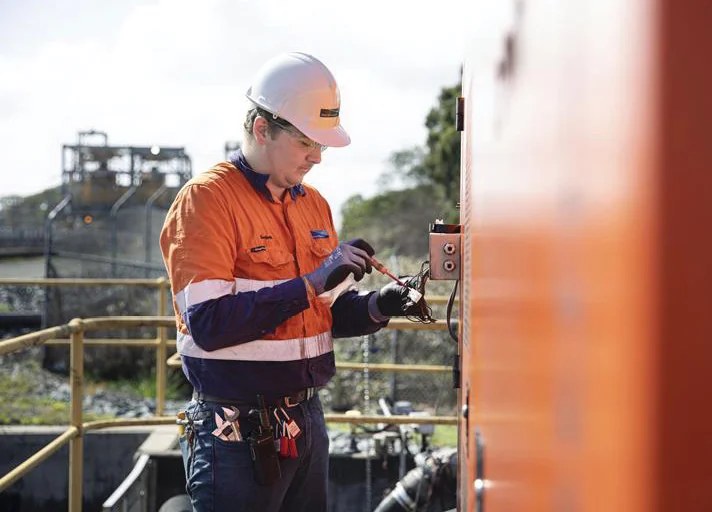
A comprehensive Emergency Preparedness & Response Plan (EP&RP) is in place at APSEZ to ensure preventive and prompt responsive safety actions. It covers all phases and areas of port site operations, and details the response processes, escalation hierarchies and control measures for managing extreme disaster scenarios. Regular simulation exercises are undertaken with stakeholders to ensure emergency-readiness. The plan also encompasses detailed fire safety measures, including firefighting equipment, early detection sensors, and regular audits. These are supported by training programmes and hazard awareness initiatives.
Unwavering Emphasis on Security
We have established a robust security framework for mitigation of all types of potential risks. Geopolitical risk assessments are taken into account to protect the workforce and operations. The framework is multi-layered and covers deployment of drone technology as well as routine patrolling for the protection of the facility. We collaborate with the Indian Coast Guard to ensure maritime security. Along with the Indian Navy, Coast Guard and Marine Police, we conduct periodic exercises, such as Sagar Kawach, to assess our response capabilities and drive effective crisis coordination.
FY 2025-26 OHS Performance at APSEZ
Reporting & Analysis of Safety Concerns
The Adani SafeX platform facilitated the reporting and analysis of 2,31,471 safety concerns in FY 2025-26, thereby emphasising the importance of data-driving safety insights to enable enhancement of safety protocols. It underlined the need to follow a proactive strategy for the management of health and safety.
Identifying Root Causes to Prevent Incident Recurrence
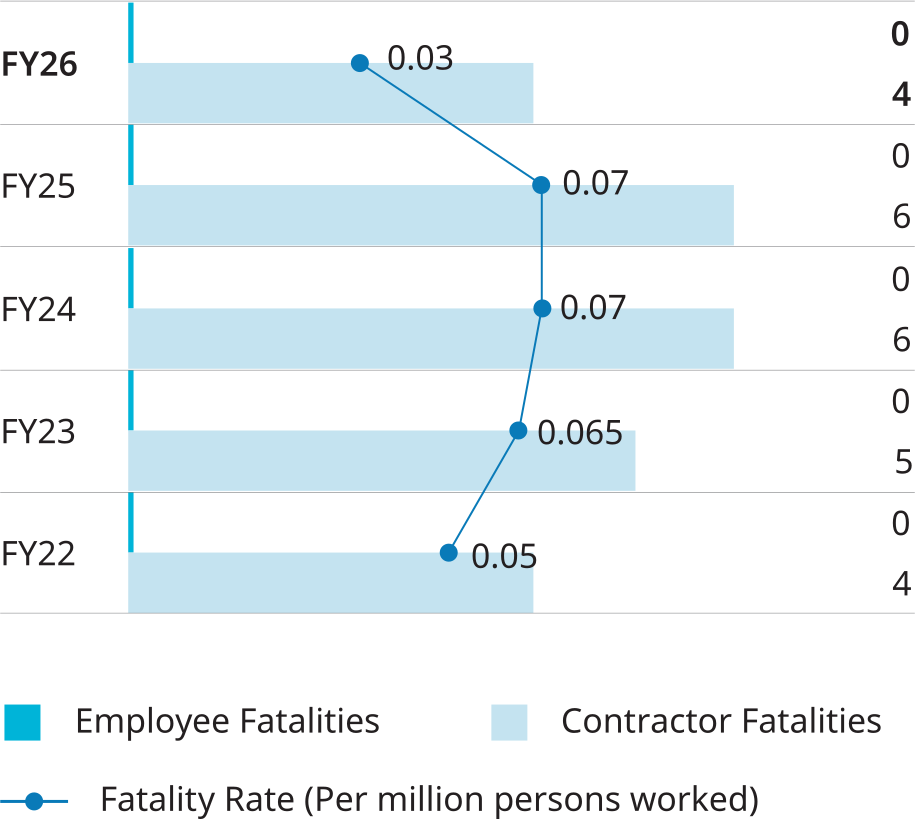
We initiated extensive investigation to identify the root causes behind the incidents that led to the loss of 4 contractors during the fiscal years despite the meticulous safety measures in place. The investigation was also aimed at formulating strategies to prevent recurrence of such incidents. The learnings from the incidents were shared with the workforce, underlining the need for stringent compliance with all the safety standards.
| Safety Incident Description | Actions Taken to Strengthen Safety |
|---|---|
A contractual employee of the contractor was found lying unconscious on the roadway near the MPB4 jetty turn. Preliminary assessment indicates that the incident is suspected to have resulted from a vehicular collision, possibly due to poor visibility or driver distraction. The injured employee was immediately transported to Civil Hospital, Surat, where he was declared brought dead by the attending medical officer. |
|
On August 17 at approximately 06:30 PM, a fatal incident occurred at AMCT (CT-2) Jetty, Berth No. 3. A supervisor employed by contractor was attempting to cross the designated e-ITV lane when he was struck by e-ITV 051. The e-ITV, which was queued for container discharge operations, moved forward and ran over the supervisor. The injured employee was immediately shifted to Adani Hospital, Mundra, where the attending medical authorities declared him dead. |
|
A truck carrying fly-ash jumbo bags was stationed at the tarpaulin stand for cover removal prior to unloading at the K1 godown. During the absence of designated personnel due to a lunch break, the driver attempted to remove the tarpaulin despite a warning from a nearby driver. While untying the ropes after climbing onto the truck, the driver slipped and fell, striking the back of the head against a foundation structure. Immediate first aid was provided, and the injured person was shifted to the Occupational Health Center (OHC) and later referred to Nellore Government Hospital, where the person was declared deceased. |
|
On October 15, 2025, at approximately 03:37 AM, the concerned person arrived at the EXIM-2 yard, Mundra Port, to collect a laden 40-ft container from 5B row. The container was loaded onto his trailer with coordination from the Reach Stacker (RST) at around 05:10 AM, after which the RST moved to another operation. At approximately 05:30 AM, the concerned person was found lying injured near the 5B row by another transporter’s driver. Despite immediate medical assistance and transfer to the Common Health Center (CHC), Mundra, he was declared dead on arrival. |
|
Total Person-Hours Worked in FY 2025-26
66,05,430 hours
Employees
12,95,20,105 hours
Contractors
Fatalities Due to Work-Related Injury
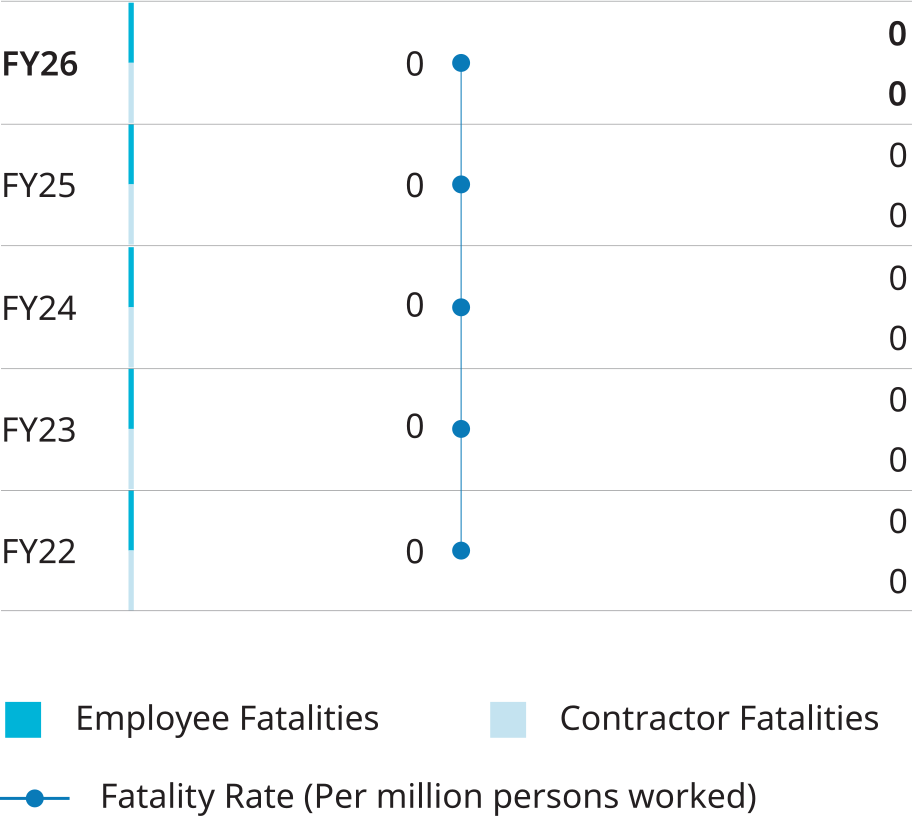
Fatalities Due to Work-Related Ill-Health
Lost Time Injury (LTI) Details
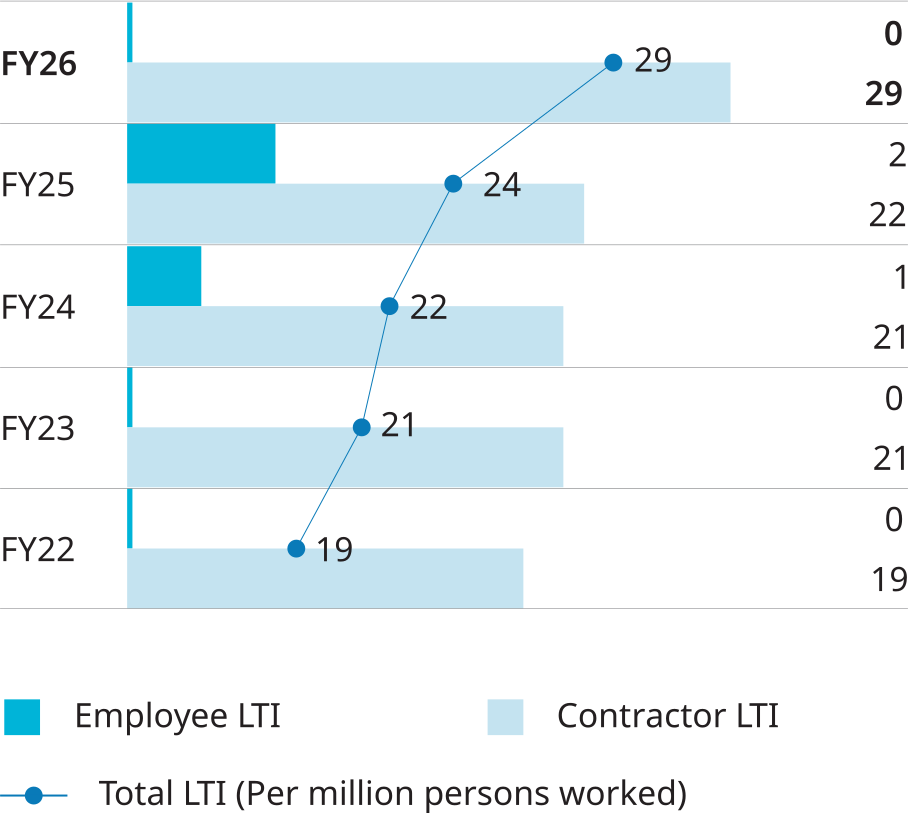
Lost Time Injury Frequency Rate (LTIFR) Details