Climate change report
Aligned with the Recommendations of the Taskforce on Climate-Related Financial Disclosures

Ports and logistics constitute the backbone of global trade and economic progress, enabling the seamless movement of goods, energy, raw materials, and essential commodities that power industries, cities, and communities. As gateways to global supply chains, ports are indispensable to sustainable economic development, making it vital to ensure their effective management across the key operational and sustainability metrics. Adani Ports and Special Economic Zone Ltd. (APSEZ) – India’s largest integrated transport utility, plays a critical role in facilitating national and international trade. Yet, the traditional port ecosystem – dependent on diesel-powered equipment, conventional cargo-handling systems, and fossil fuel-based auxiliary operations – has historically resulted in significant emissions, catalysing the need for sustainable upgradation.
While modern port digitalisation and mechanisation offer efficiency gains, widespread adoption of greener technologies remains uneven across the industry. Challenges such as the availability of green power, infrastructural readiness for electrification, and constraints in deploying alternative fuels on a large scale continue to impact the pace of decarbonisation.
Intensive global efforts to address these challenges are continuing at an accelerated pace. Port operators around the world are working resiliently toward reducing their climate impact by transforming their operations, supply chains, and energy systems. The pathways vary by geography and resource availability – ranging from electrified port equipment and shore power systems to renewable energy integration and green hydrogen pilots. For a country like India, where trade volumes are growing rapidly and supply chains continue to expand, ensuring a just and economically viable transition is essential.
At APSEZ, we are strategically navigating this transformation by exploring scalable, future-ready solutions that align with regional resource conditions, support ecosystem partners, and strengthen long-term business resilience. We believe that with the evolution of the logistics sector, sustainable port operations will be central to enabling cleaner trade corridors, fostering resilient infrastructure, and anchoring India’s low carbon growth trajectory.

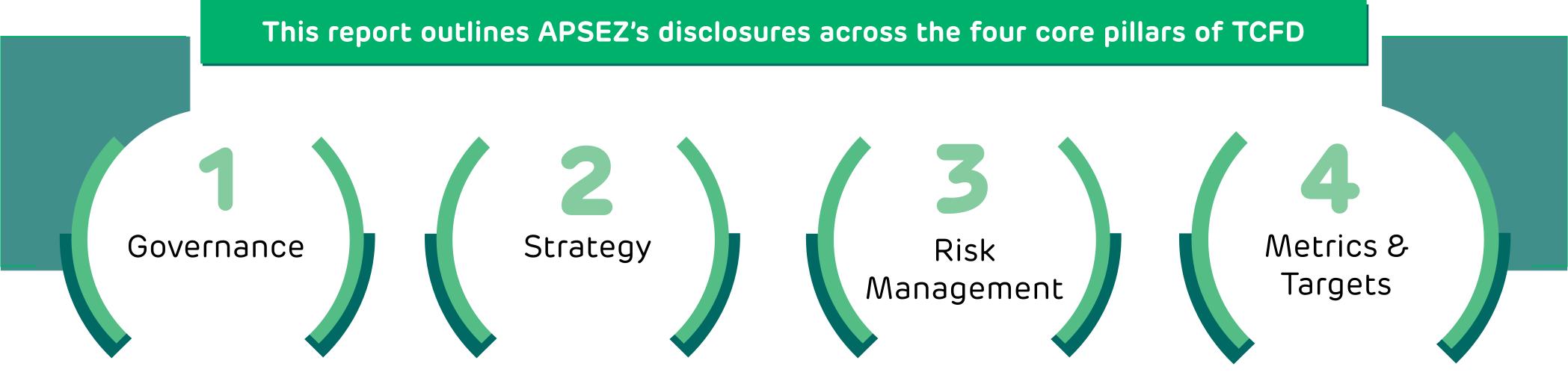
As a responsible corporate citizen, APSEZ is an early advocate of climate-aligned disclosures and transparent ESG governance. In line with global best practices, the company adopted the recommendations of the Task Force on Climate-related Financial Disclosures (TCFD) well ahead, and has progressively strengthened its climate risk management processes over the years.
As part of our commitment to TCFD disclosures, we have undertaken comprehensive physical climate risk assessments – covering sea-level rise, storm surges, extreme weather events, flooding, and temperature-related impacts, across our major ports assets through reputed independent third-party experts. We have additionally conducted detailed transition risk assessments to evaluate potential implications of evolving climate policies, carbon pricing, regulatory shifts, global supply chain expectations, and emerging low carbon technologies. These insights have been embedded into the company’s Enterprise Risk Management (ERM) Framework to support informed, resilient, and forward-looking decision-making across our operations.