Ports
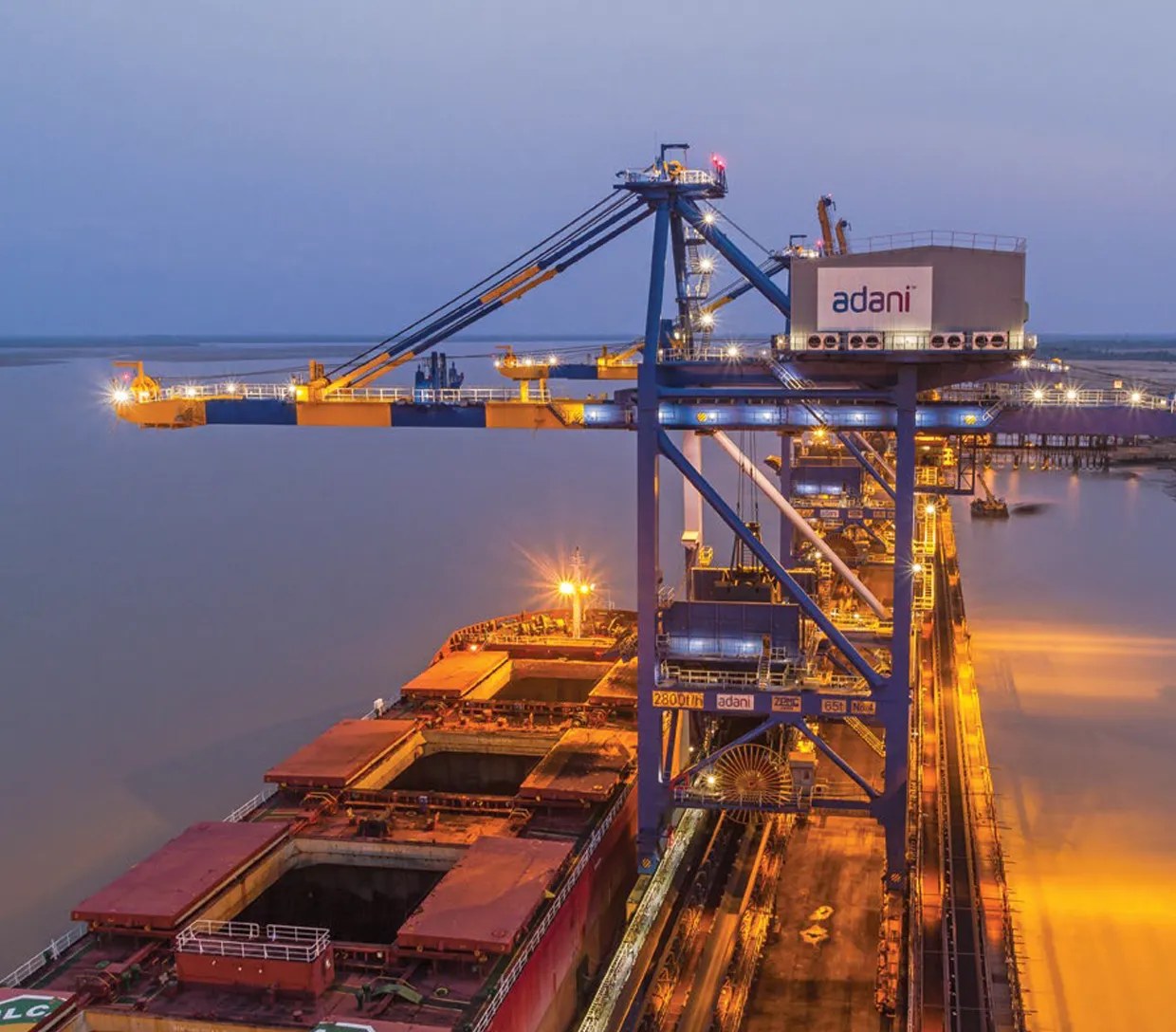
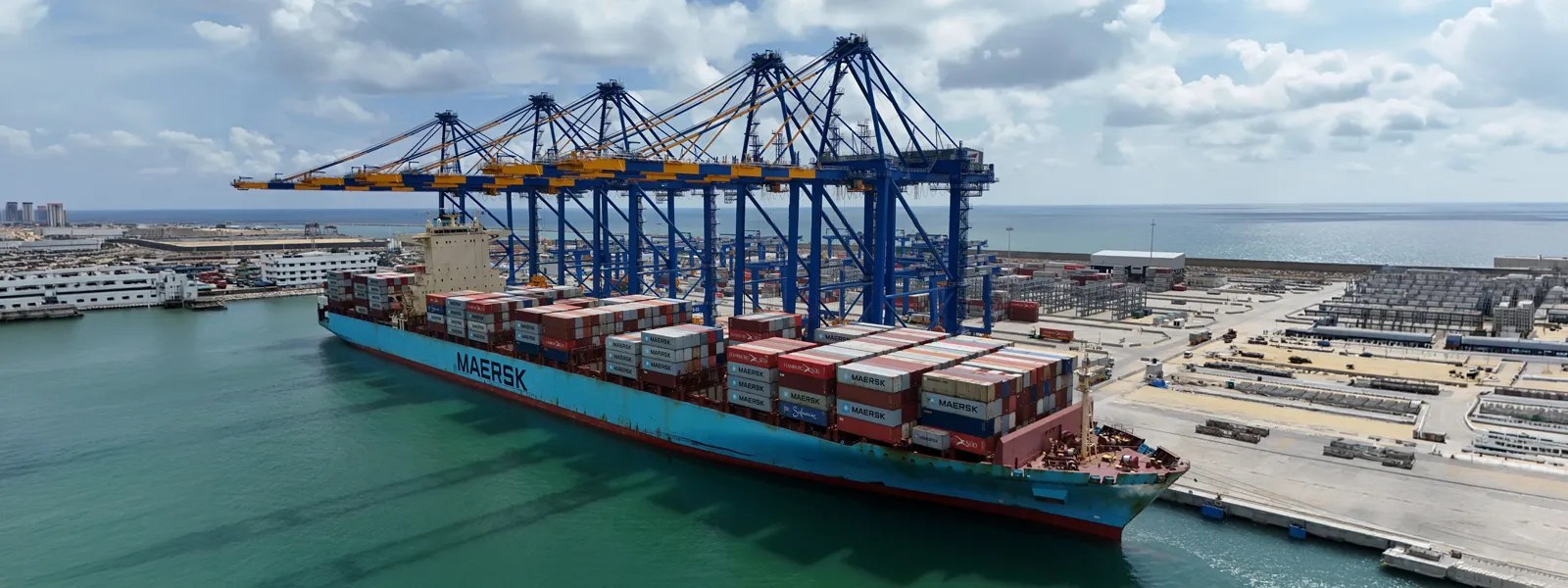
APSEZ’s ports business operates at scale in India, supported by a diversified, pan-coastal network and rising global presence. The company operates 15 strategically located ports and terminals across the west, south and east coasts of the country, with a cargo handling capacity of 653 MMT and ~27% share of India’s total port volumes. This ecosystem enables efficient handling of bulk, container and multipurpose cargo while strengthening access to key industrial and consumption clusters. The network remains on track toward a 850 MMT throughput vision by 2030.
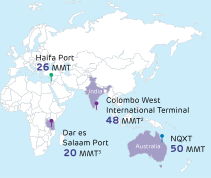
On the international front, APSEZ has built a growing global footprint that complements domestic leadership and positions it along key East–West trade lanes. The company operates four international ports across Israel, Tanzania, Sri Lanka & Australia, expanding its participation in global cargo flows and transshipment. This overseas portfolio adds geographic diversification, strengthens partnerships with global shipping lines and cargo owners, and supports APSEZ’s evolution toward a fully integrated transport platform.
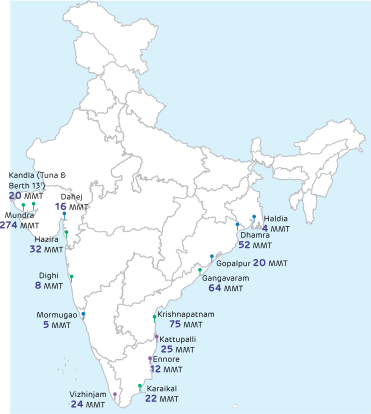
West Coast Ports - Dahej, Kandla, Mundra, Hazira, Dighi, Mormugao
South Coast Ports - Vizhinjam, Karaikal, Ennore, Kattupalli, Krishnapatnam
East Coast Ports - Gangavaram, Gopalpur, Dhamra, Haldia
1. Berth 13 – Under development
2. 24 MMT capacity already
commissioned, additional 24 MMT under construction
3. Includes 5 MMT under construction;
MMT – Million Metric Tonne
Maps not to scale
Our global network

Mundra Port
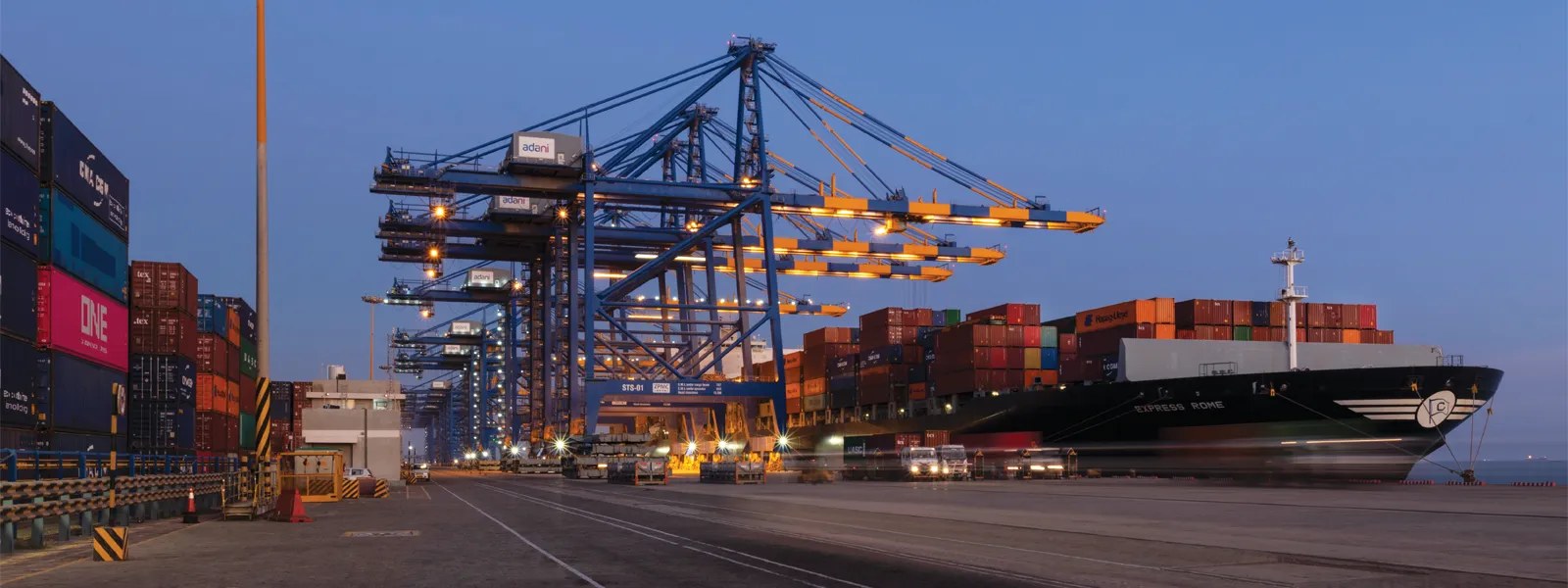
Mundra, APSEZ’s flagship port, ranks among the country’s leading maritime assets. Its location positions it as a natural gateway to the northern and north-western hinterland, enabling efficient cargo movement to key consumption centres. The port operates 29 berths (27 berths and 2 Single Point Moorings), supported by a deep draft and multi-cargo capabilities. It accommodates Capesize vessels, VLCCs and ULCCs, and handles dry and liquid cargo, automobiles and containers. The facility includes India’s largest coal import terminal supported by advanced high-speed conveyor systems and the country’s largest port-based SEZ. Connectivity remains strong through state highway 48 and national highway 8A, along with a 64-km electrified Mundra-Adipur rail line linking to the Indian railways network at Adipur for multimodal efficiency.
Key Statistics
Highlights
Mundra Port Operations
RoRo Delivers Record-Breaking Performance
RoRo operations at Mundra achieved its highest-ever throughput of 229,357 units in FY 2025-26.
On March 10, 2026, AMCT RoRo (CT2) set a historic national record by loading 6,008 vehicles on MV NOCC ADRIATIC, the highest number of vehicles ever handled on a single vessel in India.
T2 Terminal Peak Volume
T2 Terminal handled a record volume of 1.48 Mn TEUs in FY 2025-26, marking the highest annual throughput ever achieved by the terminal. This surpasses the previous peak of 1.22 Mn TEUs recorded in FY 2024-25.
Mundra Liquid Terminal Handles H₂SO₄ Vessels
Commissioned 98% Sulphuric Acid (H₂SO₄) vessel loading facilities at West Port, Berth No. 4, and successfully handled the first export vessel, MT Eva Fukuoka, marking a significant milestone in specialty chemical exports.
LPG Record Handling
Handled a record volume of 1.42 MMT, marking a substantial increase from 0.90 MMT in FY 2025.
First Indian Port and Among a Select Few Globally
Berthed a fully-laden VLCC directly at a jetty, significantly lowering transport costs
First liquid export
Vessel handled for Kutch Copper Ltd. in September 2025
Railway Highlights
Container Handling
A record high container handling by rail was achieved in FY 2025-26, with total throughput reaching 21.34 lakh TEUs (10.44 lakh Exports and 10.90 lakh Imports) handled through 18,206 rakes (9,149 Export rakes and 9,057 Import rakes).
Double Stack Volume Handling
FY 2025-26 marked a record year for double-stack rail operations, with the highest number of double-stacked trains and TEUs handled to date. A total of 10,200 double-stacked trains (4,275 Export and 5,925 Import) moved 5.45 lakh TEUs (2.49 lakh Export and 2.96 lakh Import).
SPRH Bundle–II, Line 1
Inaugurated and completed first rake operation in November 2025.
SPRH Daily Record
SPRH recorded its highest-ever annual throughput of 1,694,540 TEUs in FY 2025-26, surpassing the previous record of 1,617,436 TEUs achieved in FY 2024-25.
 Awards and
Accolades
Awards and
Accolades
Tuna Terminal
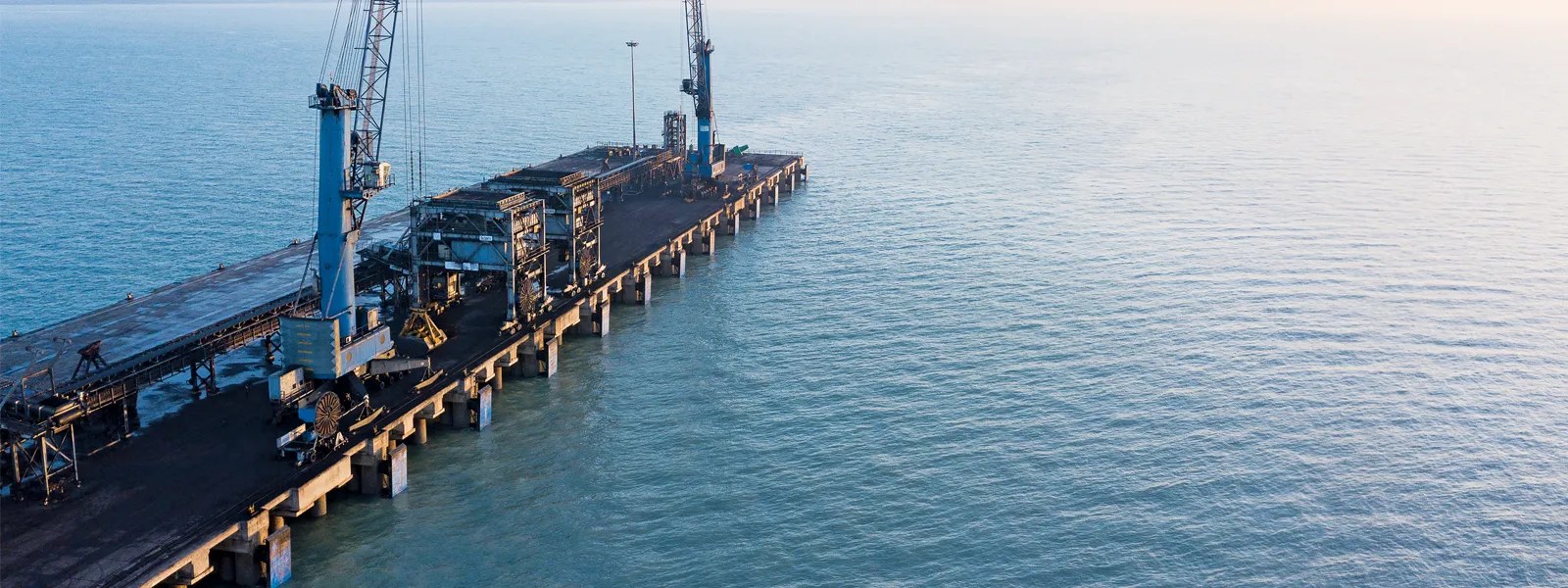
Tuna Terminal, located off Tekra along Kandla Creek in Gujarat, operates as a strategically located all-weather dry cargo facility serving a diverse mix of bulk and break-bulk commodities. The terminal features four berths, including a fully mechanised and automated dry bulk handling system that supports high operational efficiency, faster vessel turnaround and stronger safety standards. Dedicated facilities for agri commodities and fertiliser imports strengthen its role in essential supply chains. The terminal’s well-developed rail and road connectivity provides seamless access to the central and north-western hinterland.
Key Statistics
Highlights
100 MT Gottwald Crane
Installed and operational for cargo handling
Mobile Hopper Crane
Installed for agri commodity handling
Coal Yard Upgrade
Pipeline system enhanced to reduce dust emissions
Dahej Port
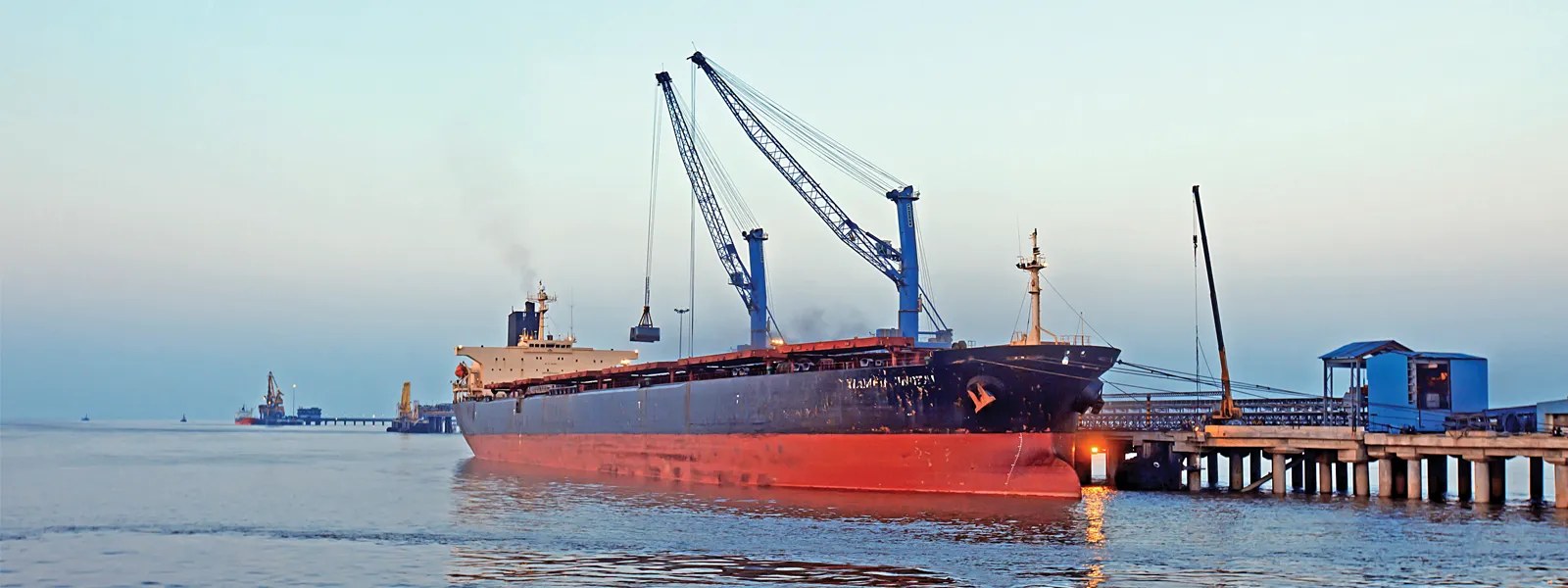
Dahej Port, located on the Gulf of Khambhat, provides seamless access to the dense industrial corridors of Gujarat, northern Maharashtra and central Madhya Pradesh. The port features robust infrastructure, including a mechanised berth for coal and gypsum, a multipurpose non-mechanised berth for coal and other bulk and break-bulk cargo, and a dedicated Ro-Ro berth for over-dimensional and project cargo. Facilities include four mobile harbour cranes, a 9.8 km conveyor system, three stacker-cum-reclaimers, two rapid wagon loading silos, and a private railway siding capable of loading 16 rakes per day. The port offers storage of 1.24 lakh sq. m for clean cargo and 2.61 lakh sq. m for coal, enabling efficient handling of diverse cargo. Connectivity remains strong through a six-lane, 46 km highway link to Bharuch and rail integration via Bharuch Dahej Railway Company Ltd.
Key Statistics
Awards and
AccoladesHighlights
Digital Initiative
Deployed thermal printers across weighbridges to enable paperless printing
Coil Handling Peak
2,943 coils for 30 receivers in November 2025
ODC Milestones
Longest at 71.7 m and heaviest at 598 MT, both in August 2025
Record Discharge Rates
36,073 TPD (Pet Coke, June 2025) 22,768 TPD (Rock Phosphate, June 2025) 35,646 TPD (Gypsum in North Berth, August 2025) 23,146 TPD (Gypsum in South Berth, December 2025) 29,387 TPD (Limestone, December 2025) 41,348 TPD (Coal, January 2026) 27,377 TPD (Clinker, February 2026)
Operational Milestone
Six vessel movements completed within an 11-hour window on October 16, 2025. New commodity Slag Capsize vessel (MV SEMA M) handled at the port Completed Joint Inspection of Weightometer and received approval of FOIS integration in Silo. Received approval of Partial EOL siding at MAPD.
New Records
Despatched 30,965 MT in a single day in November 2025.
Despatched 7,89,737 MT in a month, January 2026.
Despatched 1,15,560 fertiliser bags in two full BCN rakes despatched in 20 hours, February 15, 2026.
Hazira Port
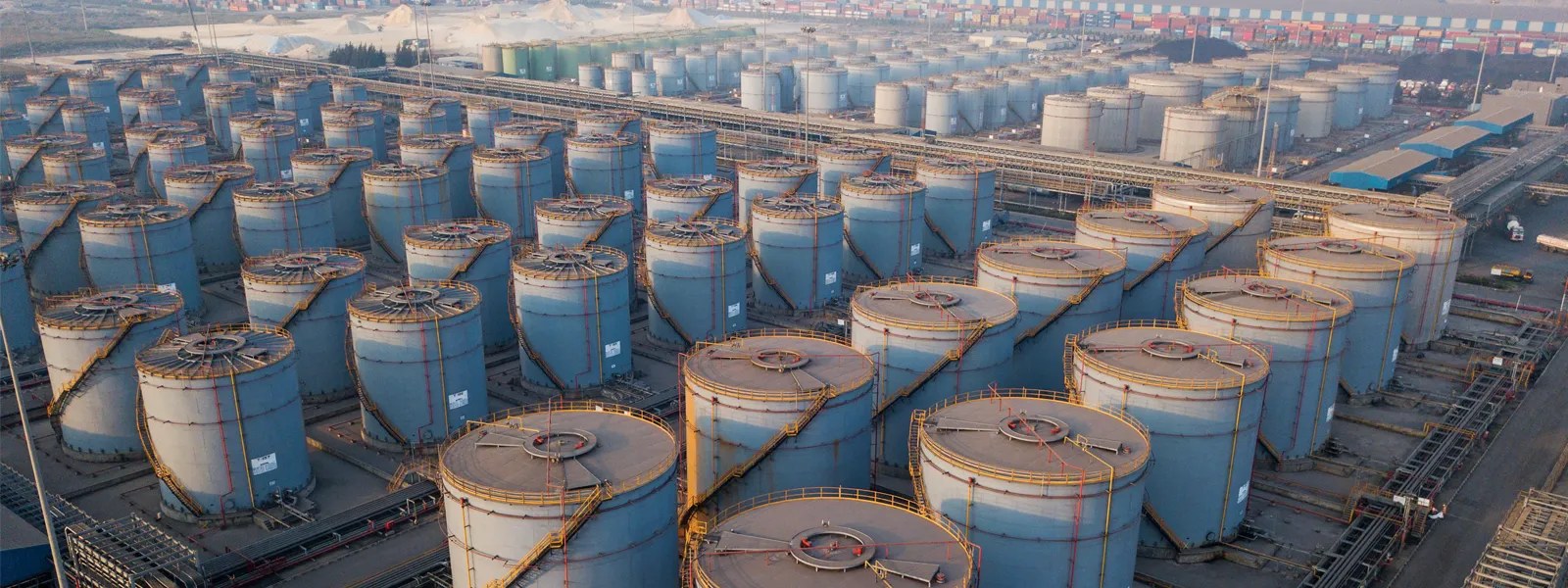
Hazira Port, located on the Gulf of Khambhat in Surat, is a key commercial multi-product port in Gujarat. Proximity to the Delhi–Mumbai Industrial Corridor supports major industrial activity and positions it as a significant international trade hub for Europe, Africa, America and the Middle East. The port berths Panamax vessels, liquid tankers and container ships, and handles dry bulk, break-bulk, project cargo, liquids, containers, automobiles and crude. It manages over 190 types of liquid cargo for the hinterland chemical industry. Infrastructure includes India’s largest multi-product liquid terminal with 7.20 lakh KL capacity, planned to expand to 1 MMT. Strong multimodal links to North, North-West and Central India support its role as an efficient global gateway.
Key Statistics
Highlights
Peak Container Throughput
84,782 TEUs in March 2026, above 84,631 TEUs in January 2026
Highest Bulk Liquid Volume
Handled 5.1 MMT through 700 liquid tankers in FY 2025-26
Largest Parcel Size
In September 2025, the Hazira Container Terminal handled its highest-ever parcel size of 7,840 TEUs on a single vessel call, MSC Nithya B, surpassing the earlier record of 7,340 TEUs achieved in December 2023 on MSC Shay
Renewable Energy
Installed 3.6 MW solar and 2 MW wind installed at Sukhpur (dist. Amreli), generating avg 4,79,000 units per month of power to date. (~2,49,000 Wind & ~2,30,000 Solar)
Dighi Port
Dighi Port in Maharashtra operates as an all-weather multipurpose facility with covered warehouses, 1.2 lakh sq. m of open yards, a 62,000 KL liquid tank farm and 650 m of quay length. The port supports liquid, break-bulk, Ro-Ro and project cargo, and accommodates Panamax and partly loaded Capesize vessels. Direct berthing, four-lane road access and connectivity to NH66 via NH548A and NH753F strengthen its role as a strategically important trade gateway for the state.
Key Statistics
Highlights
ONGC Partnership
Berthed ONGC rigs Sagar Vijay and Sagar Bhushan, strengthening offshore energy logistics and demonstrating safe, precise handling of complex offshore assets
Ro-Ro Terminal Partnership
Motherson, through JV SAMRX, partnered to develop a dedicated auto-export Ro-Ro terminal featuring end-to-end finished vehicle logistics and single-window operations, serving the Mumbai-Pune auto belt
Mormugao Terminal
Mormugao terminal on India’s west coast sits about 570 km south of Mumbai, 300 km north of New Mangalore and 575 km north of Kochi. The terminal operates under a DBFOT agreement with the Mormugao Port Authority and features a 300 m jetty, two track-mounted cranes, a 5,000 MT high-speed conveyor system and automated truck and wagon loading supported by a stacker-cum-reclaimer for efficient coal and coke handling. Strong connectivity to Maharashtra and Karnataka supports smooth, cost-effective cargo movement.
Key Statistics
Highlights
Daily Discharge Peak
48,965 MT
Single-Day Despatch High
27,270 MT in June 2025
Rake Despatch Record
7 rakes totalling 27,763.85 MT in December 2025
Vessel Productivity Record
35,371 MT
Truck Despatch Record
202 trucks moving 3,840 MT in June 2025
Pollution Control
Adopted low-cost measures as an alternative to dome construction
Safety Measure
Installed a dust-cum-vision barrier near the road area
Awards and
Accolades
Vizhinjam Port
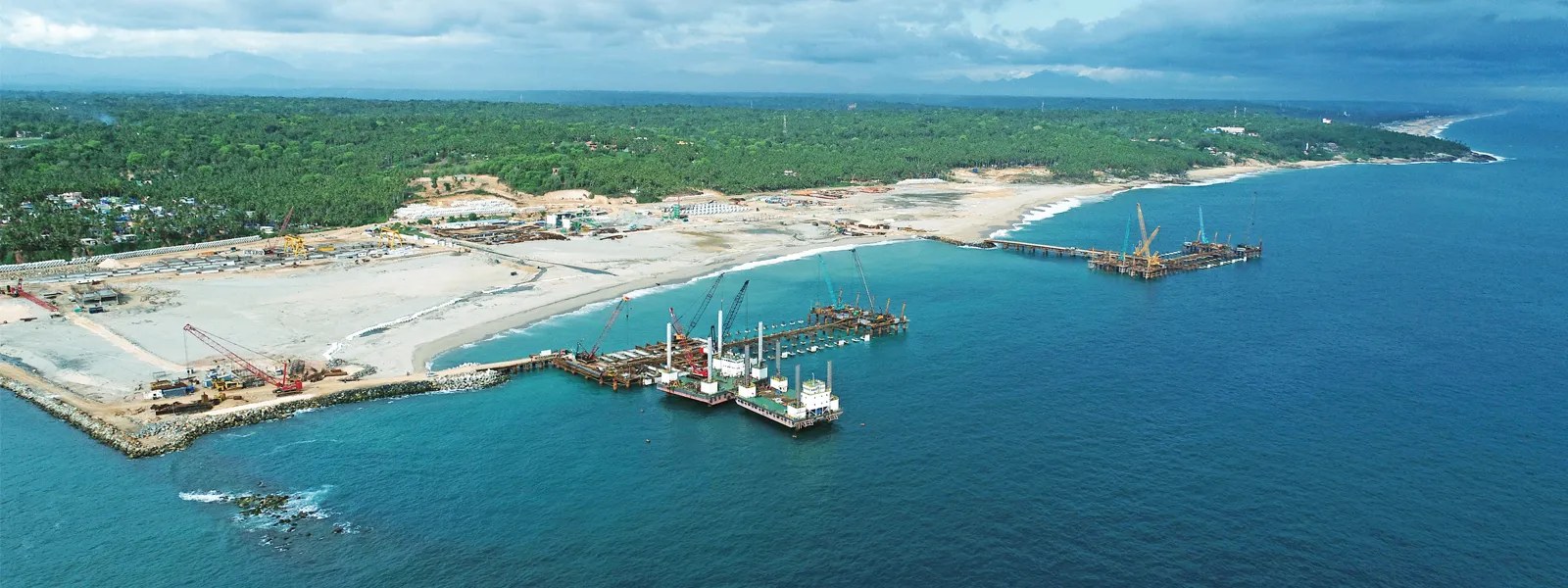
Vizhinjam, India’s first mega transshipment container terminal, marks a landmark infrastructure development in the country’s maritime sector. Located 10 nautical miles from the key East–West shipping route, it serves as a vital link between Europe, the Persian Gulf and Southeast Asia. Its central position along the Indian coastline strengthens hinterland connectivity. The port offers a natural harbour with an 18–20 m deep draft, a 2.9 km breakwater, an 800 m berth, eight quay cranes and 24 fully automated yard cranes. As India’s first automated port, Vizhinjam uses modern container handling equipment and advanced IT systems, including smart port technologies such as Digital Twin, to drive operational excellence and reliability. The port is a national priority under Maritime India Vision 2030.
Key Statistics
Phase 2 capacity expansion has commenced
Completion targeted by December 2028 with ~ ₹16,000 crore investment, expanding capacity from 1.6 to 5.7 million TEUs
Initiated construction; developed CFS, an MTY container depot and an EXIM yard to strengthen EXIM handling.
Highlights
Utilisation Peak
Reached 100% utilisation in the ninth month of operations
Reefer Expansion
Increased reefer capacity to meet rising demand for temperature-sensitive cargo
Shore Tension Systems
Implemented to improve vessel stability and safety
LNG Bunkering MoU
Signed with Bharat Petroleum Corporation Limited to launch India’s first ship-to-ship LNG bunkering; Vizhinjam to serve as a dedicated LNG refuelling hub on the east-west corridor
Crew Change Services
Commenced to broaden service offerings and flexibility
ULCV Handling
Managed 40+ ULCVs of 399.99 m LOA; also accommodated the world’s largest vessel at 399.99 metre length and 61.3 metre beam
Deep-Draft Record
Berthed a 17.1 metre draft vessel, the deepest at any Indian port
Inaugural-Year Milestones
Handled 1.3 Mn TEUs, fastest Indian port to cross 1 Mn TEUs; accommodated 41 ULCVs, the highest for any Indian port
Sustainability Highlights
Zero Waste to Landfill
Initiative underway, supported by structured waste segregation at source across operational areas
Energy Efficiency
Improved through optimisation and automation of electric-powered cranes
Compensatory Afforestation
Planted 50,040 trees across 40.67 hectares to support ecological balance
Awards and
Accolades
Karaikal Port
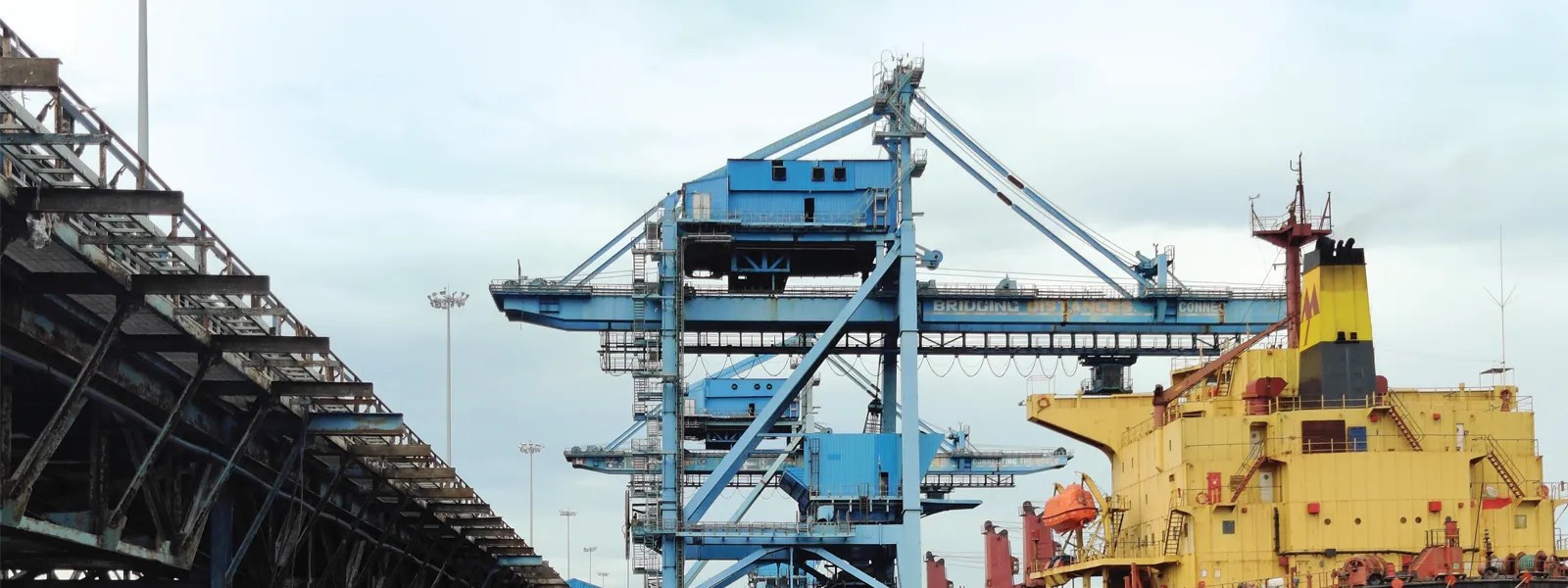
Karaikal Port, centrally positioned between Chennai and Tuticorin at about 300 km from each, serves as a strategic gateway to the northern hinterland of Tamil Nadu, including key manufacturing hubs such as Ariyalur, Trichy and Salem. Spread over 611 acres, this all-weather deep-water port operates five berths and advanced mechanised facilities that support efficient bulk handling and high discharge rates. The port handles dry bulk, general cargo (break-bulk), liquid cargo and containers, enabling versatile operations. Strong multimodal connectivity, including links to the Southern Railway network, reinforces its role as a key regional logistics node.
Key Statistics
Awards and
AccoladesHighlights
Draft Enhancement
Increased permissible draft to 14.5 metre, placing it among Southern India’s deepest ports; berthed the port’s deepest draft vessel in October 2025
Equipment and Automation
Commissioned two hoppers (October 2025); added two 100-tonne weighbridges at the main gate and started automated gate operations (January 2026)
Parcel Records
Discharged record parcels of limestone (81,466 MT) and slag (77,000 MT)
Monthly Cargo Peak
1.47 MMT in April 2025
Renewable Energy
Began using 1 MW under the open-access scheme
Sustainability Practice
Declared and maintained a single-use-plastic-free zone
Gopalpur Port
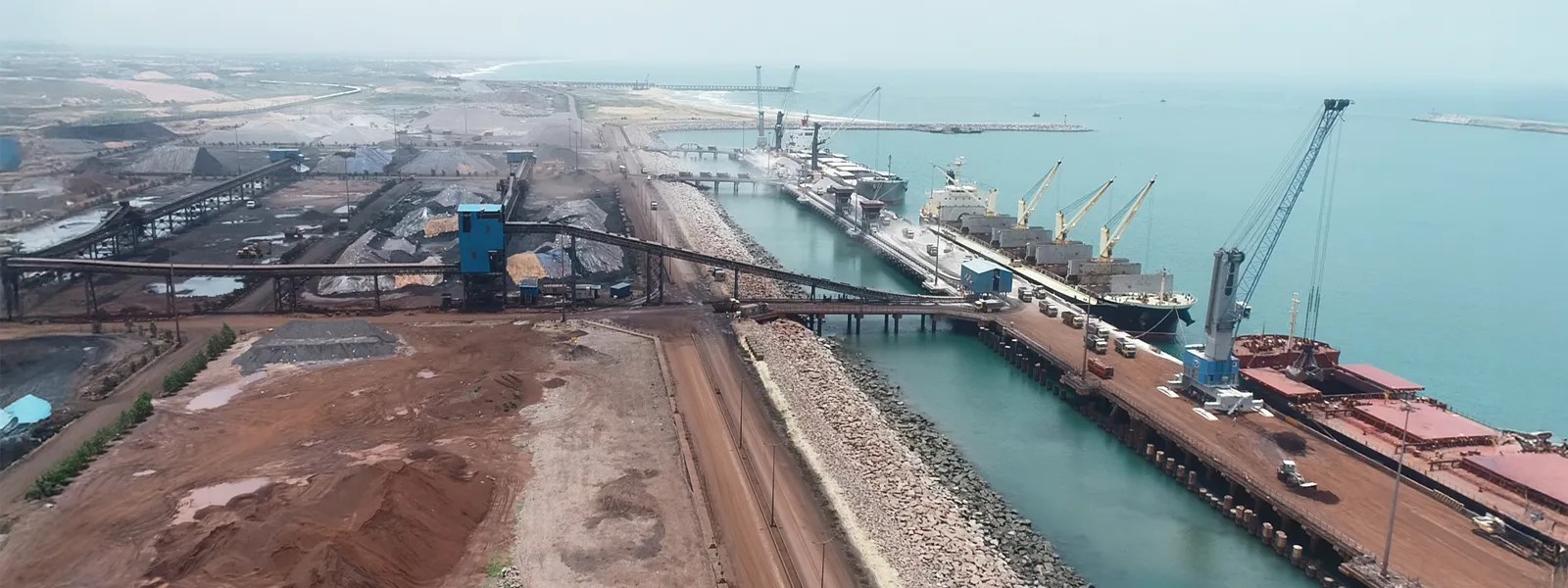
Gopalpur Port on India’s east coast serves as a strategic gateway between Paradip to the north and Visakhapatnam to the south. Its hinterland covers Odisha, Jharkhand and Chhattisgarh, supporting industries such as minerals, steel, aluminium, cement and power. The port operates three multipurpose berths with a 14.5 metre draft and handles Handymax, Supramax and Capesize vessels. This all-weather deep-draft port includes a 2.5 km entrance channel, 7.5 lakh sq. m of open storage and dedicated stockyards for key bulk cargo. Six rail sidings within the port and two nearby sidings support iron ore and pellet handling. A 7 km rail link to the Howrah–Chennai east coast trunk route and a direct road link to NH16 enable multimodal connectivity and swift evacuation.
Key Statistics
Highlights
Cargo Flow Optimisation
Enabled direct berth-to-rail transfers and optimised reverse movement from the IREL siding to the berth, removing intermediate carting
Higher-Draft Handling
Used high-tide windows to handle deeper-draft vessels, raising parcel sizes and productivity
Daily Thermal Coal Peak
60,000 MT in August 2025
Equipment Electrification Plan
Phased shift to electric power for major equipment, including excavators and loaders, starting next financial year
Rail-Sea-Rail Model
Introduced for select customers, adding a new commodity and lifting throughput
Rake Handling Record
73 rakes in October 2025, the highest monthly tally since APSEZ’s acquisition
HMC Electrification
Electrified harbour mobile cranes to cut emissions and improve efficiency
Kattupalli Port and Ennore Container Terminal
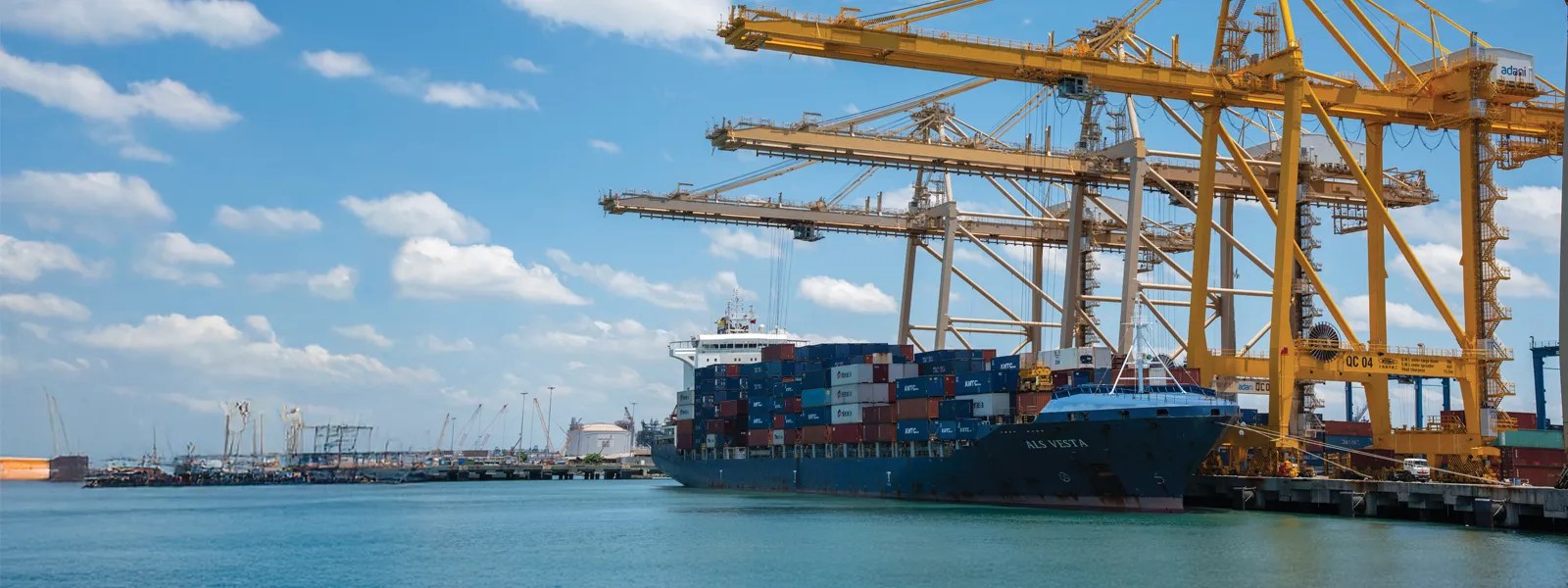
Kattupalli Port in North Chennai operates as a modern multi-cargo facility supported by robust infrastructure, including three berths with a total quay length of over 1 km, a DPD warehouse, a 45,000 sq. ft. on-dock container freight station and a six-lane gate complex. The port handles fully loaded Panamax vessels. Ennore Terminal is a joint venture between APSEZ and TiL, the terminal arm of MSC. Located 30 km north of Chennai Port, it provides 24/7 road access, on-dock rail siding services to Bengaluru, and links to major container freight stations and four national highways.
Key Statistics
Highlights (Kattupalli)
Berth 3 Upgrade
Executing berth extension, container yard expansion and deployment of relocated RMQCs and new electric RTGCs to raise capacity and efficiency; enables larger vessels and faster turnaround. Completion targeted by March 2026.
Dry Cargo Peak
1,97,000 MT in August 2025, the highest monthly volume.
New Service
Glottis Shipping launched a new fortnightly service connecting Kattupalli Port with key routes
Renewable Power Use:
Over 94% of electricity sourced via TPP and IEX, lowering unit electricity cost by 8%
Highlights (Ennore)
Ennore Phase 2
Construction underway to add 0.6 Mn TEU annual capacity through jetty extension, an additional container yard, new RMQCs, eRTGs and support equipment including a reach stacker and 18 ITVs.
Ennore Records
Highest monthly call at 10,007 TEUs (June 2025) and highest rake volume at 4,406 TEUs (September 2025)
Awards and
Accolades
Krishnapatnam Port
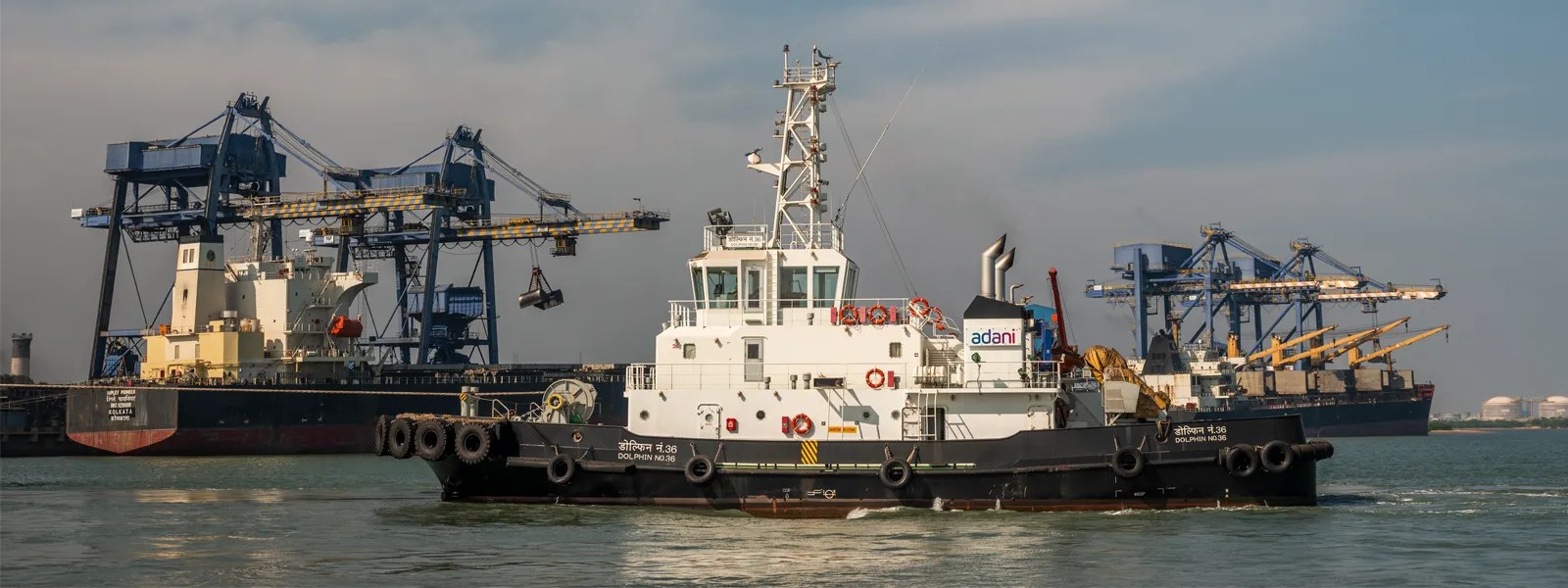
Krishnapatnam Port, located in Andhra Pradesh’s Nellore district, is a premier private port with world-class infrastructure. A 3,830 m wharf supports berthing for up to 14 vessels at a time, and a deep draft accommodates Super Capesize vessels of up to 2,00,000 DWT. The port remains India’s only facility with five cape-enabled berths, underscoring strong operating capability. Operations deliver efficiency, cost advantages and customer-focussed service. Multimodal connectivity via proximity to National Highway 16 and the Chennai-Kolkata main rail line enables efficient road and rail cargo movement.
Key Statistics
Highlights
Berth Enhancement
In-house grab dredging increased available berth length by 60 metre
Cargo Diversification
Expanded the dry bulk mix from coal to include minerals such as barytes, rock phosphate, laterite, soda ash, and agri commodities
Monthly Cargo Peak
5.85 MMT in June 2025
Liquid Cargo Record
3,51,545 MT in July 2025 (edible and POL), exceeding 2,76,367 MT during May 2024
Mechanised Operations Milestones
Achieved 2.14 MMT via NCCS in August 2025, surpassing 2.03 MMT (May 2025), along with a coal discharge record of 58,594 MT in 24 hours (October 2025), exceeding 54,800 MT (July 2024)
Mineral Cargo Milestone
Achieved 1.50 MMT in September 2025, surpassing the previous peak of 1.27 MMT recorded in February 2024
Daily Discharge Rate Record
71,618 MT achieved in October 2025, surpassing the previous record of 61,500 MT in September 2025
Fertiliser Peak
0.43 MMT in November 2025 surpassed 0.36 MMT in December 2023, with the highest-ever annual volume reaching 1.92 MMT in FY 2025-26
Vessel Movement Record
17 bulk vessel movements within 24 hours during December 2025
Renewable Power Addition
Added 2.5 MW solar from captive hybrid plant at Khavda since September 2025, in addition to 5 MW wind from Atria Wind Power
Achieved highest-ever cargo handling in FY 2025-26 at 59.2 MMT.
Awards and
Accolades
Gangavaram Port
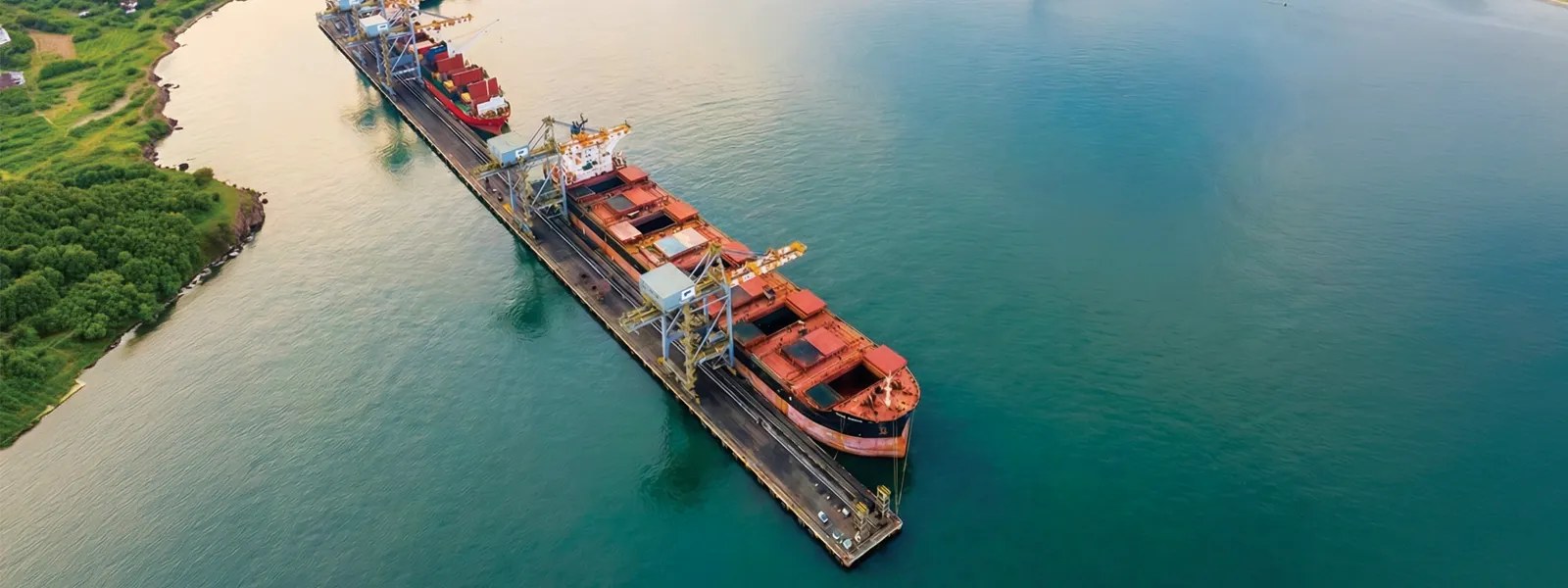
Gangavaram Port, located south of Visakhapatnam, operates as a strategic maritime gateway on India’s east coast. This all-weather deep-water port runs nine berths, including five multipurpose berths, one container terminal, two mechanised import berths and one mechanised export berth, with depths up to 19.5 metre to handle Super Capesize vessels. Advanced mechanised systems and a newly commissioned container terminal support rising trade volume. A dedicated four-lane expressway connects directly to NH 16, and integration with the Chennai-Howrah rail corridor enables efficient cargo evacuation across a hinterland covering eight states.
Key Statistics
Highlights
Exim and Digital Gates
Commissioned a container EXIM yard and launched Digi Yatra digital gates for containers in November 2025
Skill Development
Inaugurated a Skill Development Centre during December 2025
Digital Transformation
Deployed RFID-enabled digital gates integrated with FASTag, MBUs for automated bag tilting and a PILC system
Deep-draft record
The deepest draft ever handled 18.31 metres on March 31, 2026, surpassing the earlier record of 18.20 metres
Throughput Records
12,637 TEUs in February 2026 (above 11,545 in October 2025)
Vessel Movement Records
New All Time Record with 641 Cargo Vessels Handled in FY 2025-26, surpassing previous of (above 552 in FY 2024-25)
Fertiliser Despatch Speed
42,750 MT evacuated within 7 days in September 2025
Single-Day Despatch Peak
48,271 MT to RINL in September 2025 via road, rake and conveyor
ZWL Rating
Achieved Zero Waste to Landfill Platinum - Class I with 99.9% diversion
Operational Strength
Achieved a record-handling parcel size of 2,00,918 MT on March 8, 2026. Underscoring customer focus, growing scale and operational excellence.
Strategic Expansions & Partnerships
MoU signed between APSEZ, NMDC and VALE for handling VALEMAX vessels at Gangavaram Port, enhancing large-capacity bulk trade capabilities
Honoured with Appreciation
Award at P4 Program - Bangaru Kutumbam Initiative - Government of Andhra Pradesh for CSR Excellence, March 31, 2026
Won
GOLD for the Best Safety performer for the year 2025 (Category - Ports & Logistics), CII Andhra Pradesh Industrial Safety Excellence Awards 2025, March 2026
Wins Prestigious
“Top Custodian – Port” Award, International Customs Day 2026, February 2026
Wins
“Environmental Excellence Award - Platinum Category” at Indian Chamber of Commerce (ICC) 19th Environment Partnership Summit & Excellence Awards, Kolkata, 2025, January 8, 2026
Safety Excellence Award
“Platinum Category” - Green Enviro Summit & Excellence Awards, Goa, 2026, January 12, 2026
“Lowest Import Dwell Time in 2025”
Award, International Customs Day 2026, February 2026
Rural Sports
to Promote Talent in Fisherfolk Communities, January 11, 2026
Received Appreciation Momento
“Highest Blood Units collected by an Industry/PSU in 2024-2025” from Indian Red Cross Society, Andhra Pradesh, July 2025
“Environment Protection Award”
Global Greentech Environment & Sustainability Awards 2025, June 2025
Awards and
Accolades
Dhamra Port
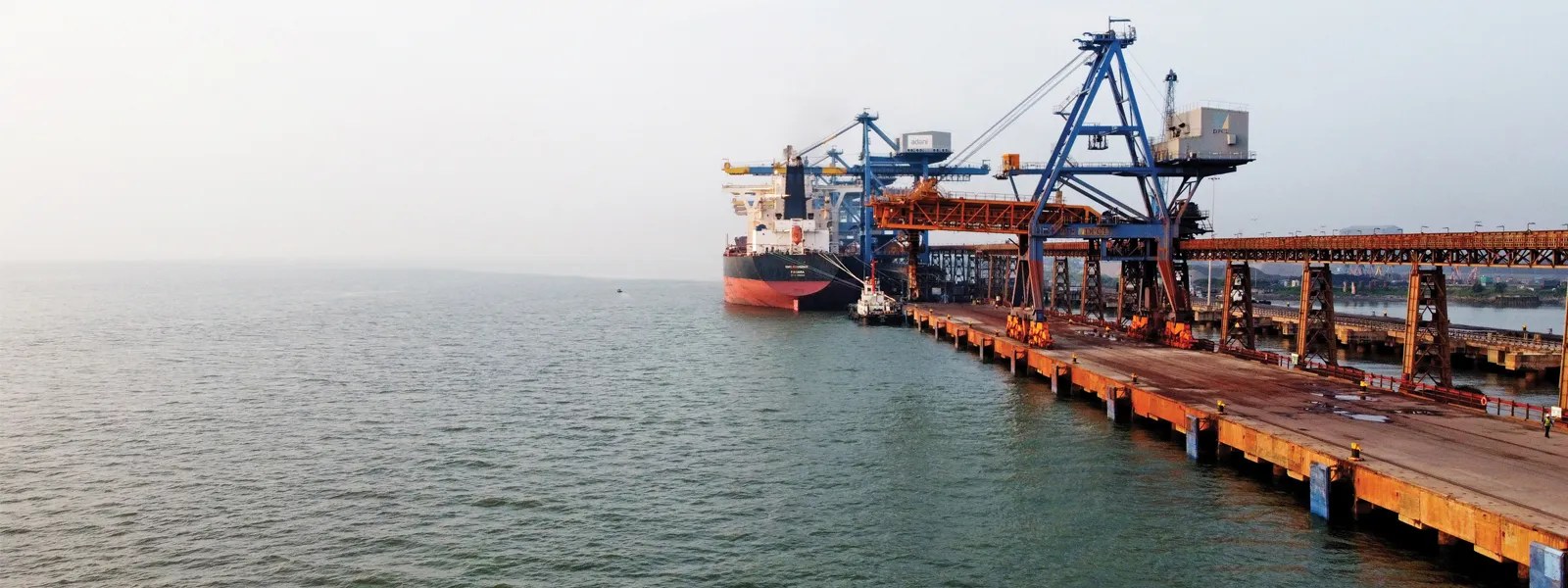
Dhamra Port, located on the Odisha coast between Haldia and Paradip, is positioned to emerge as one of India’s most efficient east coast ports. The port operates six berths and a rapid-loading silo, a high-capacity bulk storage and discharge system capable of handling up to 4,000 tonnes per hour. This deep-draft, all-weather, multi-user and multi-cargo facility accommodates Super Capesize, Panamax and Handymax vessels, and handles both dry and liquid bulk cargo. Strong road and rail links to the mineral-rich regions of Odisha, Jharkhand and West Bengal support efficient cargo movement and operations.
Key Statistics
Highlights
Capacity Expansion
Construction underway on Mechanised Coal Export Berth BB-5 with a conveyor system and Mechanised Coal Import Berth BB-6 with a mechanised yard
Shore Supply System:
Fabricated and installed an in-house shore supply box at BB-1 for two tugs, generating cost savings
Digital Upgrades:
Implemented digital gate passes, digital payments and GPS tracking; added RFID automation, unmanned and digitised weighing and real-time locomotive monitoring
Thermal Coal Record:
55,450 MT at BB-3 in April 2025, above 51,900 MT record in November 2024
Import Dry Cargo and Rakes:
2.98 MMT and 158 coal rakes in May 2025, both record highs
Rail Traffic Records:
912 rakes in March 2026, averaging 29.42/ day, including 320 inward and 592 outwards; followed by 598 outward rakes in July 2025, averaging 19.29/day
Truck Movement Record:
317 outbound trucks in a day in July 2025, above 284 in November 2024
Steel Slab Milestone:
Handled the first import steel slab vessel in August 2025
STS Cargo Record:
0.61 MMT in March 2026, exceeding 0.53 MMT in September 2025
Fertiliser Records:
1,29,852 MT monthly cargo in January 2026; 37 rakes in October 2025; and three rakes loaded in a day in October 2025
Sustainability Status:
Certified Zero Waste to Landfill and single-use-plastic-free
Conservation MoU:
Signed with Wildlife Institute of India, PCCF, DPCL and Adani Foundation for a three-year Olive Ridley sea turtle conservation program on the Gahirmatha Coast (2025-2027)
Awards and
Accolades
Haldia Terminal
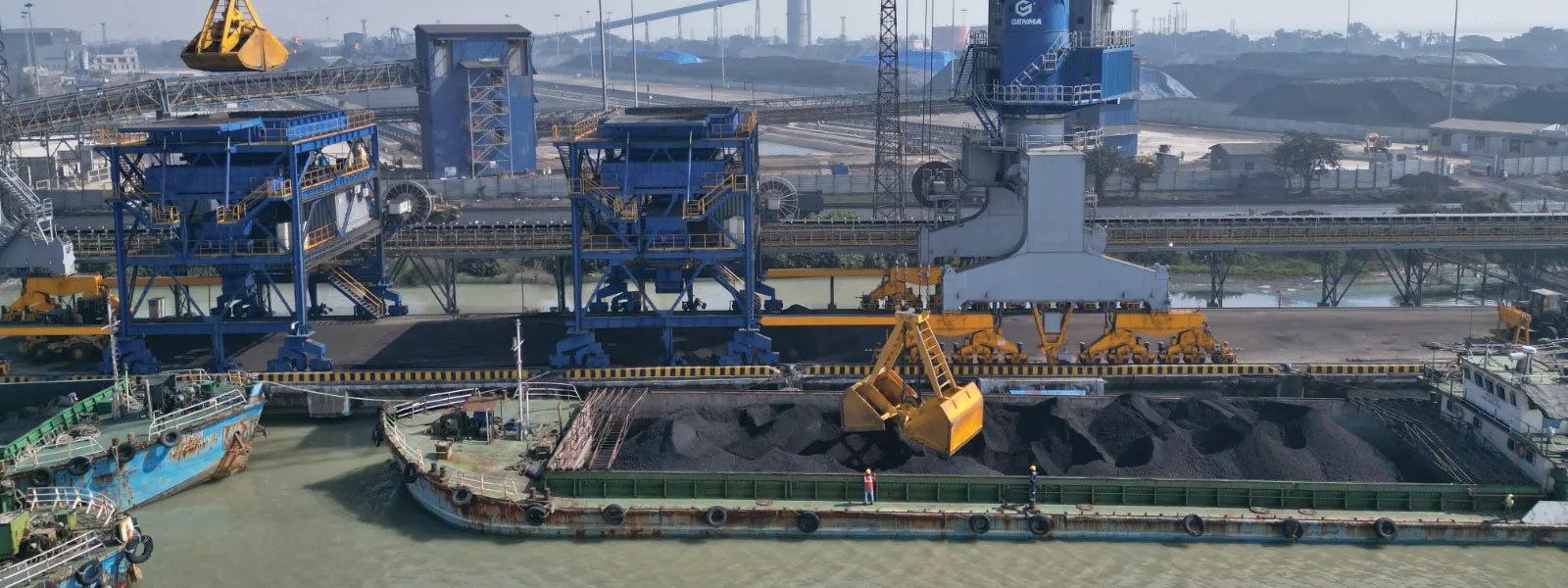
Commissioned operations at Haldia Bulk Terminal (HBT). Located within the Haldia Dock Complex of Shyama Prasad Mookerjee Port, Kolkata, this terminal is a next-generation facility bringing 100% mechanisation and direct rail connectivity together. These advanced features allow bulk cargo discharged from vessels to directly load into rail wagons and connect to main rail lines, reducing turnaround time significantly and setting new efficiency benchmarks on the eastern Indian coast. The terminal is set to play a pivotal part in strengthening the industrial supply chains of West Bengal, Odisha and Jharkhand.
Key Statistics
Key infrastructure:
2 gantry-operated harbour mobile cranes with two mobile hoppers
2 stacker-cum-reclaimers
6 conveyors (approximately 2.1 km)
1 Rapid Wagon Loading System (RWLS) of 1,000 Tonne capacity
Rail track of approx. 1.54 km
Installation of a 2,000 T Railway Wagon Loading System (RWLS) and commissioning of a 1.54 km dedicated railway line, enabling direct ship-to-train cargo evacuation
Refurbishment of the existing jetty
Installation of advanced conveyor systems, automating the process deployment of two stacker-cum-reclaimers for automated stockyard management
Addition of two mobile harbour cranes for faster vessel discharge
Kolkata Container Terminal
APSEZ holds a five-year contract to deploy, operate and maintain container handling equipment at the Kolkata Dock System, Syama Prasad Mookerjee Port, Kolkata. The terminal operates six mobile harbour cranes (MHCs) and four rubber tyre gantry cranes (RTGCs). Further investments planned in reach stackers and trailers.
Netaji Subhas Dock, the largest container terminal on India’s east coast, serves a wide hinterland across West Bengal, Bihar, Uttar Pradesh, Jharkhand, Assam and the Northeast, along with Nepal and Bhutan. Regular liner calls connect the dock to Port of Singapore, Port Kelang and Port of Colombo. APSEZ’s presence creates synergies with its transshipment hubs at Colombo and Vizhinjam, improving connectivity and efficiency.
Haifa Port, Israel
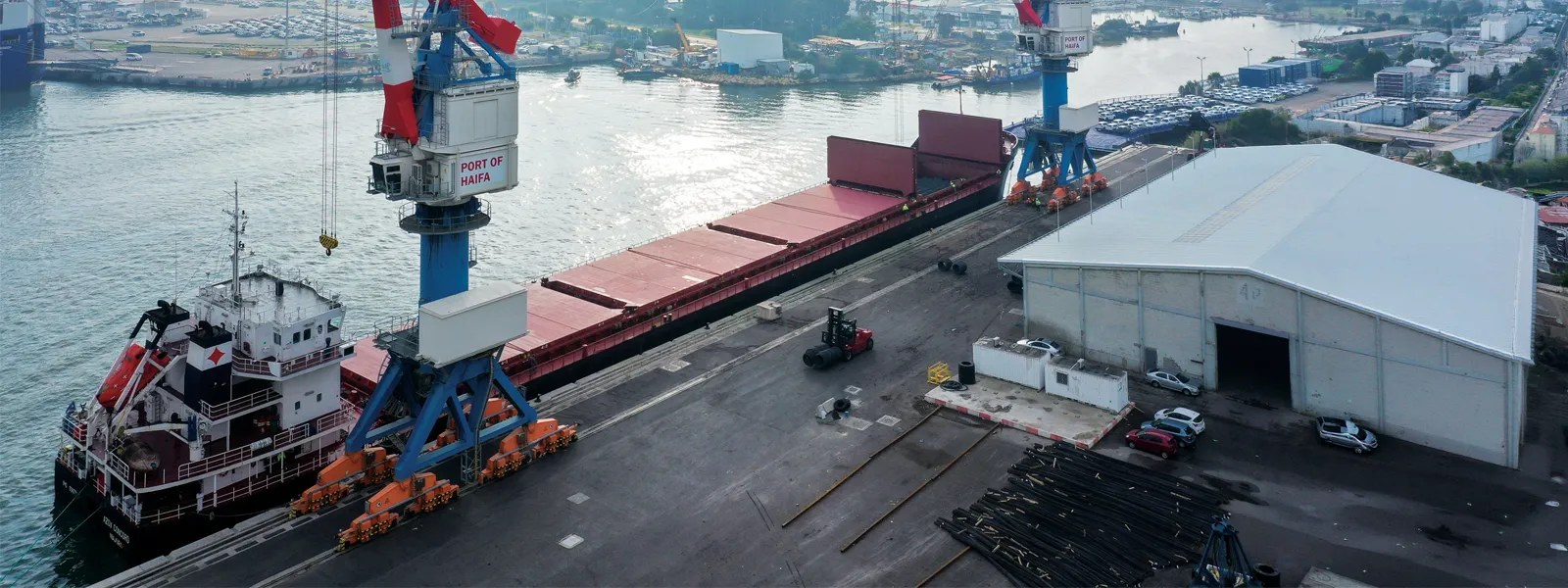
The consortium of APSEZ and Gadot Group, Israel acquired Haifa Port Company (HPC) from the Government of Israel, following a successful bid for its privatisation. APSEZ holds a 70% stake in the consortium. Haifa Port, Israel’s largest, is a key regional hub near the Suez Canal, handling containers, general cargo, bulk goods, vehicles, and cruise ships. Its strong connectivity with Israel’s railway network boosts its logistics role locally and regionally. Haifa Port is also part of the proposed IMEC corridor, which aims to improve trade between India and Europe.
Key Statistics
Highlights
Ensured operational continuity being in a war zone despite multiple challenges
Launching new cruise terminal in May, 2026. The new facility, expected to become one of the largest and most advanced cruise terminals in the Eastern Mediterranean, will support up to one million passengers annually and enable the simultaneous handling of two large cruise ships
Handled c.1,95,000 cars & vehicles handled at port during FY 2026
Awards
Dar es Salaam, Tanzania
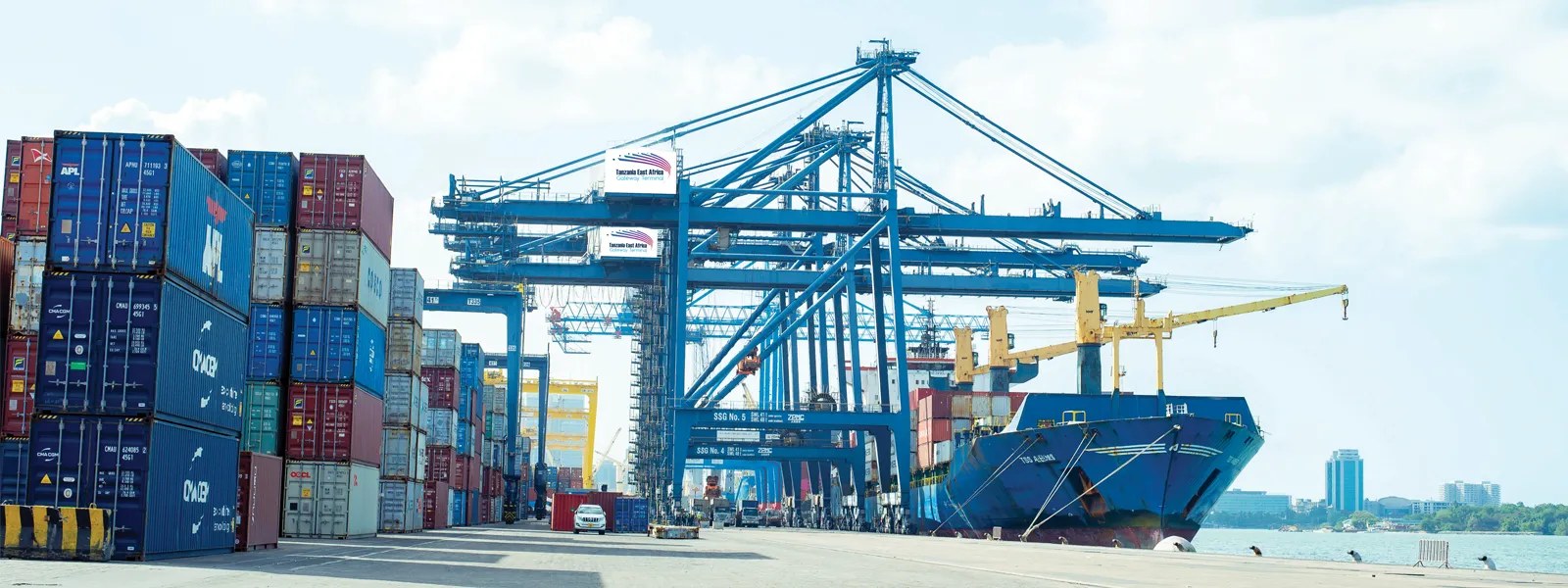
APSEZ acquired Tanzania East Africa Gateway Terminal Limited (TEAGTL) in June 2024 and assumed the long-term concession for Container Terminal 2 (CT2) at the Port of Dar es Salaam in July 2024. CT2, the port’s largest container facility with four berths, handles about 70% of its container throughput and serves as a key East African trade gateway for Tanzania and transit cargo from Uganda, Democratic Republic of Congo, Rwanda, Burundi, Zambia and Malawi. FY 2025-26 focussed on operational stabilisation, stronger customer centricity and employee upskilling.
Key Statistics
Highlights
Improved average vessel waiting times to 4.6 days, from an average of 8.9 days in FY 2024-25
Commenced on-dock TAZARA (Tanzania-Zambia Railway Authority) rail operations for container movement
Added new services connecting Dar es Salaam with the Indian Subcontinent, supporting India-Africa trade
Advanced digital transformation across terminal planning, container tracking, and live vessel schedules.
Conducted customer outreach with Tanzania Port Authority (TPA) in nearby landlocked countries to attract transit cargo
North Queensland Export Terminal, Australia
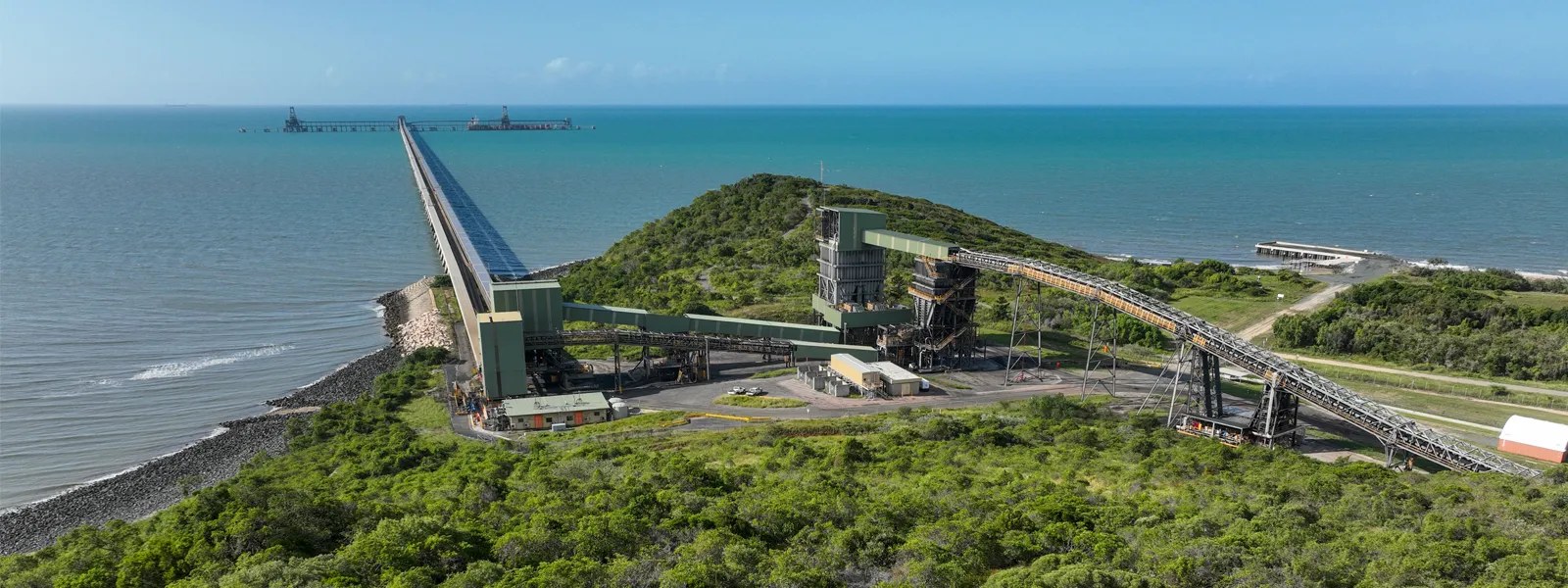
North Queensland Export Terminal (NQXT) is a dedicated deep-water coal export terminal at the Port of Abbot Point, with a nameplate capacity of 50 MMT. Connected to the Bowen Basin rail network and serving as a gateway for the Galilee Basin, it has long supported Queensland’s and Australia’s resources sector.
Key Statistics
Highlights
365 Vessels handled
4,932 Trains unloaded
Record 42 vessels loaded in a month
New long-term customer contract signed
Commercial framework implemented for customer renewal cycle
Long-term asset management program implemented with terminal operator
Joint safety and risk reviews undertaken between APO and NQXT
Continued safety and risk compliance and ISO 14001 and 45001 maintained
Sustainability
FY 2025 Sustainability Report highlights NQXT’s safe, efficient operations, strong ESG performance, zero environmental incidents, community impact, and contribution to Queensland’s economic growth and energy supply
Awards
Colombo West International Terminal, Sri Lanka
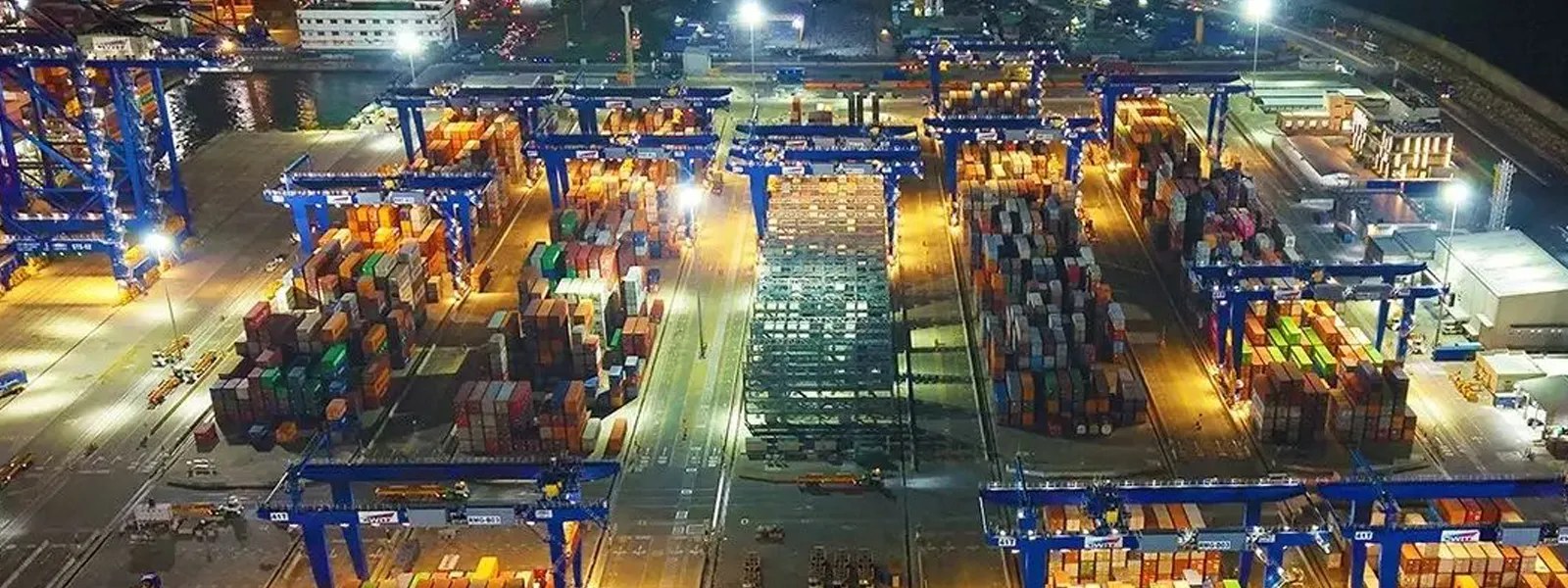
Colombo West International Terminal (CWIT) commenced operations in FY 2026. Developed under a landmark public–private partnership, CWIT is operated by a consortium comprising India’s largest port operator Adani Ports and Special Economic Zone Ltd., leading Sri Lankan conglomerate John Keells Holdings PLC, and the Sri Lanka Ports Authority, under a 35-year Build, Operate, and Transfer (BOT) agreement.
CWIT strengthens regional maritime connectivity and is designed to meet rising transshipment demand across the Indian subcontinent and South Asian trade lanes. The terminal enhances Colombo Port’s ability to serve mainline services, regional feeders and global alliances.
Key Statistics
Highlights
CWIT set a historic industry record by handling over 1 million TEU within the first year of its commercial operations
Vessel Capacity
Capable of handling three ULCVs simultaneously, up to 24,000 TEUs each
Electric Fleet:
100% electric operations with 62 eco-friendly ITVs
Awards and
Accolades