
Addressing priority matters
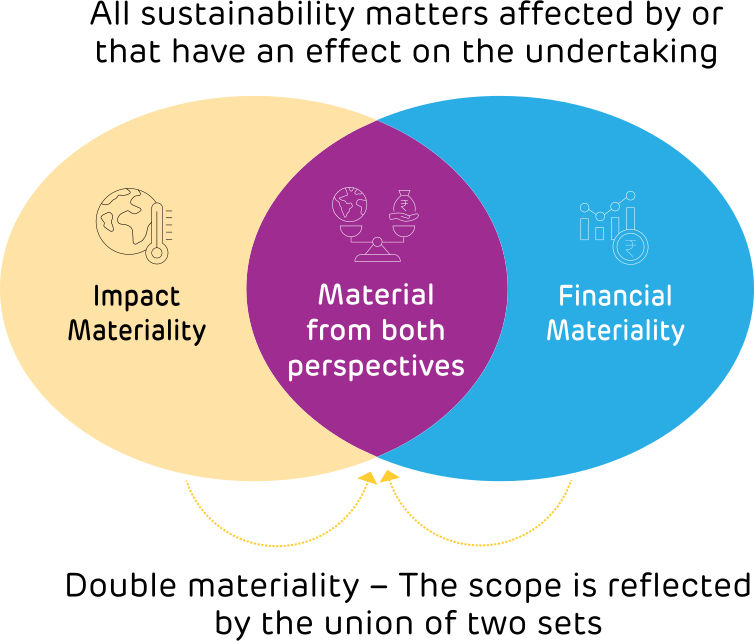
Materiality assessment helps define our priorities, guides resource allocation and drives value creation. We follow double materiality principles to evaluate topics that influence our financial performance and risk profile, as well as have an impact on the environment, society and economy. The integration of stakeholder perspectives, business priorities and regulatory expectations further ensures alignment of our sustainability agenda with our strategy, risk management and long-term growth.
Approach to Materiality
Since 2015, APSEZ started conducting a comprehensive materiality assessment at least once every two years, with an annual review of material topics to capture emerging trends, regulatory changes, evolving stakeholder expectations, and ESG priorities. In FY 2024-25, we undertook a bottom-up materiality assessment exercise, gathering fresh insights from both internal and external stakeholders. The assessment was conducted in accordance with the guidance provided by key standard-setting bodies and frameworks, particularly GRI Standards 2021 and European Sustainability Reporting Standards (ESRS).
The current fiscal year 2025-26 witnessed an internal review of material topics, aligning analysis with global ESG frameworks, emerging trends in the ports and logistics sector, and peer benchmarking insights.
Our Materiality Assessment Process
Our materiality process is stakeholder-centric, involving both internal stakeholders (functional heads, employees) and external stakeholders (suppliers, investors, customers, non-governmental organisations, and business associations). Engagement was carried out through structured questionnaires and consultations, in line with AA1000 Stakeholder Engagement Standard. This approach ensures that diverse perspectives inform the identification and prioritisation of material issues.

Identify
- Adopted a double materiality approach, assessing both:
- Impact materiality – Evaluates the significance of impacts based on their scale, scope and irreversible nature, considering effects on people and the environment
- Financial materiality – Risks and opportunities of the identified impacts to determine financial considerations based on senior leadership responses
- Analysis included considering sector-specified dynamics and operational context, aligned with global benchmarks and standards

Stakeholder Consultation
- Impact materiality considered:
- Scale, scope, and irremediable character in case of negative impacts
- Likelihood of occurrence in case of potential impacts
- Developed customised materiality assessment questionnaires for internal and external stakeholder groups, focussed on capturing significance to the business and impact on stakeholders
- Financial materiality assessed through senior management response on scale of impacts, likelihood, and potential financial effects of risks and opportunities

Assess and Prioritise
- Analysed stakeholder feedback using a defined scoring methodology, considering both financial and impact materiality dimensions
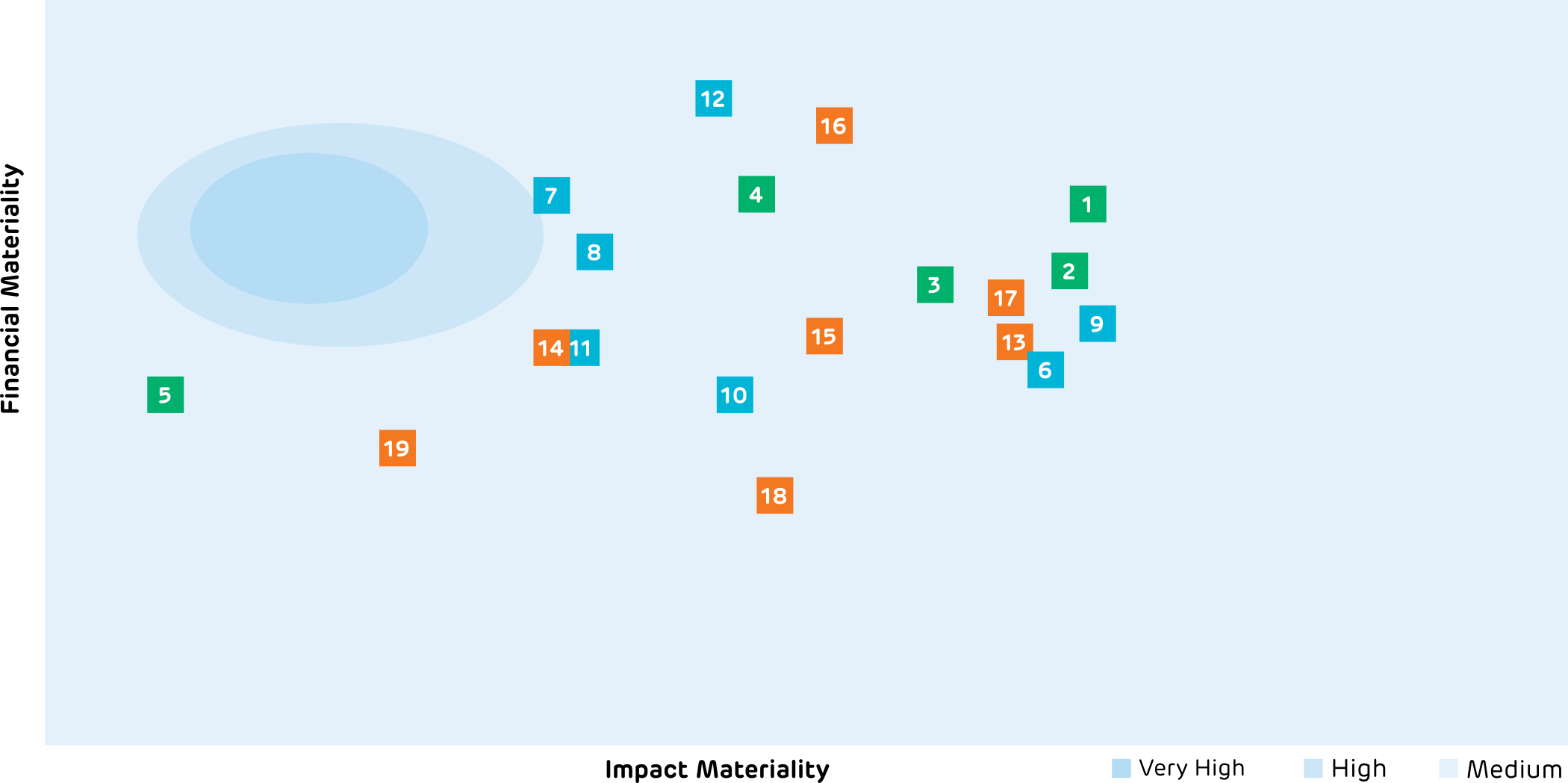
- Prioritised material topics and mapped them on a materiality matrix

Monitoring and Validation
- Aligned ESG key performance indicators (KPIs) with material topics, SDGs, strategic priorities and risks
- Integrated topics into the Enterprise Risk Management (ERM) framework, with annual reviews to ensure alignment with strategy, CAPEX and OPEX decisions
- Our Chief Risk Officer provides an oversight of the assessment process. Subsequently, the process followed for the materiality assessment and the outcomes were presented to the Board of Directors for validation and final signoff
- Process and outcomes validated by the Board and verified by a third-party assurance provider
Materiality Matrix
Our Material Topics
Environmental material issues
Social material issues
Governance material issues
Addressing the Material Issues
Capitals
 Financial Capital
 Manufactured Capital
 Social & Relationship Capital
 Intellectual Capital
 Human Capital
 Natural Capital
Financial Impact
Environment
GRI Alignment
KPIs
- GHG emissions intensity
- Share of RE in total electricity
- Share of fossil fuel in total energy
SDG Alignment
Capitals Impacted
Financial Implication
Risk or Opportunity
Risk: Rising instances of climate-change related disasters present physical risks (revenue vulnerability and increased costs from infrastructure damage and operational disruption) and transitional risks (evolving regulations and shift to a low-carbon economy)
Mitigating Actions
- Structured long-term decarbonisation roadmap aligned with net-zero (2040) ambitions
- Integrated climate resilience into asset planning based on Climate Change Vulnerability Assessments and adaptation planning
- Expanded the use of renewable energy through captive solar and wind power plants, energy-efficient technologies (like mechanised bulk cargo handling and LED lighting), electric fleet (like electric internal transfer vehicles, electric reach stackers, e-mobile harbour cranes), and low-emission operational practices
GRI Alignment
KPIs
- Total area of mangrove afforestation & terrestrial plantation
- Improvement in native species diversity and abundance
SDG Alignment
Capitals Impacted
Financial Implication
Risk or Opportunity
Risk: Port and integrated logistics operations can cause habitat fragmentation, deforestation and coastal erosion, leading to habitat loss for animals, degradation of the marine ecosystem and decline in species diversity. It may also impact the local community, whose livelihood is dependent on fishing. These can lead to regulatory constraints, reputational risk and project delays.
Opportunity: Responsible biodiversity management enables sustainable growth (ecosystem and climate stability, food security), ensuring licence to operate and strengthening reputation.
Mitigating Actions
- Committed to Net Positive Impact (NPI) on biodiversity by 2050, supported by Environment and Social Management Plans (ESMPs) aligned with CII’s India Business and Biodiversity Initiative (IBBI); i.e. Dhamra follows IUCN’s lighting and dredging protocol to protect endangered Ridley turtles and dolphins
- Oil spill preparedness at ports aligned with National Oil Spill Disaster Contingency Plan (NOS-DCP) and the International Petroleum Industry Environmental Conservation Association (IPIECA). Adhering to global biodiversity protection practices with location-specific Biodiversity Management Plans for Mundra, Dhamra, Hazira, and Vizhinjam, in accordance with IFC Performance Standards and the Equator Principles
- Focussed measures around natural habitat protection (threat monitoring and avoiding developments in eco-sensitive areas) and restoration (afforestation)
GRI Alignment
KPIs
- Specific water consumption
- Share of wastewater recycled
- Water intensity
SDG Alignment
Capitals Impacted
Financial Implication
Risk or Opportunity
Risk: Water scarcity, driven by excessive freshwater consumption and improper treatment of wastewater, can degrade the ecosystem and pose risks to human health and agriculture.
Mitigating Actions
- Committed to the CEO Water Mandate and pursuing partnerships for water stewardship certification
- Established water stewardship measures to achieve targets for reducing water consumption intensity, water withdrawal, WASH assessment
- Initiatives like Zero Liquid Discharge to enhance efficiency of effluent treatment plant
- Improving water-use efficiency through monitoring, measurement, robust water and effluent treatment and responsible discharge practices
GRI Alignment
KPIs
- Zero Waste to landfill certified sites
- Quantity of waste generated
- Share of waste recycled, reused, reprocessed and recovered
SDG Alignment
Capitals Impacted
Financial Implication
Risk or Opportunity
Risk: Inadequate waste management practices can cause environmental and safety hazards, resulting in regulatory penalties, reputational damage and operational disruptions.
Mitigating Actions
- Adhering to the principles of sustainable consumption and production and the regulations under the State Pollution Control Board (SPCB), E-Waste Management and the Batteries Waste Management Rules of 2016
- Implemented the 5Rs (reduce, reuse, recycle, recover and reprocess) approach along with measures like zero waste to landfill, conversion of waste to fuel
- Ensured single-use plastic-free operations across all our ports
- Emphasis on addressing marine pollution

GRI Alignment
KPIs
- Air Quality Index (AQI)
- Number of locations with tarpaulin-covered bulk cargo handling
SDG Alignment
Capitals Impacted
Financial Implication
Risk or Opportunity
Risk: Regulatory scrutiny and potential fines or restrictions on operations may arise if emissions exceed permissible limits, driven by elevated nitrogen and sulphur oxides (NOx/SOx) and particulate matter (PM) emissions from cargo transport, diesel-powered equipment and docked ships, and dust from cargo handling and storage operations.
- elevated nitrogen and sulphur oxides (NOx/SOx) and particulate matter (PM) emissions from cargo transport, diesel-powered equipment and docked ships
- dust from cargo handling and storage operations
Mitigating Actions
- Adherence to regulations for air emissions, including guidelines set by the State Pollution Control Boards (SPCB) for stack monitoring
- Comprehensive air quality monitoring and management strategies in compliance with National Ambient Air Quality Standards (NAAQS)
- Developing greenbelt and deployed dust control and suppression systems (dry fog systems, water sprinklers, and enclosed cargo handling mechanisms, dust suppression systems at conveyor belts and transfer points)
- Transition to cleaner equipment and fuels, including retrofitting diesel generators at select ports and electric-powered mobile harbour cranes
Social
GRI Alignment
KPIs
- subjected to human rights reviews and impact assessments
- where risks have been identified
- where corrective actions have been taken
SDG Alignment


Capitals Impacted
Financial Implication
Risk or Opportunity
Risk: Human rights violations across operations and the value chain can result in regulatory penalties, operational disruption, reputational damage, and adverse ESG and credit implications.
Mitigating Actions
- Human rights principles integrated into business operations through policies aligned with UN Guiding Principles
- Human rights due diligence (across operations and the supply chain) and risk assessments covering all stakeholders and internal audits
- All operational sites, offices and suppliers assessed for issues related to child/forced/involuntary labour, sexual harassment, discrimination, and equitable wages
- Implemented responsible recruitment process and inclusive practices that value people’s skills and abilities
GRI Alignment
KPIs
- Lost Time Injury (LTI)
- Lost Time Injury Frequency Rate (LTIFR)
- Fatalities
SDG Alignment
Capitals Impacted
Financial Implication
Risk or Opportunity
Risk: Human rights violations across operations and the value chain can result in regulatory penalties, operational disruption, reputational damage, and adverse ESG and credit implications.
Mitigating Actions
- Safety Management System, covering Group/Business/Site OHS guidelines, governance model, standard operating procedures, RACI (responsible, accountable, consulted, and informed) matrix, strategic goals and objectives alongside ten lifesaving safety rules
- Emphasised Process Safety Management (PSM) and cultivated safety leadership across all organisational levels
- Regular safety training, audits, inspections, and incident investigations
- Focussed measures like zero harm, deployment of emergency preparedness and response protocols, hazard identification and contractor safety management
GRI Alignment
KPIs
- Number of complaints
- Number of engagement sessions
SDG Alignment
Capitals Impacted
Financial Implication
Risk or Opportunity
Risk: Weak labour relations may result in non-compliance, employee dissatisfaction, operational disruptions (strikes or disputes) and loss of productivity.
Opportunity: Effective labour relations enhance workforce stability, productivity and trust, ensuring operational continuity and driving long-term value creation.
Mitigating Actions
- Ensuring strong legal compliance and ongoing employee engagement through open communication and regular interactions
- Grievance redressal mechanisms to proactively address issues and prevent escalation

Governance
GRI Alignment
KPIs
- No. of complaints on conflict of interest, corruption or misconduct
- No. of resolved and pending complaints
- % employees trained on anti-bribery & anti-corruption policies
SDG Alignment
Capitals Impacted
Financial Implication
Risk or Opportunity
Risk: Non-compliance, fraud or corruption can result in penalties, reputational damage, financial health degradation and loss of stakeholder trust.
Opportunity: Strong ethical practices through robust policies and the maker-checker mechanism enhance transparency, accountability, and stakeholder confidence.
Mitigating Actions
- Adherence to Code of Conduct and governance policies supported by employee awareness and training sessions
- Strong internal controls and regular audits
- Robust grievance, whistleblower and POSH and data privacy control mechanisms to effectively address ethical concerns
GRI Alignment
KPIs
- No. of risk management committee meetings
- No. of sites covered with ERM process
SDG Alignment
Capitals Impacted
Financial Implication
Risk or Opportunity
Risk: Failure to identify and mitigate enterprise risks emanating from operations, market fluctuations, regulatory changes and cyber threats can lead to financial losses, operational disruptions, regulatory non-compliance and reputational damage.
Opportunity: Effective management of risks strengthens resilience, supports informed decision-making, enhances stakeholder trust and enables sustainable growth.
Mitigating Actions
- Established Enterprise Risk Management (ERM) framework and processes overseen by a dedicated ERM committee
- Structured approach to identify, assess, mitigate and monitor risks
- Regular reviews and enhancement of the ERM process to address emerging risks
GRI Alignment
KPIs
- No. of suppliers screened using ESG criteria
- No. of suppliers with negative environmental and social impacts under a corrective action plan
SDG Alignment
Capitals Impacted
Financial Implication
Risk or Opportunity
Opportunity: Integrating sustainability into the supply chain helps mitigate operational and regulatory risks, promotes ethical and sustainable business practices. This strengthens resilience, attracts sustainability-focussed stakeholders and supports responsible value creation.
Mitigating Actions
- Procurement standards, supplier code of conduct and a comprehensive due diligence mechanism to ensure a responsible supply chain
- Comprehensive Supplier ESG Programme encompassing minimum ESG requirements, supplier screening and grading and corrective actions to integrate sustainability
- Supplier development programs to align them with our values and operational standards of safer and responsible practices
GRI Alignment
KPIs
- Communication and training on anti-bribery and anti-corruption policies and procedures
- Confirmed incidents of corruption and bribery
- Legal actions for anti-competitive behaviour, anti-trust and monopoly practices
SDG Alignment
Capitals Impacted
Financial Implication
Risk or Opportunity
Risk: Violation of regulations or changes in regulatory requirements increase compliance complexity and scrutiny. Non-compliance may lead to penalties, restrictions on operations and loss of customers and suppliers due to reputational damage.
Mitigating Actions
- All employees and value chain partners are mandated to adhere to the Code of Conduct and the ethics framework
- Zero-tolerance for bribery, corruption, anti-competitive and unethical practices, supported by escalation mechanisms
- Operating guidelines for critical aspects like record-keeping and approval procedures to ensure transparency and accountability
GRI Alignment
KPIs
- Cargo volume volatility
- Supply chain lead time
SDG Alignment
Capitals Impacted
Financial Implication
Risk or Opportunity
Risk: Rising geopolitical tensions, trade barriers, policy shifts, tariffs and economic sanctions can disrupt trade flows and alter shipping routes. This may impact cargo volumes and cause delays in customs clearances, resulting in volatility in revenues and increased operational costs.
Mitigating Actions
- Diversification across geography and cargo to reduce dependency on any single commodity, customer or trade route
- Expanding capacities and capabilities in high-growth cargo areas like containers, coastal coal, LNG and PNG and liquid bulk supplies
- Established presence in strategic trade routes through operationalisation of Vizhinjam and Colombo ports

Top Three Material Focus Areas
Target Metric
- Net zero by 2040
Progress
- 28% share of RE (16% in FY 2024-25)
- 660+ eITVs acquired towards equipment electrification
Business Impact
Business Case
Rise in climate change-related disasters poses a threat to our ports, railways, and logistics operations.
Physical risks like calamities, rising sea levels and infrastructure deterioration can disrupt transportation networks. Such events can interrupt services, reduce efficiency, cause delay and pose safety hazards, leading to higher operational costs and potential damage to goods in transit.
Robust contingency planning and building resilient infrastructure are essential to ensure business continuity and safeguard operations, people and assets.
Business Strategy
- Proactive implementation of decarbonisation strategy, including in capex plans, towards the targets of net-zero
- Deployed asset-specific adaptation measures based on findings of climate risk assessments of our infrastructure
- Completed installation of 200 MW of solar and 52 MW of wind energy capacity and additional 25 MW of hybrid plant
Target Metric
- Net Positive Impact (NPI) on Biodiversity across all the operational sites by 2050
Progress
- Complete 4,240 Ha of mangrove afforestation by FY 2025-26
Business Impact
Business Case
Ports and logistics infrastructure are essential for global trade, supply chains and economic workflows, necessitating significant land use and marine interventions to support capacity expansion. Activities such as land development, dredging, ship movement and cargo handling may degrade terrestrial and marine habitats, disturb the aquatic environment, increase pollution levels and affect the livelihood of local communities. Such events may lead to intensifying stakeholder opposition and social licence risks.
At APSEZ, we are focussed on balancing infrastructure growth with environmental and social considerations to sustain long-term operational continuity and value creation. Our efforts aim to conserve and enhance biodiversity, benefiting the ecosystems and local communities.
Business Strategy
- Goal of achieving a Net Positive Impact (NPI) on biodiversity by 2050
- Adherence with global practices:
- Implemented Environment and Social Management Plans (ESMPs) to support the CII’s India Business and Biodiversity Initiative (IBBI)
- IUCN protocol for lighting and dredging near Dhamra Port
- Oil Spill Action Plan by NOS-DCP and IPIECA
- Location-specific Biodiversity Management Plans for all ports
- Undertaking measures like natural habitat and grassland protection, mangrove afforestation and conservation, terrestrial plantation, threat monitoring of endangered species and assessing biodiversity richness
- Carrying out developments outside eco-sensitive areas
Target Metric
- 50% reduction in LTIFR by FY 2029-30 from FY 2024-25 levels
- Zero fatality
Progress
- 0.21 LTIFR in FY 2025-26 (19% reduction from FY 2024-25)
- 15 Safety Excellence Centres operating across sites
Business Impact
Business Case
Port and logistics operations involve high-risk activities like operating heavy machinery, handling bulk cargo, and moving transportation equipment.
Safety culture and best-in-class safety measures are thus essential to prevent occupational injuries, accidents, or fatalities. Such instances may lead to operational downtime, productivity losses, increased insurance costs, regulatory penalties, reputational damage and decline in stakeholder confidence.
Business Strategy
- Adani Safety Management System, covering Group/Business/Site OHS guidelines, a governance model, empathetic leadership, standardised processes, a RACI matrix, strategic goals and objectives and ten essential safety rules
- Emphasis on Process Safety Management (PSM) and safety leadership at all levels
- Following a zero-harm culture, enabling better identification and management of hazards, improved workplace hygiene and health standards, robust contractor safety management and readiness to deploy emergency response protocols
- Conducting traditional and advanced (simulator-based) training programmes
Impact on External Stakeholders
Cause of impact
- Port and marine operations (ship movement, cargo handling, development of port infrastructure, dredging)
Quantitative impact Output Metric
- Changes in green cover
- Changes in flora and fauna species in marine ecosystem
- Biodiversity richness trends across sites
Impact area(s) evaluated (External stakeholders)
- Environment (coastal and marine ecosystem)
- Community (local fishermen community)
Impact Metric
- Increase in mangrove plantation area
- Increase in terrestrial plantation area
- Operational/conservation site subject to assessment of biodiversity richness and threat monitoring of endangered species
Type of impact
Negative: Our operations may cause habitat disturbance, biodiversity loss in marine ecosystems and affect the livelihood of the local community depending on the marine resources. This might also affect our relationship with the local community, who depend on the marine resources like fish catch, for their livelihood. The mitigation of these risks is essential for maintaining business sustainability and trustworthiness. Read details of mitigating actions.
Cause of impact
- Port and logistics operations (cargo handling, equipment washing, sanitation, landscaping)
Quantitative impact Output Metric
- Changes in freshwater withdrawal and consumption levels
- Wastewater recycled and reused
- Quality of treated wastewater discharged
- Sites operating with zero liquid discharge or advanced wastewater treatment systems
Impact area(s) evaluated (External stakeholders)
- Environment (marine ecosystem, water bodies, groundwater depletion)
- Local community
Impact Metric
- Reduction in freshwater withdrawal
- % of treated wastewater reused
Type of impact
Negative: Freshwater withdrawals may affect local water availability and stress local communities. Wastewater discharge may degrade surface and marine water quality, which may impact aquatic ecosystems and water access for communities. Read details of mitigating actions.