Holistic Water Management
Given the nature of our business operations, prudent water management is central to the efficiency of our port and logistics operations. It is also pivotal to the long-term well-being of the surrounding coastal ecosystems and communities. In FY 2025-26, we augmented our commitment to water stewardship, with a heightened focus on ports located in water-stressed regions.
Our water interactions span withdrawal, consumption, and discharge activities. Water is sourced from surface water, municipal supply, groundwater and harvested rainwater, while usage primarily includes utilities, dust suppression, cooling, landscaping, firefighting, and domestic needs. In view of our coastal footprint, we continuously monitor the potential impacts of water usage, such as runoff behaviour, local water availability shifts, and effects on neighbouring ecosystems. All potable water withdrawal at APSEZ arises from third-party municipal supply or groundwater. Treated wastewater is reused wherever feasible, and discharged only in compliance with statutory norms.
Our water management approach integrates scientific assessment with on-ground engagement, combining data-driven insights, advanced water efficient technologies, and community collaboration. This approach is designed to deliver solutions that are both technically robust and socially responsive.
Governance & Policy
Our Water Stewardship Policy is aimed at ensuring sustainable and effective operations over the long term. The policy:
Is underpinned by our internal governance framework, which assigns accountability for target-setting, performance review, and corrective actions to senior functional leaders across operations, EHS, and sustainability.
We proactively engage our value chain, spanning employees, suppliers and customers, to bolster awareness of water scarcity and drive responsible practices beyond our operational boundary.
Strategy & Risk Management
Regular risk assessment through customised local scenario planning is central to our water strategy. We conduct comprehensive water balance assessments and site-level audits across all ports to map consumption patterns, identify inefficiencies, and evaluate hydrological risks. We use local hydrology insights, regulatory requirements, and recognised water risk tools to:
Targets & KPIs (2030)
Our water targets for 2030 underscore our strong leadership role in water management. The targets have been developed via a structured internal process that considers regulatory expectations, local hydrology, national policy frameworks, and the CEO Water Mandate’s stewardship pillars.
Using FY 2024-25 as the baseline, we have identified:
The targets are designed to protect shared resources, enhance operational resilience, and create value for our customers and communities. We monitor progress on these targets through enterprise systems, with monthly dashboards at key business units and annual management reviews.
| Water Consumption | Unit | FY 2021-22 | FY 2022-23 | FY 2023-24 | FY 2024-25 | FY 2025-26 |
|---|---|---|---|---|---|---|
| A. Water withdrawal (excluding saltwater) | Million cubic metres | 2.7432 | 3.6234 | 4.3011 | 4.6071 | 5.5366 |
| B. Water discharge (excluding saltwater) | Million cubic metres | 0 | 0 | 0 | 0 | 0 |
| Total net fresh water consumption (A-B) | Million cubic metres | 2.7432 | 3.6234 | 4.3011 | 4.6071 | 5.5366 |
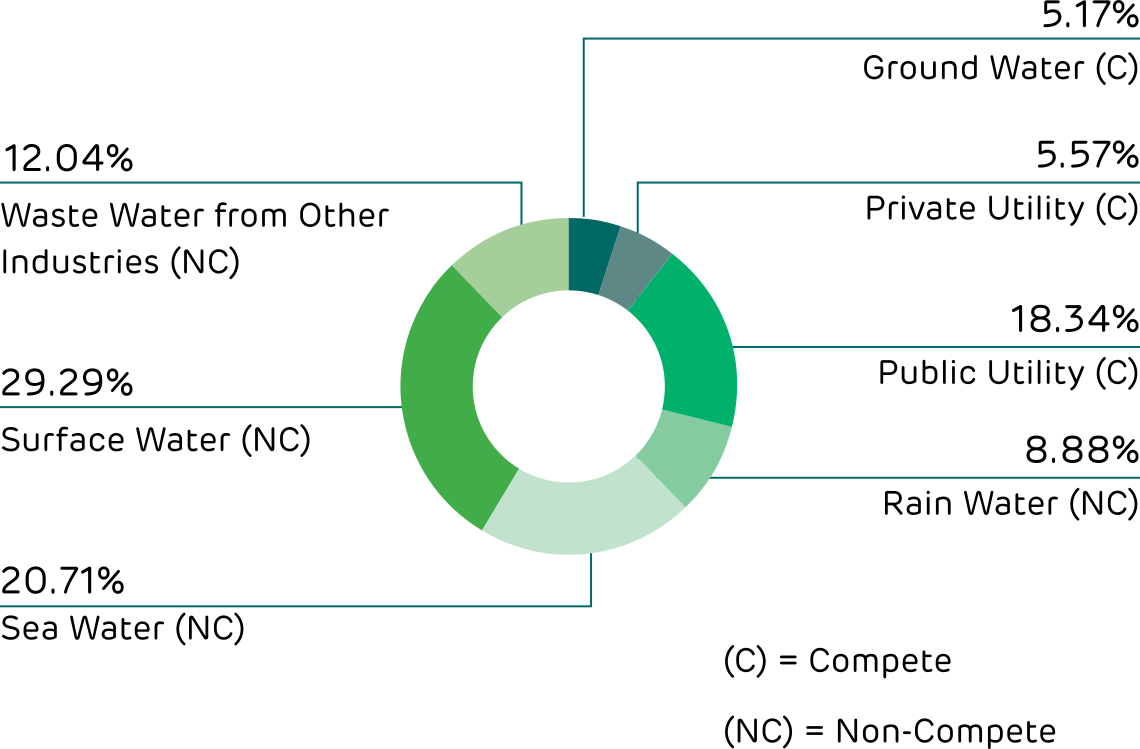
Sources of water withdrawal (%)
Management Approach
At APSEZ, we have strategically prioritised water management as a key focus area to ensure the sustainability of our operations. We have adopted a comprehensive and responsible approach towards stewarding this critical resource:
- Access and equity: supporting vulnerable communities by providing safe drinking water, sanitation facilities, and assistance in adapting to climate-related impacts on local water resources
- Water use assessments to identify opportunities for water efficiency improvements and understand consumption patterns across sites
- Public partnerships with local governments, community groups, and development agencies to advance water and sanitation agendas and long-term water infrastructure solutions
- Actions to reduce water consumption, improve wastewater quality, and implement water recycling applications where feasible
- Awareness and education initiatives with local stakeholders, complemented by employee awareness training on water efficiency
- Continued investments in infrastructure and technology, including water efficient systems, smart metering, leak detection tools, upgraded sanitation networks, and new treatment technologies
- Establishing targets to reduce water use at the site and organisational levels
- Value chain engagement with suppliers and vendors through structured meetings and quarterly reviews
- Site-specific water management plans, tailored to local catchment conditions, regulatory requirements, operational needs, and stakeholder expectations
Transparency in Approach
Transparency is integral to our water strategy in the evolving global water conservation landscape. We disclose actions and investments aligned with the CEO Water Mandate in our UN Global Compact Communication on Progress, and continue to report performance using indicators aligned with GRI 303 (Water and Effluents), sharing progress, targets, and improvement opportunities across corporate reports.
Operational Priorities & Initiatives
Hierarchy of Water & Wastewater Management:
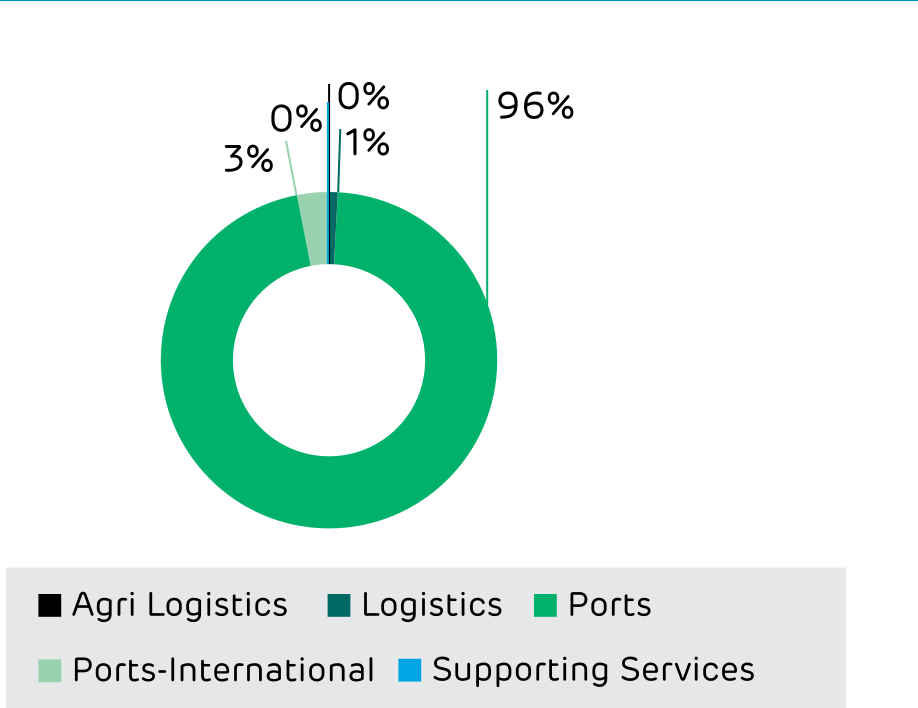
Business Unit-Wise Water Consumption (ML)
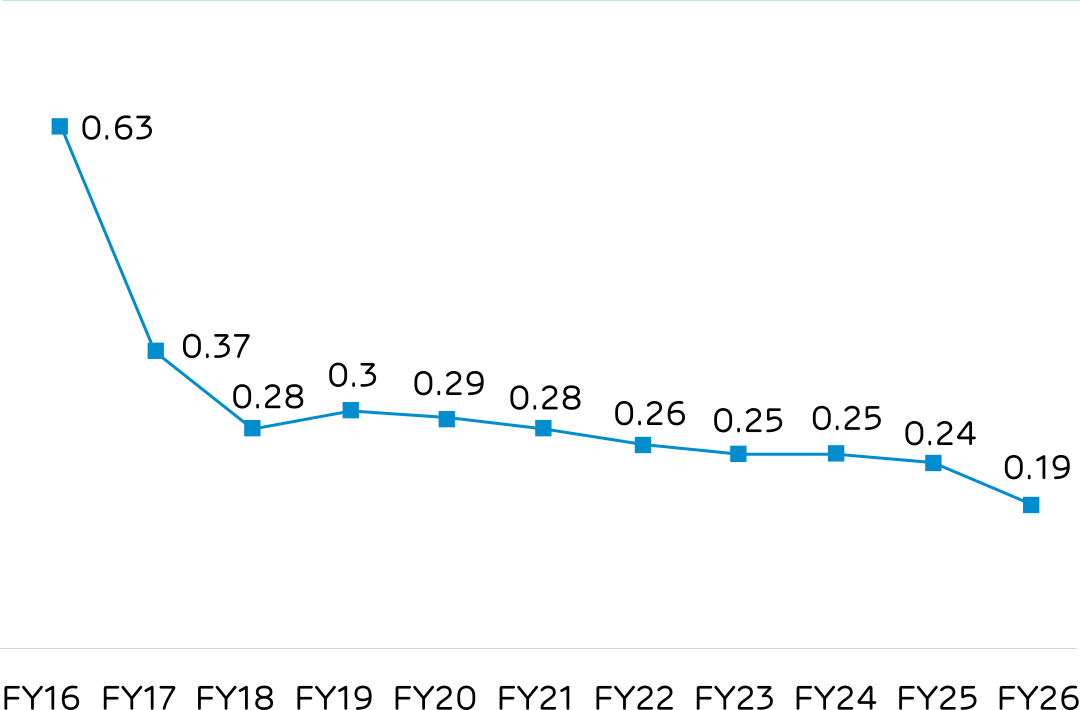
Water Consumption Intensity (ML/Crore)