Adani Ports and Special Economic Zone Ltd. (APSEZ)Integrated Annual Report 2025-26
Environment · Climate Change Report
Energy Management
Energy at the Core of Operational Excellence
Energy remains central to our operational excellence and decarbonisation pathway. As India’s largest integrated transport utility, we manage energy systematically to deliver reliable, cost-efficient services while advancing our Net Zero commitments. Given its direct contribution to GHG emissions, efficient energy use is a strong climate imperative, while also being a cost lever, materially influencing our operating expenditure.
Our energy management programme is built on precise measurement, efficiency enhancement, electrification, behavioural controls, and a growing share of renewable energy (RE) across ports, terminals, logistics parks, and rail assets.
Robust Governance & Certified Management Systems
Our energy governance system is anchored in our environmental, energy and emission policy. It is overseen through a structured framework, comprising the ESG Steering Committee, site-level energy champions, and digital platform (Gensuite). Together, these help track fuel, electricity, and RE performance at APSEZ in real time.
To enhance our energy governance, we operate a comprehensive set of energy management programmes, including:
Energy audits to identify opportunities for improving energy performance
Quantified energy-saving targets assigned across sites to drive continuous improvement
Actions to reduce the amount of energy use, aligned with site-specific significant energy uses (SEUs)
Evaluation of progress in reducing energy consumption through performance dashboards, management reviews, and audit findings
Use of clean or green energy, including renewable power, onsite solar, and shore power systems
Investments in innovation or research and development to decrease energy consumption and improve operational efficiency
Energy efficiency training for employees to strengthen awareness and encourage behavioural discipline
Assurance & Continual Improvement: Driven by conduct of regular energy audits, defining of quantified savings targets, implementation of reduction actions, and training employees on energy efficiency; an annual ISO 50001 surveillance audit assesses progress against objectives and targets, identifies significant energy use (SEU) areas, and unlocks opportunities for performance improvement
ISO 50001:2018: All operating ports and our two joint ventures (AICTPL and ACMTPL) maintain Energy Management System (EnMS) certification; other operational locations follow ISO 50001 aligned practices to drive sustained improvements
Powering Performance: Our Energy Footprint in FY 2025-26
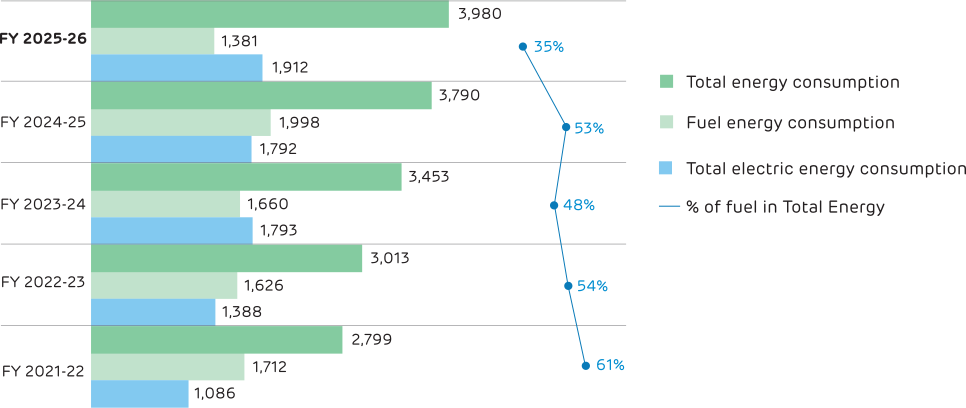
In FY 2025-26, we significantly strengthened energy management at APSEZ through enhanced monitoring, equipment upgrades, and measured electrification. “Energy consumption within the organisation” covers non-renewable fuels, renewable fuels, and purchased electricity; it excludes self generated energy not consumed or exported. Conversion factors follow IPCC 2006 Guidelines and relevant national reference norms; organisational boundaries align with our financial control approach.
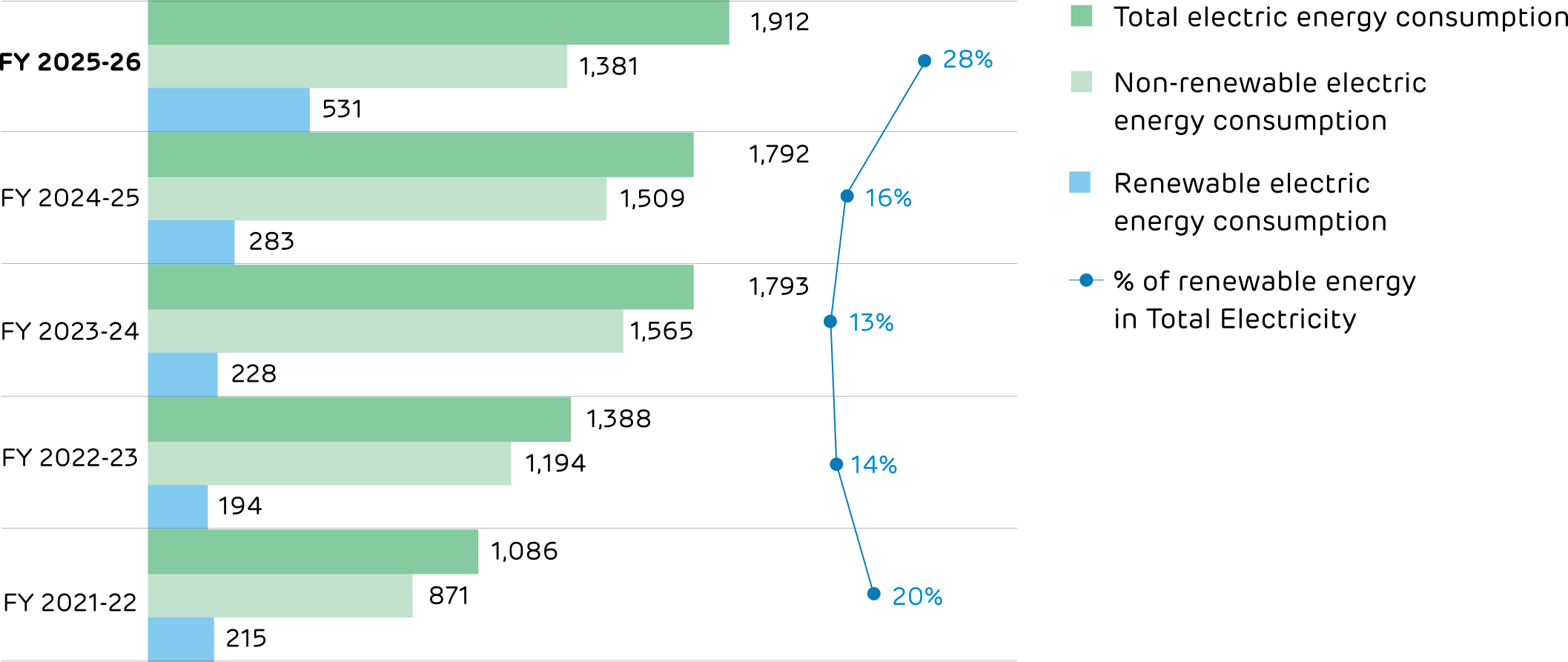
Renewable Growth: Renewable electricity increased via enhanced sourcing from Khavda renewable installations
In line with our sustainability goals, we have set a target to achieve 100% of our total electricity consumption from renewable energy sources by 2027. In FY 2025-26, we achieved a notable 28% renewable energy (RE) consumption, marking a significant increase from 16% in the previous year. This progress underscores our commitment to the realisation of our ambitious target and reflects our determination to reduce our carbon footprint, promote clean energy practices, and contribute to a more sustainable future.
Doing More With Less: Energy Efficiency Metrics
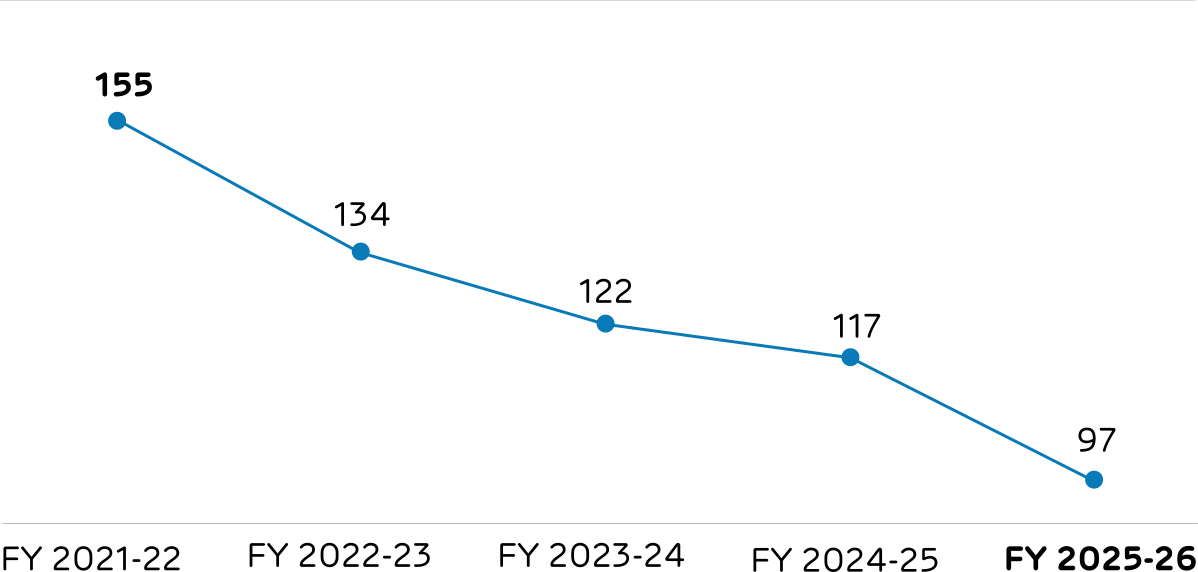
Energy intensity remains a key performance lens for APSEZ’s diversified portfolio. We disclose ratios tied to operational relevance – GJ per revenue – calculated from absolute energy consumption.
Energy Intensity Trends (GJ/Crore)
FY 2025-26 Drivers of Improvement that Supported Intensity Gains
Better equipment utilisation
Digital optimisation of yard operations
Higher deployment of electric assets
Driving Down Energy Use: Targeted Efficiency Gains
During the year, we achieved verifiable reductions in energy consumption through targeted programmes across ports, terminals, and logistics assets. The reductions reflect efficiency improvements, and exclude any decreases stemming from demand contraction or outsourcing. Reductions are derived from metered data or engineering models consistent with recognised methodologies; baselines and operating conditions are normalised where applicable.
Key initiatives in FY 2025-26 included
Electrification of equipment (e.g., RTGs and yard vehicles) and expansion of shore power to reduce auxiliary fuel use
High efficiency LED retrofits on high mast towers across all ports – improving visibility and safety while significantly cutting electricity use and associated emissions
Crane cycle optimisation (automation, anti sway, and cycle time analytics) and HVAC automation in buildings
Digital twins / IoT metering for real-time anomaly detection, with data-driven root cause correction to address irregularities across sites
Behavioural and process controls (driver coaching, idling limits, optimal setpoints) supported by refresher training
Return on Environmental Investment
Return on Environmental investment
Units
FY 2021-22
FY 2022-23
FY 2023-24
FY 2024-25
FY 2025-26
Environment – Capital Investments
₹ Crore
209.7
767.4
1,493.0
934.0
1,255
Environment – Operating Expenses
₹ Crore
23.6
25.6
31.7
33.9
40.7
Environment Total Expenses
₹ Crore
233.2
793.0
1,524.7
967.9
1,295.7
Environment – Savings, Cost Avoidance, Income Tax incentives, etc.
₹ Crore
7.7
36.0
95.3
33.1
117.0
Equipment upgradation and efficiency improvement: Replaced inefficient air-conditioning systems in the RTG E-Room, achieving annual energy savings of 6.6 MWh, and upgraded three RTG drives, delivering energy savings of approximately 10.5 MWh per month from March 2026
Electrification: Converted Harbour Crane MHC-04 from diesel to electric operation, resulting in a reduction of 100 kilolitres of diesel consumption
Energy-efficient lighting initiatives: Installed LED lighting across 20 HM Towers and replaced 286 conventional 72W fixtures with 50W LED lights, resulting in combined annual electricity savings of approximately 31 MWh
Electrical equipment modernisation: Replaced the 11 kV miniature oil circuit HT breaker at MPT-Substation-4 with a vacuum circuit breaker with advanced relay protection, and upgraded three RTG drives to Sinamics S120, enabling power savings through regenerative energy on a common bus
To reduce our energy consumption, we embed energy-efficient solutions into our customer-facing services, reducing the total energy requirements in vessel and landside operations:
Shore power availability to cut auxiliary fuel use at berth
Optimised gate operations and appointment systems that reduce truck idling
On dock rail connectivity and modal shift, lowering tonne km energy intensity
Higher crane productivity that shortens vessel turnaround time and total energy per call
Focus Areas for FY 2026-27
Scale RE penetration via additional PPAs and distributed solar; evaluate battery energy storage for peak shaving at select sites
Deepen electrification of mobile equipment and expand shore power coverage
Undertake next-gen analytics (ML-based anomaly detection and prescriptive maintenance) to further compress energy variance
Continuous capability-building through EnMS refresher training and SEU-specific performance clinics