
Ensuring sustainable supply chain sourcing

At APSEZ, we have embedded sustainability into our operational fabric, with responsible supply chain procurement, a key facet of our approach. Our sourcing process is designed to protect our operations from potential risks. At the same time, our emphasis on sustainable procurement helps reinforce our brand equity and the organisation’s integrity. This approach, rooted in environmental, social and ethical sustainability, is also designed to strengthen supplier partnerships, and contribute to India’s economic development.
Key Linkages
Material Issues
Supplier Risk Screening Methodology
- Sustainability Risk Matrix
- Country-Specific Risk
- Sector-Specific Risk
- Commodity-Specific Risk
Capitals Impacted
 Social and Relationship Capital
 Financial Capital
 Manufactured Capital
Supplier Screening Aspects
- Environmental
- Social
- Governance
- Business Relevance
SDG Alignment
GRI Linkage:

Our sourcing process is designed to protect our operations from potential risks.
75% Value Chain Coverage by FY30
The Company aims to progressively enhance value chain transparency and accountability by assessing and aligning at least 75% of its key value chain partners with the requirements of SEBI BRSR Core by FY2030.
This will be achieved through a structured approach encompassing risk-based partner prioritisation, ESG data collection, third-party assessments, and capacity-building initiatives, ensuring improved visibility on environmental, social, and governance performance across the extended enterprise.
Key Highlights
5,763
Total suppliers
5,763
Total number of Tier 1 suppliers
168
Total number of significant suppliers in Tier 1
75%
of total spend on significant suppliers in Tier 1
0
Total number of significant suppliers in non-Tier 1
168
Total number of significant suppliers (Tier 1 and non-Tier 1)
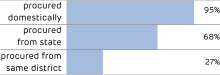
Local procurement (%)
High Procurement Standards and Supplier Code
Perceiving our suppliers to be our key strategic partners, we have established a comprehensive Supplier Code of Conduct along with a Sustainable Procurement Policy to guide and strengthen our relationships with them. We proactively encourage suppliers to adopt these standards, and have made compliance mandatory to foster a culture of sustainable procurement backed by mutual respect.
- Focusses on ensuring ethical, lawful, and sustainable business practices
- Applicable to all global suppliers, and underlines compliance with laws, equal employment opportunities, occupational health & safety, non-discrimination, freedom of associations and collective bargaining
- Focus on minimising environmental impact by reducing GHG emissions, conserving resources, protecting biodiversity, and promoting product reusability and recyclability
- Prohibits child labour, forced labour and harassment, and ensures fair wages, safe working conditions, and clean accommodation
Read more Supplier Code of Conduct
Read more Sustainable Procurement Policy
Major Supply Chain Components of Code & Policy
 Ethical Business Conduct
 Human Rights
 Foster a Safe and Healthy Work Environment
 Risk Management
 Fair Employment Practices
 Corporate Governance and Business Ethics
 Minimise Environmental Impact
 Reduce GHG Emissions
Robust Due Diligence
At APSEZ, a robust due diligence framework empowers us to ensure sustainability and ethical practices across our supply chain. The elaborate and comprehensive process includes a thorough assessment of our Tier 1, critical, and monopoly suppliers against well-defined Environmental, Social, and Governance (ESG) criteria. We remain committed to strengthening our supply chain resilience by identifying and mitigating the potential risks and dependencies involved, and by concurrently integrating responsibilities, risks and opportunities into our outsourcing strategy.
Diligent assessment of suppliers based on ESG criteria
Mandatory compliance to our code of conduct
Focussed orientation and ongoing education for suppliers
Regular oversight and evaluation of supplier performance
Transparent dialogue and clear communication channels with suppliers
Strengthening Supply Chain with Supplier ESG Programme
The Supplier ESG Programme at APSEZ is aimed at strengthening our supply across operations. It helps drive efficiency and sustainability through a series of initiatives that enable easy identification and assessment of potential ESG risks, while empowering us to effectively address such risks. It further empowers us to easily track supplier performance and take prompt, necessary corrective actions.
Programme Interventions

Minimum ESG Requirements and Exclusion of Non-Compliant Suppliers: It is mandatory for our suppliers to meet specific minimum ESG requirements, and deviation leads to their exclusion.
Preferring Suppliers with Enhanced ESG Profiles: The company prefers suppliers demonstrating excellence in ESG practices. Selection and contracting of contractors involves assigning of significant weightage to ESG criteria. This underlines our commitment to recognising and rewarding those who contribute positively to environmental protection, social well-being, and excellence in governance. It further helps incentivise superior ESG performance while aligning with our broader sustainability goals.

Training Buyers and Internal Stakeholders: Contractors are extensively trained on social aspects of ESG, including fair labour practices and ethical procurement.

Oversight of Supplier ESG Programme: The ESG Programme is overseen by the Board Corporate Responsibility Committee. This helps ensure integration of the programme into the corporate strategy and resource allocation methodology. This Committee reports directly to the Board on the programme status and progress.
Periodic Evaluation of Purchasing Practices: Alignment of procurement activities with our Supplier Code of Conduct and ESG standards is ensured through periodic evaluation. The process involves scrutiny of the suppliers’ compliance with our established ESG metrics, underlining our commitment to sustainability and ethical practices.
We have consciously adopted a well-defined diligent supplier screening process to address the complexities and potential risks inherent in our supply chain. The process is aligned to our insights into the global environmental, social, financial, and business relevance risks and challenges. It enables identification of critical suppliers, aiding us in effective risk monitoring and management with respect to suppliers with the highest potential impact. This translates into enhanced resilience and sustainability of our supply chain.
Well-structured Supplier Ecosystem
We follow well-defined vendor registration and onboarding processes to strengthen the reliability and efficiency of our supplier ecosystem while ensuring compliance with the highest ethical standards and operational conduct. Besides helping to mitigate risks associated with third-party engagements, these processes support in reducing the potential financial liabilities and protecting the company’s reputation.
A dedicated digital platform, integrating Contractor Safety Management and SAP Ariba, is in place to strengthen our supplier management system. This facilitates robust and seamless supplier governance.
Supplier Onboarding Criteria
Comprehensive evaluation of the suppliers is undertaken during their onboarding at APSEZ. The assessment is benchmarked to multiple criteria, covering:
The process is designed to ensure alignment of the suppliers with our Supplier Code of Conduct and Sustainable Procurement Policy.
Besides assessment criteria, a grading system is followed for ranking the suppliers. The suppliers are graded on a scale of O, B, and A, in accordance with their respective revenue profile. The process promotes transparency and fairness in the evaluation of the suppliers’ performance and their alignment with our ethical and sustainability standards.
| Grade | Criteria (Annual revenue in ₹) |
|---|---|
| O Grade | Less than 25 Crore |
| B Grade | Between 25 and 50 Crore |
| A Grade | More than 50 Crore |
Augmenting Supplier Oversight
We work continually towards augmenting supplier oversight, ensuring compliance with the highest standards of integrity and ethics. Our approach includes:
A digital, portal-based assessment is conducted during supplier onboarding, followed by an annual performance review to encourage ongoing improvement.
These include site inspections, engagement surveys, partnerships with external agencies, and review of publicly available information to gain deeper insights into supplier practices.
Suppliers are evaluated on a 0–100% scoring scale, based on their level of compliance with APSEZ’s standards.
Project SETU – ESG Assessment
At APSEZ, we remain committed to building a resilient, transparent, and future-ready supply chain. In line with this vision, we have launched Project SETU partnering with UTOPIIC, our third-party vendor, an integrated digital governance and supplier evaluation platform designed to strengthen sustainability practices and ensure alignment with internationally recognised ESG standards.
Project SETU enhances supplier oversight through a structured screening process that combines peer benchmarking, desk-based assessments, independent on-site evaluations, and continuous improvement feedback. This holistic approach ensures that our suppliers meet global ESG expectations while contributing to APSEZ’s long-term sustainability roadmap.
Integration of Project SETU has made our supplier screening and assessment process more robust, transparent, and aligned with global sustainability expectations, further reinforcing APSEZ’s commitment to ethical procurement and a resilient supply chain ecosystem.
 Screening Framework
Our supplier screening framework prioritises partners who are critical of operations and difficult to substitute due to the uniqueness or strategic importance of their offerings. High-volume suppliers and essential component providers are digitally mapped within Project SETU, enabling centralised monitoring, enhanced risk visibility, and proactive risk management.
 ESG Considerations
Supplier evaluations under Project SETU include a comprehensive review of ESG performance, covering historical commitments and ongoing actions to mitigate environmental, social, and governance risks. The process also incorporates contextual factors such as geographical, sectoral, and commodity-specific vulnerabilities, ensuring a nuanced and forward-looking assessment.
 Sustainability Risk Matrix
To ensure objectivity, APSEZ has implemented a Sustainability Risk Matrix that classifies suppliers based on ESG parameters and assigns overall grades. This matrix identifies suppliers with elevated sustainability risks as well as those demonstrating leadership in ESG practices. Project SETU digitises this methodology, offering real-time analytics, risk flags, and performance comparisons to support responsible sourcing decisions.
 Purpose and Impact
Project SETU is designed to engage suppliers, customers, and partners in a recurring assessment exercise that:
- Collects reliable ESG performance data across the value chain
- Supports reduction of GHG emissions and environmental impacts
- Enhances practices in water stewardship, waste management, and resource efficiency
- Promotes health, safety, labour rights, diversity, equity, and inclusion
- Ensures adherence to ethical business practices, including anti-bribery, anti-corruption, and human rights compliance
- Builds a responsible ecosystem that contributes to APSEZ’s sustainability roadmap
 Digital Platform and Third-Party Assurance
To enable this project, we have formulated a digital platform for our desk-based assessment for our suppliers in collaboration with our partner. This platform will serve as a single window for:
- Uploading ESG performance data and supporting documents
- Managing compliance reporting under BRSR Core and other frameworks like GRI, CDP, etc
- Enabling training, awareness sessions, and regular updates
- Ensuring confidentiality, traceability, and verification of information
UTOPIIC is APSEZ’s independent sustainability partner and will play a critical role in ensuring credibility and assurance through:
Onboarding & Training
Suppliers are introduced to the POSITIIVPLUS platform via their nominated Single Point of Contact (SPOC). Training sessions build awareness of ESG compliance and BRSR requirements, ensuring suppliers understand both the reporting process and its strategic relevance to APSEZ’s sustainability roadmap.
Data Collection & Support
A robust questionnaire, aligned with global reporting frameworks, enables suppliers to disclose ESG data through desk-based assessments. Guidance is provided to ensure accuracy and completeness, reinforcing transparency and accountability across the supply chain.
On-Site Assessments
Joint site visits with APSEZ representatives integrate awareness-building with compliance verification. These visits strengthen supplier capacity while ensuring that ground-level practices reflect ESG commitments.
Validation & Assurance
Independent verification checks are conducted to validate supplier submissions. This assurance process enhances credibility and supports investor confidence in APSEZ’s supply chain governance.
Peer Benchmarking
Supplier performance is benchmarked against recognised global frameworks such as the Global Reporting Initiative (GRI). Comparative analysis fosters transparency, highlights leadership practices, and motivates continuous improvement across the supplier base.
Impact and Continuous Improvement
Beyond compliance, Project SETU identifies gaps and provides corrective action plans, tailored feedback, and capacity-building workshops. This collaborative approach transforms supplier relationships into partnerships for sustainable growth, ensuring resilience and long-term value creation.
Value Creation Through Integration
Project SETU exemplifies APSEZ’s integrated reporting philosophy by connecting supplier oversight with material ESG outcomes. The initiative strengthens risk management, enhances stakeholder trust, and contributes directly to our strategic objectives of reducing environmental impacts, promoting social equity, and upholding governance excellence. By digitising supplier evaluation and embedding third-party assurance, Project SETU ensures that sustainability performance is traceable, verifiable, and aligned with global standards – creating shared value across the ecosystem.
Project SETU embeds these ESG criteria into automated dashboards, ensuring consistent, data-driven evaluations across all business units.
| Grade/Score | Above 85% | Between 60 and 85% | Below 60% |
|---|---|---|---|
| O Grade | Low Risk | Low Risk | Low Risk |
| B Grade | Low Risk | Medium Risk | Medium Risk |
| A Grade | Low Risk | High Risk | High Risk |

Reinforcing Supplier Management Framework with Project SETU
Project SETU is reinforcing our supplier management framework by digitising sustainability-related data and seamlessly integrating it into BRSR-aligned metrics. Through automated disclosures, real-time dashboards, risk scoring, and audit ready documentation, the platform ensures greater accuracy and consistency in reporting. This is helping strengthen our transparency and compliance across all BRSR requirements related to supply chain sustainability.
Supplier Evaluation and Development
Streamlined engagement is ensured by tiering the suppliers. Tier 1 suppliers get special attention. A dedicated team evaluates assesses potential suppliers based on ESG, HR, and Techno-commercial criteria.
Given the importance of vendor onboarding for mitigating any concerns, suppliers are required to comply with APSEZ's Supplier Code of Conduct and Sustainable Procurement Policy. Their screening is based on quality, manpower, audit experience, and compliance with environmental and social norms.
Well-defined procurement guidelines are in place at APSEZ for reducing environmental and social impacts. Compliance with quality, environmental, safety, and social standards is ensured through regular internal assessments, desk assessment, and third-party audits. This is supported by on-site inspections of supplier production sites and factories at all levels.
Engagement with stakeholders helps to promote safe and eco-friendly practices throughout the operational lifecycle at APSEZ. Evaluation of supplier ESG performance is undertaken through an integrated scorecard, with 10% assigned for safety and compliance, and the rest for overall performance. Suppliers are mandated to maintain a minimum score of 90, updated monthly.
Audit/self-assessment results are analysed by the ESG and purchasing teams for the identification of sustainability deficiencies. We collaborate with suppliers on corrective action plans, ensuring continuous improvement. Continued non-compliance can result in contract termination or non-renewal. High-risk suppliers are required to share mitigation plans within a set timeframe, followed by regular follow-ups and re-assessments.
Periodic re-assessments and re-audits are undertaken to track the progress of supplier performance, ensuring a continuous improvement cycle involving evaluation, analysis, and corrective measures.
Supplier Development Initiatives
Various development initiatives have been undertaken at APSEZ to educate our suppliers on the company’s core values and operational standards. The initiatives also help in aligning the suppliers with these values and standards. The focus is on fostering a culture of safety, sustainability, and responsible business practices among our suppliers.
Project SETU:
Strengthening Supplier Governance and Sustainability
- Digitised Supplier Ecosystem: Project SETU integrates all supplier onboarding, verification, and compliance processes into a unified digital platform, enhancing transparency, accuracy, and operational efficiency.
- ESG Aligned Evaluation Framework: The platform embeds ESG parameters into supplier assessments, enabling structured risk scoring, sustainability grading, and continuous improvement monitoring.
- Automated BRSR Ready Reporting: SETU streamlines supplier-related BRSR disclosures through automated data capture, real-time dashboards, and audit ready documentation, ensuring consistency and regulatory compliance.
- Strengthened Oversight & Accountability: With centralised tracking of supplier performance, risk alerts and compliance status, Project SETU empowers APSEZ teams to proactively manage supply chain risks and uphold ethical sourcing standards.
Saksham:
Empowering Suppliers
- Focussed on empowerment of suppliers through skill enhancement in the areas of quality, safety, and sustainability, boosting innovation, aiding SME growth, and bolstering partnerships
- ‘In Contractor Incubation Series’, particularly "Saksham", helps in enhancing safety and productivity through 3D animated modules and uniform training
- Coordinators and OH&S team maintain training records and feedback to drive sustained improvement
Suraksha Samvad:
Nurturing Safety Culture
- Initiative involves detailed safety sessions with key contractors on-site
- Seeks to nurture robust safety culture and raise awareness about APSEZ's safety and environmental policies
- Sessions cover critical topics, such as Adani safety culture, environmental practices, Contractor Safety Management (CSM) portal, and supplier grievances
- Ensures supplier alignment with safety and environmental requirements during project execution
Sampark:
Strengthening Relationships
- Helps reinforce relationships, driving enhanced transparency, and promoting collaboration by aligning our suppliers with the organisational vision and goals
- Involves interactive sessions designed to share our leadership’s vision on essential aspects like labour practices, safety, human resources, industrial relations, human rights, and sustainability
- 80 sessions held with key suppliers in FY 2025-26; session topics included Supplier Code of Conduct, compliance significance, ESG goals, HR and IR requirements, and safety protocols
ESG Awareness Session:
Facilitating Sustainability Insights
- Covers critical role of ESG in business operations, policy commitments, management systems, such as ISO certifications, and providing technical knowledge
- Seeks to enhance ESG performance of our significant suppliers
- Session conducted remotely, participated by over 321 significant suppliers in FY 2025-26
- Emphasises our strategy for promoting responsible business practices
Supplier Engagement Survey:
Enhancing Collaboration
- Survey conducted to assess and improve relationships with suppliers
- Collection of feedback on various metrics, such as service quality, timelines, cost, and payments
- Helps gather information on compliance in critical areas, such as climate change, human rights, carbon reduction, water conservation, commitments to the United Nations Global Compact (UNGC), and environmental protection
- Aids in measurement of supplier satisfaction, identification of improvement areas, and enhanced collaboration