
Climate Action

Amid growing climate uncertainty and resource scarcity, the Adani Foundation is advancing a community-led, forward-thinking approach to climate resilience. By integrating water stewardship, biodiversity conservation, and renewable energy adoption, the Foundation addresses the most pressing ecological challenges while laying the foundations for sustainable communities. Our efforts extend beyond environmental protection to deliver future-ready solutions for enduring social and economic well-being for the coming generations.
Our climate initiatives focus on:
- Green Transformation Developing and revitalising wastelands through structured plantation drives and increasing the use of renewable energy to enable a cleaner and greener society.
- Water Stewardship Promoting large-scale conservation of water to ensure its availability for domestic and agricultural purposes throughout the year.
Coastal Biodiversity Conservation Project
Programme Goal
To strengthen coastal protection and biodiversity
Programme Description
In 2010, we undertook a mangrove plantation project along the Luni coastal belt, creating 162 hectares of dense mangrove forests, followed by the plantation of multi-species mangroves over 20 additional hectares. These areas have evolved into thriving ecosystems, providing vital habitats for marine life and migratory birds. A dedicated mangrove nursery has also been established to cultivate 10,000 mangrove saplings.
Outcomes
162 hectares
Mangrove forests cultivated along Luni coastal belt
20 hectares
Additional multi-species mangrove plantations
10,000
Mangrove saplings planted
Climate Action
Water Conservation Project
Programme Goal
To strengthen water conservation and community resilience.
Programme Description
We have implemented several water conservation activities through the Adani Foundation, aimed at enhancing water storage capacity, recharging groundwater, and strengthening community resilience against water scarcity.
Key interventions included pond rejuvenation through deepening and cleaning, expansion of water catchment areas, maintenance of check dams, construction of filtration wells, installation of RO plants in schools, and building overhead potable water tanks.
Consultative meetings were also held with local communities to finalize pond locations and encourage participatory planning to enhance groundwater levels and ensure a reliable water supply for farming and livestock needs.
Impact Created
Water storage capacity created in 8 sites
84,660
cubic metres
640
Recharge pit
Adani Van: Mass Plantation Project
Programme Goal
To restore and rejuvenate India’s diverse landscapes through large-scale afforestation
Programme Description
Adani Van is an ambitious afforestation initiative, launched by the Adani Foundation, to restore and rejuvenate India's diverse landscapes. The programme focusses on massive plantation drives to transform barren lands into thriving forests and green spaces, enhancing environmental sustainability.
Outcomes
63,285
Saplings planted (including 70+ native species) across 8 sites
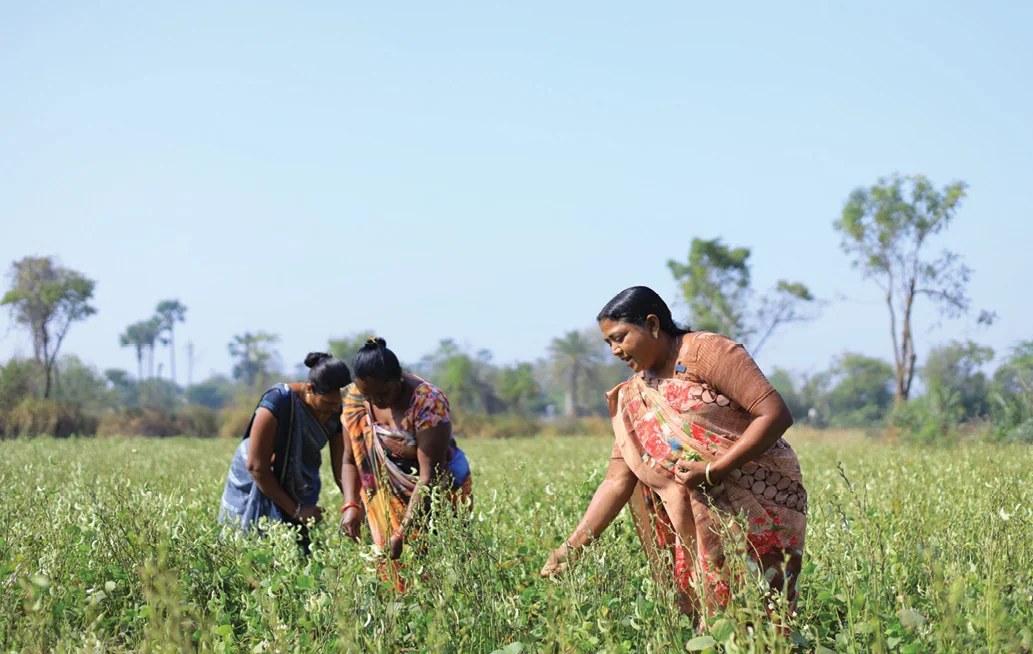
Transforming Livelihoods Through Climate-Resilient Practices
In Lavachha village, Hazira, Shashikalaben Kishorbhai Patel, a 47-year-old widow and mother of two, struggled to sustain her family through farming. High irrigation costs and unreliable water supply forced her to cultivate only half of her 4 bighas of land, while dependence on diesel pumps drained her income and limited crop choices.
Her fate transformed with the launch of the Adani Foundation’s Solar Pump Initiative, which introduced a clean, affordable, and sustainable irrigation solution. Shashikalaben embraced the opportunity and began cultivating her entire landholding, diversified into crops such as jowar, wheat, bajra, tuver, chawli, and ladyfinger, and significantly reduced operating costs. Stable incomes enabled savings and reinvestment, while improving productivity and strengthening her financial independence. Improved financial stability led to better education for her children, enhanced quality of life, and growing confidence, positioning her as a role model for women in the village.
Shashikalaben’s success sparked a ripple effect, encouraging other farmers to adopt solar-powered irrigation, reduce reliance on fossil fuels, and shift towards environment-friendly, climate-resilient farming practices. Today, the initiative has enabled over 100 farmers in Lavachha and nearby villages to lower irrigation costs, improve yields, and shift to sustainable agriculture, enhancing rural incomes and livelihoods.