
Health and Nutrition
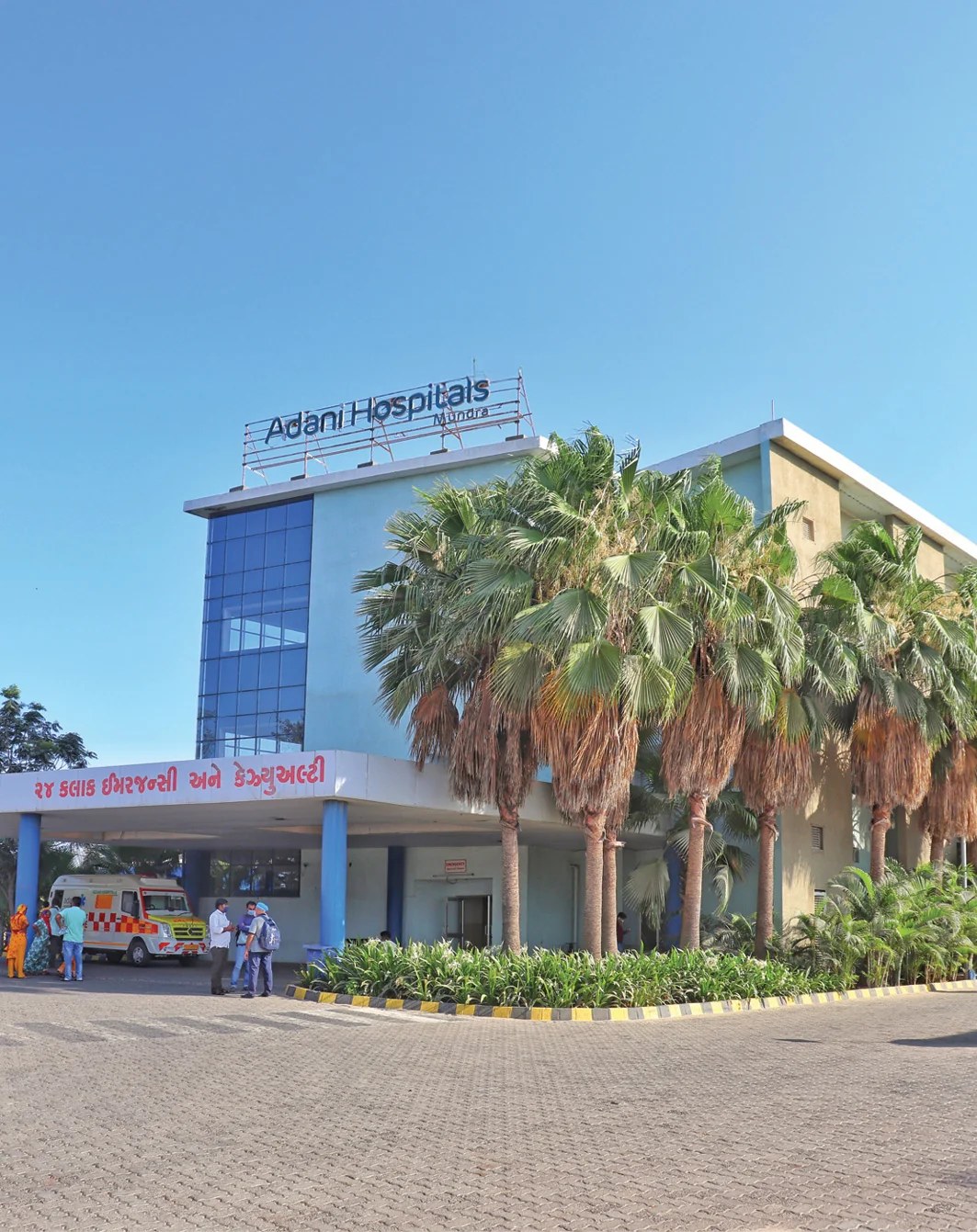
In rural and remote areas, where distance and limited infrastructure restrict access to essential healthcare, the Adani Foundation is bridging critical gaps by reaching the unreached and strengthening local health systems. Our mobile healthcare units, multi-speciality health camps, and rural clinics are vital in ensuring access to primary and secondary care to underserved and elderly people with limited mobility. By focussing on both preventive and curative approaches, the Foundation’s healthcare ecosystem is improving the well-being of India’s most vulnerable populations.
Our SuPoshan initiative is instrumental in mitigating malnutrition and anaemia among children, adolescent girls, and women. The project empowers village-level volunteers, SuPoshan Sanginis, who serve as catalysts for behavioural change by monitoring health, providing nutritional counselling, and facilitating life-saving medical treatment.
Mobile Health Care Units (MHCUs): Delivering Healthcare to Remote Populations
Programme Goal
To improve access to quality primary healthcare for remote and underserved communities
Programme Description
Mobile Health Care Units (MHCUs), operated by the Adani Foundation, play a critical role in delivering healthcare to remote populations with limited access to medical facilities. These units are fully equipped with qualified medical professionals, diagnostic tools, and essential supplies, bringing quality healthcare services to the community’s doorsteps.
The Foundation also organises general and specialised health camps to provide comprehensive services such as health checkups, screenings, vaccinations, referral to higher facilities and health awareness campaigns.
Outcomes
9
MHCUs operational across 304 villages and 7 sites
1,66,891
Treatments provided through MHCUs (60% female beneficiaries)
Adani Eye Care Programme
As per the World Health Organization (WHO), visual impairment affects 314 million people globally, including 45 million who are blind, despite over 80% of cases being preventable or treatable. Nearly 90% of those affected reside in the low- and middle-income countries, where access to eye care remains out of reach.
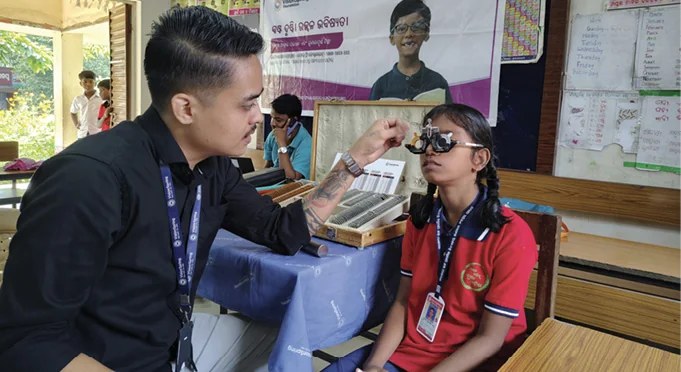
Launched in August 2024, the Adani Foundation’s Eye Care Programme aims to address this gap by providing eye screenings, primary eye-care services, and awareness on eye health to the school-going children, women, the elderly, and truck drivers. The initiative focusses on early detection and prevention of vision problems. Eyeglasses are also provided to the beneficiaries requiring corrective vision support.
Through this programme, the Adani Foundation reaffirms its commitment to preventive eye care, improving overall health and well-being
Key Highlights FY 2025-26
Screening conducted across 3 states and 3 port locations
| Children | Elderly men | Women | Total | |
|---|---|---|---|---|
| Screened | 2,902 | 702 | 3,539 | 7,143 |
| Eyeglasses provided | 1,034 | 419 | 2,059 | 3,512 |
Health Camps: A total of 21,067 patients received medical care through a series of multispecialty, gynecology, general, and general health camps conducted across nine sites. These camps provided comprehensive diagnostic and treatment services, ensuring broad community access to quality healthcare. 11,159 patients benefited from eye screening camps at different sites.
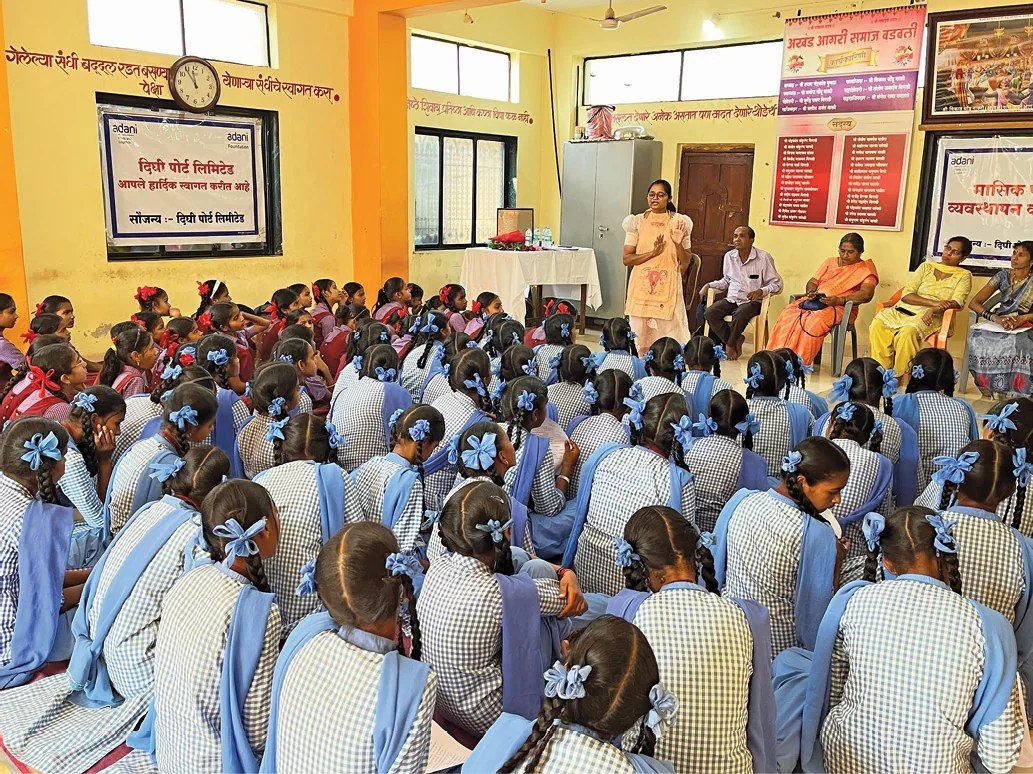
Mensuration hygiene training for ASHA (80) and adolescent girls (1397). 2,553 attended the health awareness programs. 295 TB patients supported with nutrition kits.
Rural Clinics and Wellness Centres: Strengthening Healthcare Access
Programme Goal
To provide essential healthcare services in remote and rural areas
Programme Description
The Adani Foundation’s network of rural clinics and wellness centres serves as critical access points for healthcare delivery in remote areas. These facilities act as outpatient care centres, providing essential healthcare services to the local communities, particularly women, elderly, and children.
Outcomes
7
Rural clinics operational
2
Wellness centre operational
50,424
Patients visited rural clinics and wellness centres
National Building Through Healthcare
Datta Meghe Institute of Higher Education & Research (DMIHER), Sawangi (M), Wardha, is an eminent deemed university recognized for its integrated approach to sustainable healthcare and health professions education. With a strong foundation in community-oriented and evidence-based learning, the institute has developed a comprehensive academic ecosystem comprising 15 constituent units across disciplines such as medicine, dentistry, nursing, physiotherapy, pharmacy, and allied health sciences. It offers over 260 academic programs with a student strength exceeding 12,000, supported by competency-based, outcome-driven education and technology-enabled learning systems that prepare future-ready healthcare professionals.
The institution has recently strengthened its role as a leading healthcare provider through its expansive AROGYA-SETU healthcare network, which includes 10 hospitals, 2,700 beds, more than 200 ICU beds, and 25 operation theatres. Backed by over 350 consultants and multiple specialty and super-specialty units, the institution delivers a wide continuum of care—ranging from primary and preventive services to advanced tertiary care, including transplants, cancer treatment, robotics, and traditional systems like Ayurveda and Homeopathy. Its services are particularly focused on underserved populations in Central India, including rural and tribal communities, thereby aligning clinical excellence with social responsibility.
A significant recent emphasis at DMIHER has been oncommunity outreach and inclusive healthcare delivery, reflected in its adoption of 86 villages and outreach to over 26,000 households through satellite centers, health schemes, and extensive screening programs. Nearly 1.97 Million patients have been screened, with large-scale referral and treatment linkages established. The institute’s holistic model integrates education, service, and research with initiatives such as comprehensive healthcare programs, digital learning platforms, and interprofessional training. Through its mission of fostering resilient, technology-driven and socially responsive healthcare systems, DMIHER continues to evolve as a nationally significant institution working towards equitable and sustainable health development.
As part of a collaborative project involving multiple companies of Adani group, the Adani Foundation has partnered with DMIHER to establish a global Centre of Excellence in healthcare education and delivery. This collaboration, announced in June 2025, aims at upgrading DMIHER’s 15 institutes and 5 hospitals to enhance medical education and clinical research.
Restoring Health and Hope with MHCU
In Sengazhaneermedu village, Kattupalli, 42-year-old Marimuthu lived with constant pain due to a severe wound on his right heel from a rat bite, which remained unhealed for over six months. Repeated treatments at government and private hospitals brought little relief, making him unable to work or walk and deepening his anxiety about supporting his wife and two young sons.
His recovery began when he approached the Adani Foundation’s Mobile Healthcare Project. The MHCU team assessed his condition and implemented a personalised treatment plan with regular wound care and close monitoring. Over six months of consistent intervention, the wound healed completely. Marimuthu regained mobility, returned to work, and restored stability for his family. Today, Marimuthu’s smile reflects a renewed sense of hope and confidence.